
Stamped Concrete in Odessa, MO
Stamped patios, walkways, and entries across Odessa — decorative concrete engineered for Lafayette County's heavy Grundy clay, some of the most expansive ground in the metro
Stamped Concrete in Odessa
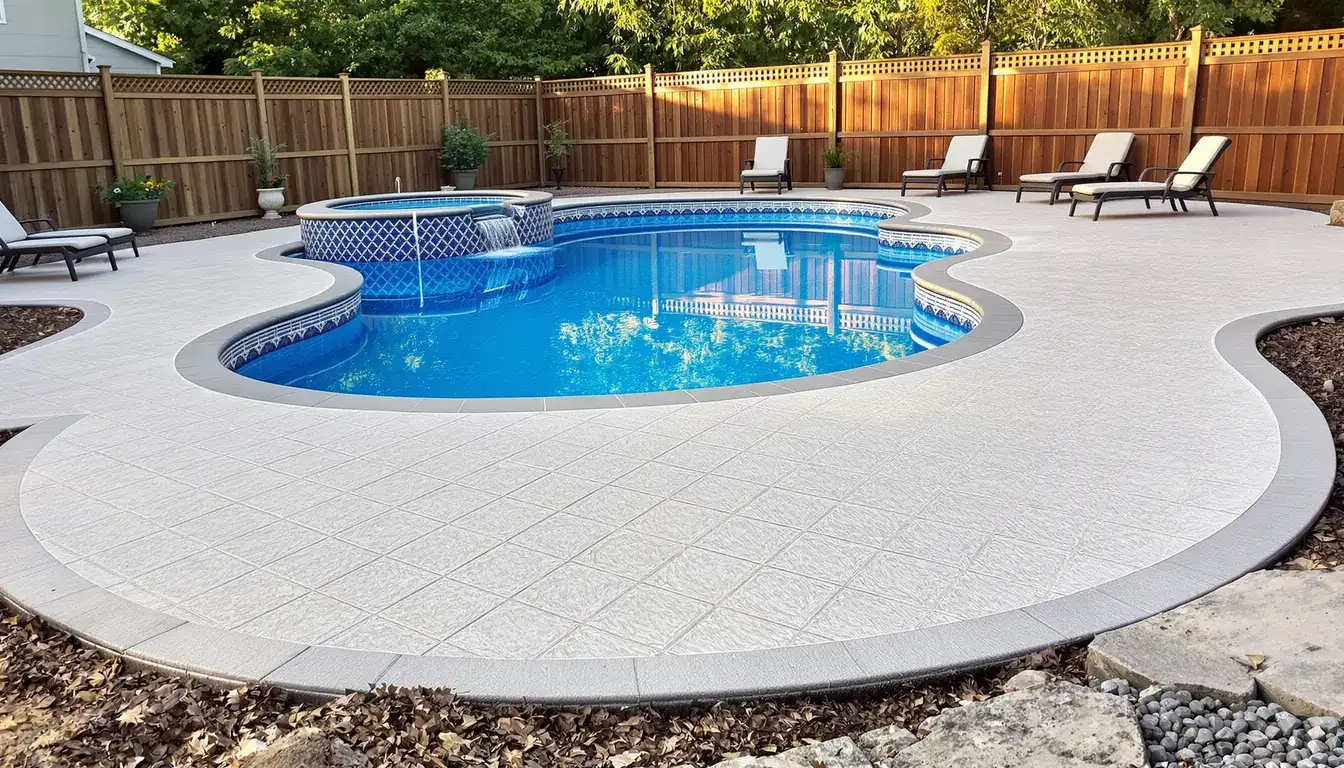
Decorative stamped concrete that replicates the look of brick, stone, slate, and wood for driveways, patios, and walkways. Ford Concrete serves Odessa, MO and the entire Kansas City metro with more than a decade of experience and a 5-star reputation.
Odessa at a Glance
- Population
- 5,593
- State
- Missouri
- County
- Lafayette County
- Schools
- Odessa R-VII School District
Stamped concrete built for Odessa's heavy Grundy clay
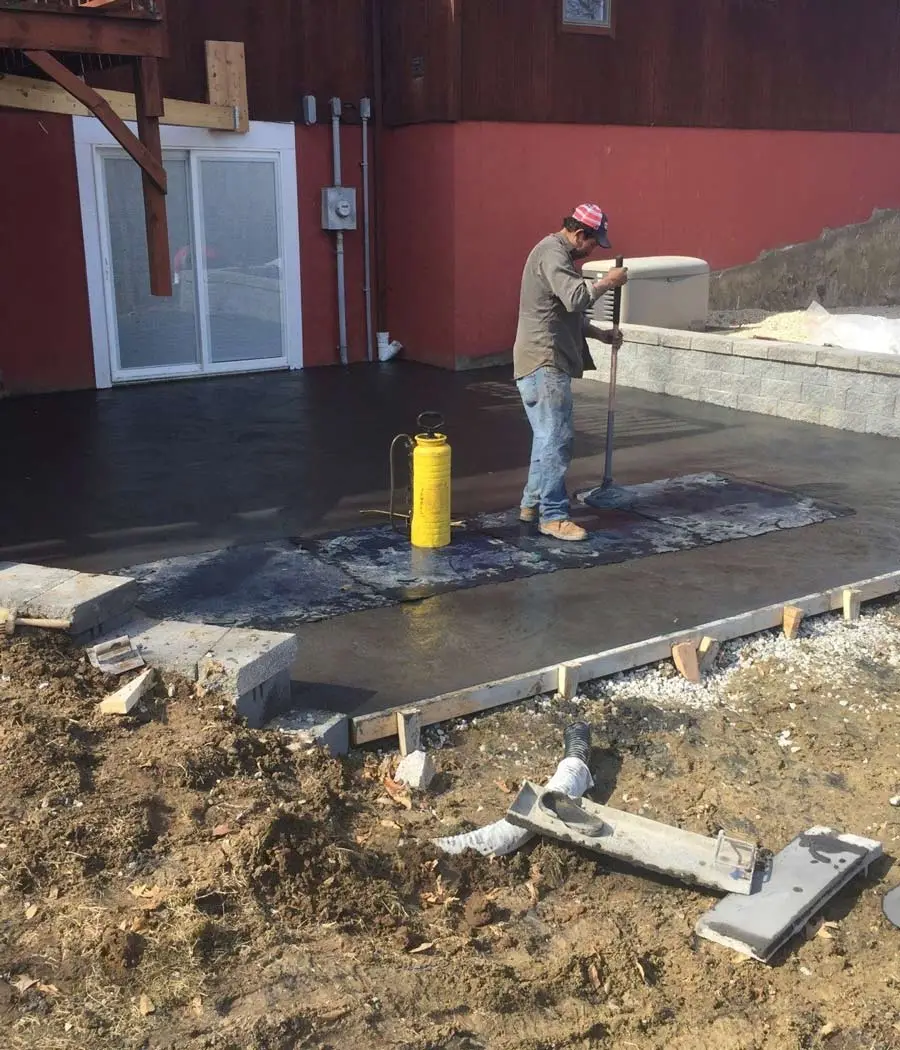
Odessa sits on Grundy series clay, some of the most expansive ground in the whole metro. A stamped patio here lives or dies on how that clay is handled — a deeper compacted base, tighter joint spacing, and reinforcement to hold the slab together while the ground moves under it. Get those right and a decorative surface stays flat; skip them and the prettiest pattern cracks apart in a season.
This clay swells hard when it's saturated and shrinks when it dries, and it does more of both than the Wymore clay most of the metro sits on. So we treat an Odessa slab as a movement problem first and a pattern second. The stamp mat and color are what you see, but the base and the joints are what let you keep seeing them, year after year, on ground that never stops working.
Why Odessa's ground moves more than the metro average
Grundy heavy clay holds water in a tight, dense structure. When it takes on moisture it expands with real force; when a dry Lafayette County summer pulls that moisture back out, it contracts and leaves voids. A slab poured straight onto that ground rides the swell-and-shrink cycle — lifting at the wet edges, dropping into the dry pockets — until it cracks where nothing told it where to move.
The fix starts under the slab. We over-build the base for this ground: strip deeper to firm clay, compact a thicker draining stone base in lifts, and proof-roll it to find and correct soft spots before the pour. That stone layer buffers the slab from the worst of the clay's movement and gives water somewhere to go instead of soaking the subgrade right under the concrete. This is Missouri ground, under MoDNR.
Joints and reinforcement that decide where it cracks
On ground this active, we plan for movement rather than pretend we can stop it. Reinforcement — steel or a fiber-reinforced mix — holds the slab together as a unit so the two sides of any crack stay level instead of stepping apart. Then the joints tell that movement where to go.
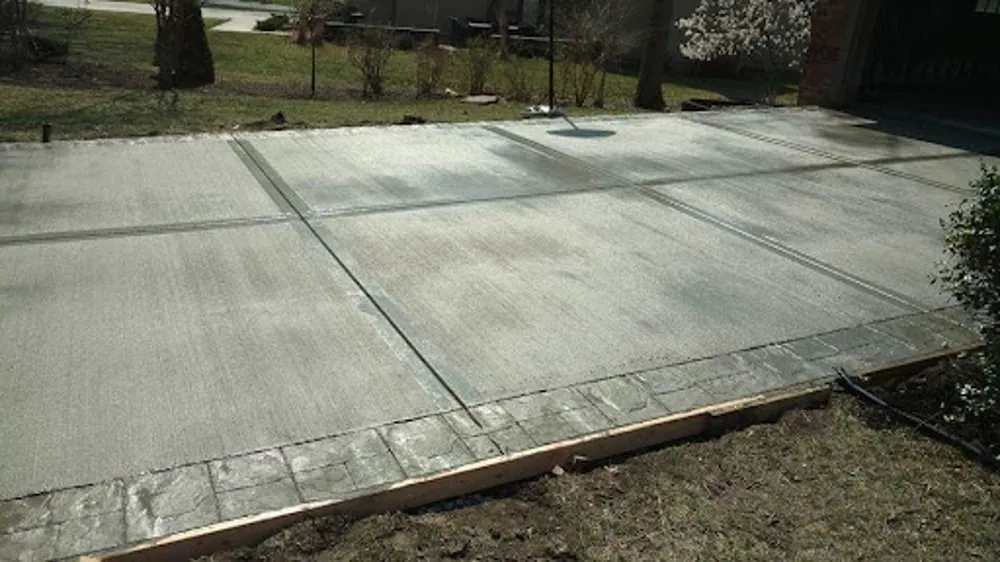
On expansive clay we set the saw-cut vs pattern joint layout tighter than a patio on calmer ground would need, cutting control joints on the pattern's grout lines at closer spacing so the slab has frequent, planned lines to relieve through. An isolation joint goes anywhere the patio meets the house or a walk. Cut on the pattern while the slab is green, those lines hide the movement in the design instead of letting a crack wander across the field.
Pressing the pattern before it sets up
Once the slab is placed, the pattern has to be seated while the concrete is workable. Fresh concrete stays open only through the plasticity window, so we staff an Odessa pour to keep pace and press every mat before it closes — too late and the texture won't seat, too early and the mix smears under the tool.
We broadcast a release agent so the mats lift clean and drop a shadow of antique color into the texture, then move the stamp mat across the field in a planned sequence. A day or two later, a timed release wash sets the tone into the joints instead of hazing the high spots, so the finished pattern reads crisp and even across the patio.
Color that holds and a sealer that lasts
Color goes into the slab, not onto it, so movement and wear can't strip it. Integral color runs through the batch — a chipped edge on active clay never flashes bare gray — and a broadcast color hardener toughens the surface and carries the tone the pattern shows. Antiquing in the release settles into the joints for the depth that makes stamped concrete read as laid stone rather than colored concrete. We prove it on a mockup before we pour.
Sealing protects that color through Lafayette County's seasons. We seal thin, because a heavy coat traps moisture and turns milky — that sealer whitening is what gets mistaken for faded color — and we work a traction additive into the final coat so the surface keeps its footing when it's wet. Finished patio work runs through our gallery, and we pour the same stamped concrete nearby in Oak Grove.
Winter, drainage, and Odessa's permits
Freeze-thaw is the other load on this ground. Water in expansive clay freezes and heaves, so we place an air-entrained mix — its microscopic air voids give freezing water room to expand instead of spalling the surface — and let the slab release its efflorescence before the first seal coat so mineral salts work out rather than blooming white under it. We thicken an edge toward the roughly 36-inch frost depth Lafayette County builds to.
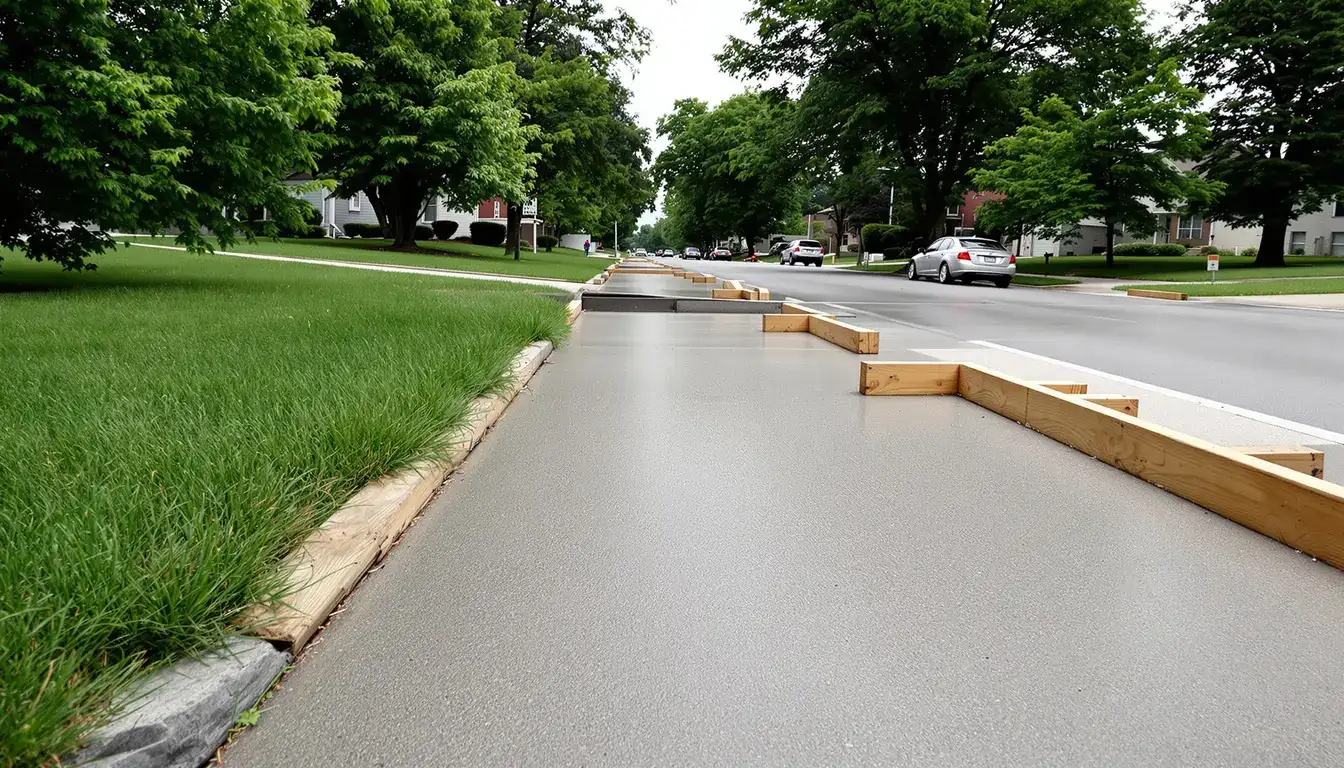
Drainage keeps water off the clay in the first place: a positive fall off the pattern, away from the house, carrying runoff to daylight. Odessa permits residential flatwork through City Hall with an efficient turnaround. Same-service work runs along I-70 in Grain Valley and Lexington. KC-metro homeowners rate Ford Concrete 4.9 on Google across 29 reviews — call (816) 721-1699 for a written estimate.
Building a stamped patio on Odessa's heavy clay?
From call to concrete — the fastest in KC.
We size the base and the joints to the most expansive ground in the metro. Call (816) 721-1699 for a free on-site estimate.
Building Stamped Concrete for Odessa conditions
Read the ground and the grade
We check the Grundy clay and the drainage on your Odessa lot so the base and joints are sized to how much it moves.
Pour a pattern and color mockup
A full-size sample so you approve the stamp mat, color, and antique in daylight before the full pour.
Strip deep and build a thick base
We remove topsoil to firm clay, compact a deeper draining stone base in lifts, and proof-roll for soft spots.
Reinforce, form, and grade the fall
Steel or fiber reinforcement, forms set, and the slab pitched to carry water off the pattern to daylight.
Pour and stamp to the window
We place the air-entrained 4,000-PSI mix, build color in two layers, and press the mat in sequence inside the plasticity window.
Cut tight control joints
Closely spaced control cuts on the grout lines while the slab is green, plus isolation joints at the house, then a release wash.
Let it release, then seal
We let efflorescence release, then seal thin with a traction additive so color and footing hold through the seasons.
Signs your Odessa Stamped Concrete needs attention
A slab cracking within a season
Corners lifting and dropping
Cracks wandering across the field
Steps at a crack
A milky haze on the finish
Spalling after a hard winter
What sets Ford apart in Odessa
Engineered for the metro's heaviest clay
Odessa's Grundy clay moves more than most metro ground, so we over-build the base and tighten the joints to match it.
A deeper, proof-rolled base
We strip deeper, compact a thicker stone base in lifts, and proof-roll it to buffer the slab from the clay's swell and shrink.
Joints and steel that control cracking
Reinforcement holds the slab level and closely spaced control joints on the pattern lines give movement a planned place to go.
4.9 stars, 29 Google reviews
KC-metro homeowners rate Ford Concrete 4.9 on Google across 29 reviews for concrete booked, poured, and finished right.
The projects behind our name
From your driveway to an Amazon warehouse — the same crew, the same standards, every project.
Taco Bell
New Construction
Overland Park, KS
Domino's Pizza
New Construction
Independence, MO
Freddy's
New Construction
Kansas City
Tidal Wave Car Wash
New Construction
Kansas City
Amazon
New Construction
Riverside, MO
Nortian Food Grade Protein Facility
New Construction
Springfield, MO
Stamped Concrete in Odessa — FAQs
Is Odessa's clay really harder to build on than the rest of the metro?
How do you keep a stamped patio from cracking on expansive clay?
Why does the base need to be deeper in Odessa?
Does a stamped slab survive freeze-thaw in Lafayette County?
Do I need a permit for a stamped patio in Odessa?
Do you work in Odessa and along the I-70 corridor?
What else we build in Odessa
Serving Odessa and the surrounding metro
Get your Odessa project moving
From call to concrete — the fastest in KC.
Get a free, no-obligation estimate for your concrete project. We serve the entire Kansas City metro — call (816) 721-1699 or request your estimate online.