Warehouse & Industrial Floors Kansas City
Slab-on-ground industrial floors — measured FF/FL flatness, hardened wear surfaces, and armored joints for distribution centers, food-grade plants, and manufacturing floors across the metro.
Warehouse & Industrial Floors in Kansas City
High-performance industrial concrete floor installation for warehouses, distribution centers, and manufacturing facilities.
Who pours warehouse and industrial floors in Kansas City?
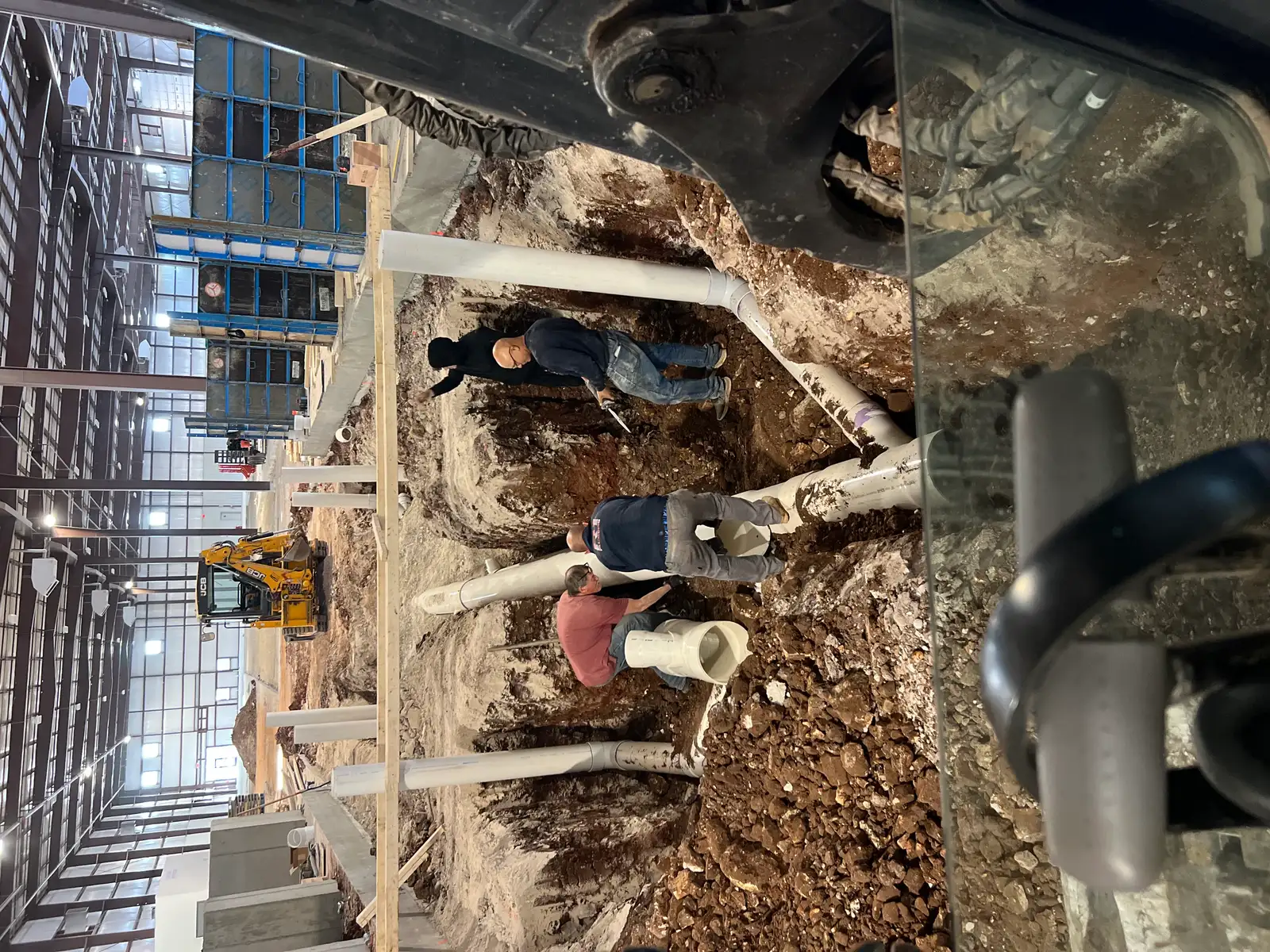
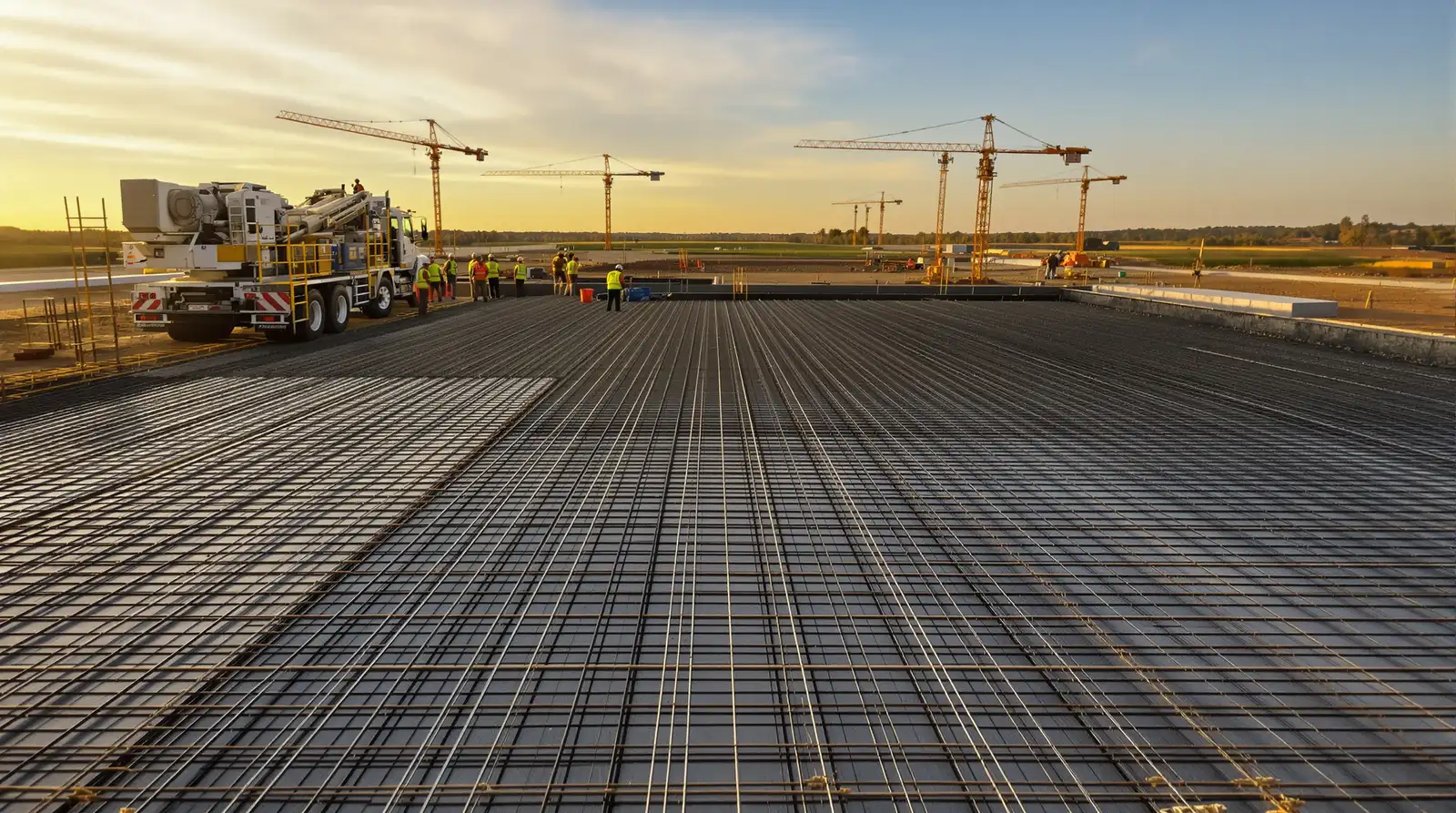
Ford Concrete Construction places slab-on-ground industrial floors across the Kansas City metro — distribution centers, manufacturing plants, and food-grade facilities. We poured site and floor concrete for Amazon in Riverside and the Nortian food-grade protein facility in Springfield, and hold a 4.9-star rating across 29 reviews. An industrial floor is engineered to ACI 302 for flatness (FF/FL), joint durability, and a wear surface matched to the traffic it carries.
An interior floor is year-round work — we pour warehouse slabs through winter under roof. A warehouse floor is a structural flat slab, so it sits alongside our structural concrete category and pairs naturally with the commercial foundations beneath the building.
We pour industrial floors in Kansas City, KS, Olathe, and Riverside among the 46 metro cities we serve.
What flatness and thickness does an industrial floor need?
Two numbers govern an industrial floor: thickness (does the slab carry the rack and forklift loads) and flatness (FF/FL), which decides whether a lift truck runs smoothly at height. A general storage floor and a wire-guided high-bay are not the same slab. The table is what we target by facility type.
| Facility type | Slab thickness | Mix (PSI) | Flatness target | Wear surface |
|---|---|---|---|---|
| General warehouse / storage | 6 in | 4,000 | FF35 / FL25 | Cured & sealed |
| Distribution / heavy forklift | 7–8 in | 4,500 | FF50 / FL30 | Dry-shake hardener |
| VNA high-bay (wire-guided) | 8 in | 5,000 | Superflat (Fmin defined path) | Dry-shake hardener |
| Food-grade / wash-down | 6–8 in | 4,500 | FF35 / FL25 + slope to drains | Sealed or polished |
| Freezer / cold storage | 6–8 in | 4,500 | FF45 / FL30 | Vapor-managed, hardened |
The FF/FL numbers are the spec most contractors leave off a proposal. We measure floor flatness after the pour and can place to a defined-traffic Fmin spec for very-narrow-aisle racking — the difference between a lift running clean at 40 feet and one that sways at the top of the mast.
How do you build a floor that survives KC soil and forklift traffic?
An industrial floor lives or dies on what is under it and how it is jointed. We build over a compacted slab-on-ground section — engineered subbase, vapor retarder where the facility needs it, and a modulus of subgrade reaction verified against the design. Kansas City’s expansive clay is managed with proper subgrade prep and moisture control; the full picture is in our soil conditions guide.
Joints are the highest-maintenance detail in any warehouse, so we cut and detail them for hard-wheel traffic and fill them with a semi-rigid filler that supports the joint edge against forklift impact. Where a floor is worn but sound, a bonded overlay or resurfacing can restore the wear surface without a full tear-out.
How much does a warehouse floor cost in Kansas City?
Industrial-floor bids move on square footage, the flatness spec (a superflat VNA floor takes more labor and equipment than FF35 storage), thickness and reinforcement for the rack and vehicle loads, and the wear surface — sealed, dry-shake hardened, or polished. We build the number from the structural design and the flatness target, not a blanket per-foot rate.
General contractors and facility developers get a firm bid with the slab section, joint layout, and flatness commitment in writing. No financing; we accept Visa, MC, Discover, Amex, debit, cash, and check.
Distribution, food-grade, and manufacturing floors
Each facility type has a non-negotiable. A distribution center needs flatness for lift speed and safety; a food-grade plant needs slope to drains and a wash-down-durable surface; a manufacturing floor needs point-load capacity under equipment pads. We poured the Nortian food-grade protein floor to its sanitary requirements and Amazon site concrete to its schedule — the same crew scopes your facility to its own spec.
General contractors building distribution and industrial space run a single concrete scope with us from foundations through truck court and lot. Working a design-build for a GC or public facility? See finished industrial work on the project gallery.
Speccing an industrial floor?
From call to concrete — the fastest in KC.
Send us the racking layout and flatness requirement — we’ll return a slab section, joint plan, and FF/FL commitment. Call (816) 721-1699 or request a consultation.
How We Handle Warehouse & Industrial Floors in Kansas City
Design and flatness spec
We set slab thickness, reinforcement, and the FF/FL (or Fmin) target from the racking, vehicle, and facility requirements, then bid to it.
Subbase and vapor
We place and compact the engineered subbase, verify the subgrade reaction, and install the vapor retarder where the use demands it.
Reinforce and layout
Rebar, dowels at construction joints, and the joint layout go in to control cracking and transfer load across panels.
Place to flatness
We place the 4,000–5,000 PSI mix and finish to the flatness target — laser-guided screeding on the floors that call for it.
Harden and cure
A dry-shake hardener is broadcast where wear demands it; we cure the slab properly to prevent dusting and curling.
Cut and fill joints
Joints are saw-cut on time and filled with a semi-rigid filler that supports the edge against hard-wheel forklift traffic.
Signs You Need Warehouse & Industrial Floors
Forklifts bouncing at height
A lift that sways at the top of the mast means the floor missed its FF/FL flatness — a safety and racking problem, not just a comfort one.
Spalled, broken joint edges
Crumbling joints under hard wheels were never armored or filled with a semi-rigid material to support the edge against impact.
Surface dusting under traffic
A floor that powders under forklift tires lacks a hardened or properly cured wear surface and will keep shedding fines onto product.
Cracks radiating from rack posts
Cracking at column and rack bases points to a slab too thin for the point loads, or missing reinforcement at the load concentration.
Curling at joints and edges
Slab corners lifting at the joints indicate a moisture or curing imbalance top to bottom — a trip and impact hazard for traffic.
Standing water on the floor
In a wash-down or food-grade space, water that will not reach a drain means the slab was placed flat instead of sloped to the drainage design.
Why Kansas City Chooses Ford Concrete
Amazon and food-grade experience
We poured site and floor concrete for Amazon in Riverside and the Nortian food-grade protein plant in Springfield — real industrial slabs, not just flatwork.
We measure FF/FL
Floor flatness and levelness are specified and verified after the pour, up to defined-traffic Fmin for very-narrow-aisle racking — the number most contractors leave off the bid.
Joints built for hard wheels
Armored and semi-rigid-filled joints support the edge against forklift impact, the detail that determines a warehouse floor’s real maintenance cost.
Year-round, under roof
Interior floors pour through winter. We schedule slab work inside the dried-in shell so the building stays on its construction timeline.
Trusted by National Brands
From your driveway to an Amazon warehouse — the same crew, the same standards, every project.
Taco Bell
New Construction
Overland Park, KS
Domino's Pizza
New Construction
Independence, MO
Freddy's
New Construction
Kansas City
Tidal Wave Car Wash
New Construction
Kansas City
Amazon
New Construction
Riverside, MO
Nortian Food Grade Protein Facility
New Construction
Springfield, MO
Get Your Free Warehouse & Industrial Floors Estimate in Kansas City
Or call us directly: (816) 721-1699
Warehouse & Industrial Floors in Kansas City — FAQs
What is FF/FL flatness and why does it matter?
How thick should a warehouse floor be?
Can you pour a warehouse floor in winter?
How do you keep the joints from breaking down?
Do you build food-grade and freezer floors?
Can you resurface a worn industrial floor?
Proof at Scale
See This Work at Commercial Scale
Ready to Get Started?
From call to concrete — the fastest in KC.
Get a free, no-obligation estimate for your concrete project. We serve the entire Kansas City metro — call (816) 721-1699 or request your estimate online.