
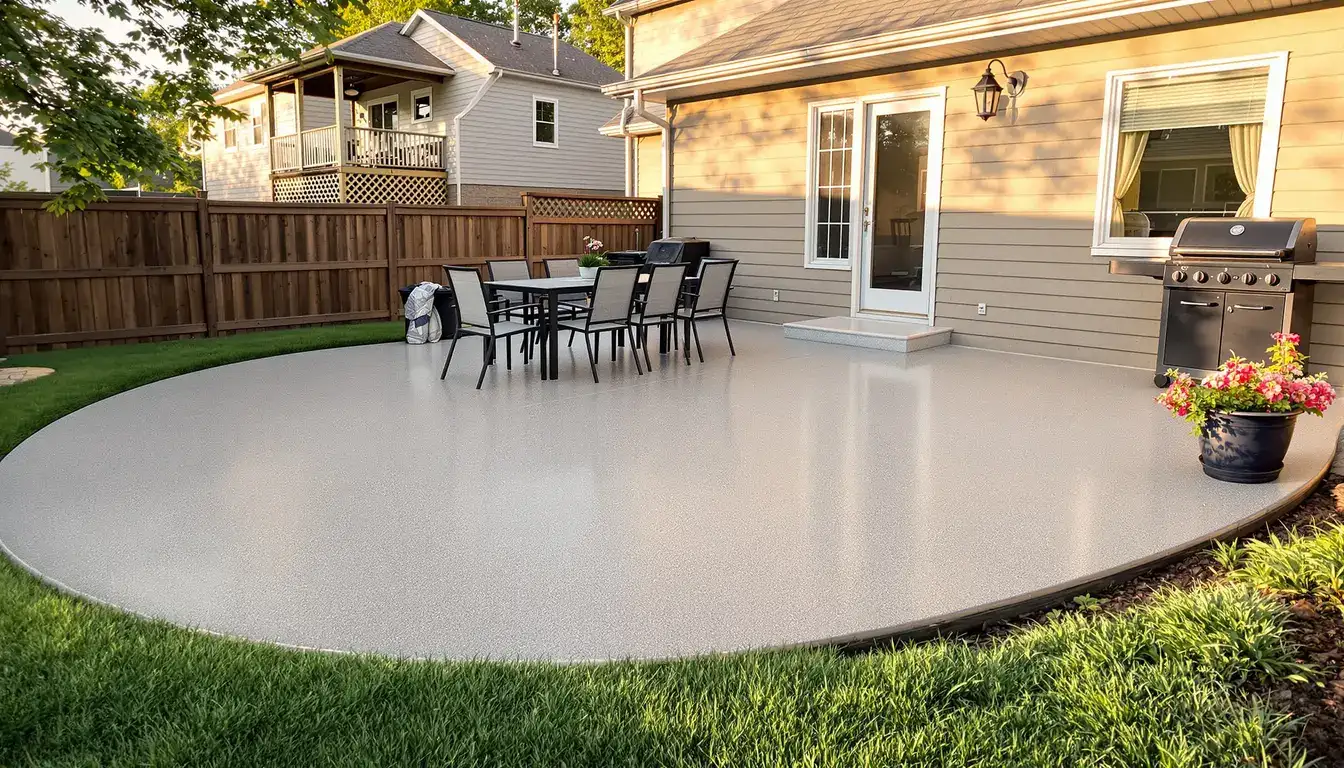
Concrete Patios & Outdoor Spaces in Greenwood, MO
Concrete patios and outdoor rooms for Greenwood — from a feature-ready pour in Greenwood Estates to a worn slab off historic Main Street, built for Jackson County clay
Concrete Patios & Outdoor Spaces in Greenwood
Custom concrete patio design and installation for backyards, outdoor living areas, and commercial courtyards. Ford Concrete serves Greenwood, MO and the entire Kansas City metro with more than a decade of experience and a 5-star reputation.
Greenwood at a Glance
- Population
- 6,125
- State
- Missouri
- County
- Jackson County
- Schools
- Lee's Summit R-VII School District
Building a Greenwood patio that carries more than chairs
A lot of Greenwood's outdoor projects are full outdoor rooms — a patio with an outdoor kitchen, a built-in fireplace or fire feature, a pergola over it — the kind of space the newer homes out in Greenwood Estates and around Lake Greenwood are built for. Put that much weight on a slab over eastern Jackson County's Wymore-series clay, and the concrete has to be engineered for it, not simply poured flat.
A patio that carries built-in features starts under the ground: a thickened, reinforced pad or footing under every heavy mass so it moves with the slab instead of tearing away from it, sleeves for gas, water, and electric run before the pour, and a compacted base that holds the whole thing steady on clay that swells and shrinks with the seasons. Get the structure right and a concrete patio holds a kitchen and a fireplace dead-level for years; skip it and the features crack away from the slab the first time the clay moves.
Footings and sleeves under an outdoor room
The heavy parts of an outdoor room concentrate load in a way a bare patio never does. Under a built-in fireplace or an outdoor kitchen we pour a thickened, reinforced footing sized to the mass, so it bears on firm ground below the clay's active zone instead of riding the same thin slab as the seating area. Where those features sit, the slab and the footing are tied and detailed to move together — we pour the flatwork and the structural base and coordinate with whoever sets the kitchen or the fireplace on top.
The perimeter gets the same care as any patio here: thickened and locked with a restraint point so the edge carries itself when the clay shrinks back in a dry spell. Before the pour we sleeve every gas, water, and electrical run so nothing has to be cut in later. The slab is 4,000 PSI with air entrainment for Missouri freeze-thaw and fiber or rebar through it — the same mix and base we pour under patios in Lee's Summit and Blue Springs, sized up here for what the slab has to hold.
Keeping features from cracking away from the slab
The most common failure in an outdoor room isn't the seating slab — it's the joint between the heavy feature and everything around it. A fireplace footing and a patio slab move at slightly different rates on clay, so without a break between them the lighter slab cracks along the feature. We set an isolation joint around each built-in mass so the two can move independently, the same way the whole pad is isolated from the house.
Across the rest of the patio we saw contraction joint lines a quarter of the slab's depth deep, spaced about two to three times the slab thickness apart in feet — a four-inch pad gets a line every eight to twelve feet — so no panel is big enough to crack itself. And at any inside corner, where an L-shaped room wraps a kitchen or a bump-out, a re-entrant corner throws a crack off the point unless a control line runs through it. Planned joints around the features and across the field are what keep an outdoor room reading as one clean surface.
Draining a patio built around features
Built-ins complicate drainage: a kitchen run or a fireplace hearth can dam water on a slab if the fall wasn't planned around them. Every pad we pour falls about a quarter-inch per foot to daylight — positive drainage that we route around the features so a downpour reaches the yard instead of pooling behind a hearth or against the house, where standing water soaks the clay and drives the swelling.
The door and the features set the grade together. On a back slider or walkout the finished threshold elevation sits a safe step below the sill with the ground falling away, and around a kitchen island or seat wall we shape the pitch so water always has a path out. Greenwood's rolling ground helps the runoff, but only if the slab is graded to use it — on a flatter lot we'll tie a downspout in or cut a shallow swale so the water clears the patio for good.
Finishing an outdoor room in Greenwood
On a patio this visible the finish carries the look of the whole space. The everyday call is a broom vs stamped finish decision: a broom finish gives a clean, slip-steady surface that wears well and keeps its footing wet, while stamped concrete can pattern the pad to read like stone or plank and tie into the kitchen and fireplace. On a large or wrapping pour we lay the control lines out as a joint pattern continuity so the joints frame the features instead of cutting across them at random. Our gallery shows stamped and colored patios we've poured across the metro.
Before any stamp or color goes down we pour a small mockup so you sign off on the exact texture and shade against your own house and hardscape, not off a brochure. Matching a colored or stamped field to a stone kitchen or a fireplace surround is the kind of detail that reads as designed when it's decided up front and looks like an afterthought when it isn't.
Replacing an aging slab off Main Street
Greenwood's core is old — the Mercantile storefronts on Main Street date to the 1910s, and the mid-century and 1990s homes around the historic district have patios that are reaching the end of their run. Those first slabs tend to be thin and lightly jointed, and on the clay they scale, crack, or lift over time. The call on one is resurface or rebuild, and it turns on what's under the wear: a slab that's solid underfoot but dull or flaked on top can take a bonded overlay, while one that rocks, pumps at the cracks, or has heaved into a trip edge is past its base and needs to come out.
When we rebuild one we put back the compacted base, the drainage, and the joints the original pour skipped — and if you're adding an outdoor kitchen or a fire feature, a rebuild is the moment to pour the footings and sleeves in from the start rather than cutting them into a slab later.
Permits, gas, and inspection in Greenwood
Most patios in Greenwood need a permit, and an outdoor room usually needs more than one — the City of Greenwood issues the building permit, and a gas line to an outdoor kitchen or fireplace or a new electrical circuit draws its own trade permits and inspections. A roofed or attached structure also gets a closer look at setbacks and lot coverage against your plat. We handle the building side and coordinate the trade inspections so the whole project clears.
Greenwood sits in Jackson County at the MO-150 and US-71 junction, so the soil and frost rules are Missouri's — MoDNR guidance and a 36-inch frost depth we carry the footings and the compacted base below. Being an easy run south for us makes it simple to walk your lot, lay out the room, and give you a written number before anything starts.
Planning a patio or outdoor room in Greenwood?
From call to concrete — the fastest in KC.
From a feature-ready pour in Greenwood Estates to a worn slab off historic Main Street, an outdoor room lasts when the footings, sleeves, and joints are built for Jackson County clay from the start. Ford pours the base, sets the sleeves, and hands you a written number. Call (816) 721-1699 to set up a site visit.
What makes a Greenwood Concrete Patios & Outdoor Spaces job different
Walk the lot and lay out the room
We look at how your Greenwood yard drains and where the kitchen, fireplace, and seating will go, and check the clay for how much it will move through the seasons.
Plan the footings, sleeves, and joints
We size a footing under each heavy feature, mark the gas, water, and electric runs to sleeve, and plan the isolation breaks and control lines before a shovel moves.
Grade and build the base
We cut to firm subgrade and build a compacted base in thin, tamped lifts, thickening the perimeter and the feature footings so they carry their load on clay.
Set sleeves, forms, and edge restraint
We run the sleeves for the trades, form the pad, lock the perimeter restraint, and grade the pitch away from the house and around the features.
Place the slab
We place a 4,000-PSI air-entrained slab with fiber or rebar, floating in the broom or stamped finish you approved off the mockup.
Cut the joints on time
We saw the contraction joints a quarter of the slab deep on a tight window and set the isolation breaks around the features, so the pad opens along planned lines.
Seal, cure, and walk it
We finish an even cure, seal the surface, and walk the room with you, going over how the footings, joints, and drainage hold it together.
Is your Greenwood Concrete Patios & Outdoor Spaces failing?
A fireplace or island cracking away from the slab
A gap opening between a built-in feature and the patio around it is the two masses moving at different rates on clay — a sign the feature was set without an isolation joint.
A kitchen run cut into a finished slab
Sawing a gas or water line into a cured patio means the sleeves weren't poured in — it weakens the slab and invites cracks along the cut.
Water pooling behind a hearth or seat wall
Runoff damming against a feature instead of clearing the pad soaks the clay under it, and points to a slab graded without the features in mind.
Random cracks across an outdoor room
Cracks wandering across a large pad mean the contraction joints were spaced too far apart to control where the clay makes it move.
An edge or corner dropped low
A pad tipped at an edge is the Wymore clay shrinking away from a perimeter that was too thin to carry itself.
A flaking, scaling surface
Concrete shedding in thin sheets is a slab poured without an air-entrained mix, losing its skin to Missouri freeze-thaw.
The Ford difference on Greenwood Concrete Patios & Outdoor Spaces
Engineered for outdoor rooms
We pour your Greenwood patio with footings and sleeves for a kitchen, fireplace, or pergola, so the features hold level on Jackson County clay instead of cracking away from the slab.
An easy run south of the metro
Greenwood sits at MO-150 and US-71, a short trip for us to walk your lot, lay out the room, pull the permits, and pour it.
Commercial-grade base work
Every Greenwood patio gets the base and reinforcement we put under commercial slabs — the part that decides whether a pad holds up on clay.
4.9 stars across 29 reviews
Ford Concrete has earned a 4.9-star average over 29 Google reviews from homeowners around the Kansas City metro.
Commercial work behind our Greenwood crews
From your driveway to an Amazon warehouse — the same crew, the same standards, every project.
Taco Bell
New Construction
Overland Park, KS
Domino's Pizza
New Construction
Independence, MO
Freddy's
New Construction
Kansas City
Tidal Wave Car Wash
New Construction
Kansas City
Amazon
New Construction
Riverside, MO
Nortian Food Grade Protein Facility
New Construction
Springfield, MO
Book your Greenwood Concrete Patios & Outdoor Spaces estimate
Or call us directly: (816) 721-1699
Concrete Patios & Outdoor Spaces in Greenwood — FAQs
Can a patio slab hold an outdoor kitchen and fireplace on clay?
Do the gas and electric lines go in before the concrete?
How thick does a patio need to be for heavy features?
Can you match a stamped patio to my stone kitchen or fireplace?
Can you resurface my old Greenwood patio?
Do I need a permit for an outdoor room in Greenwood?
Related concrete services in Greenwood
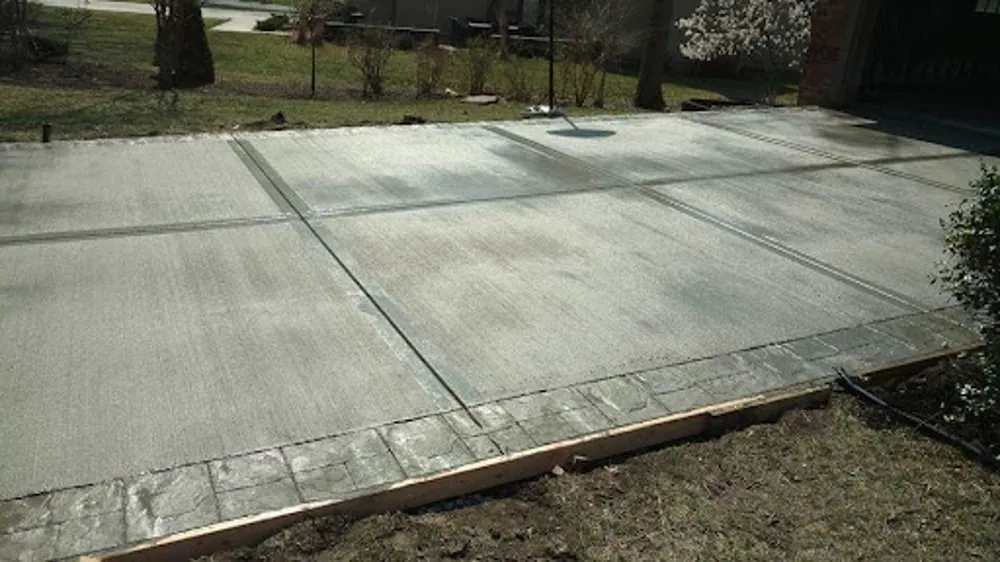
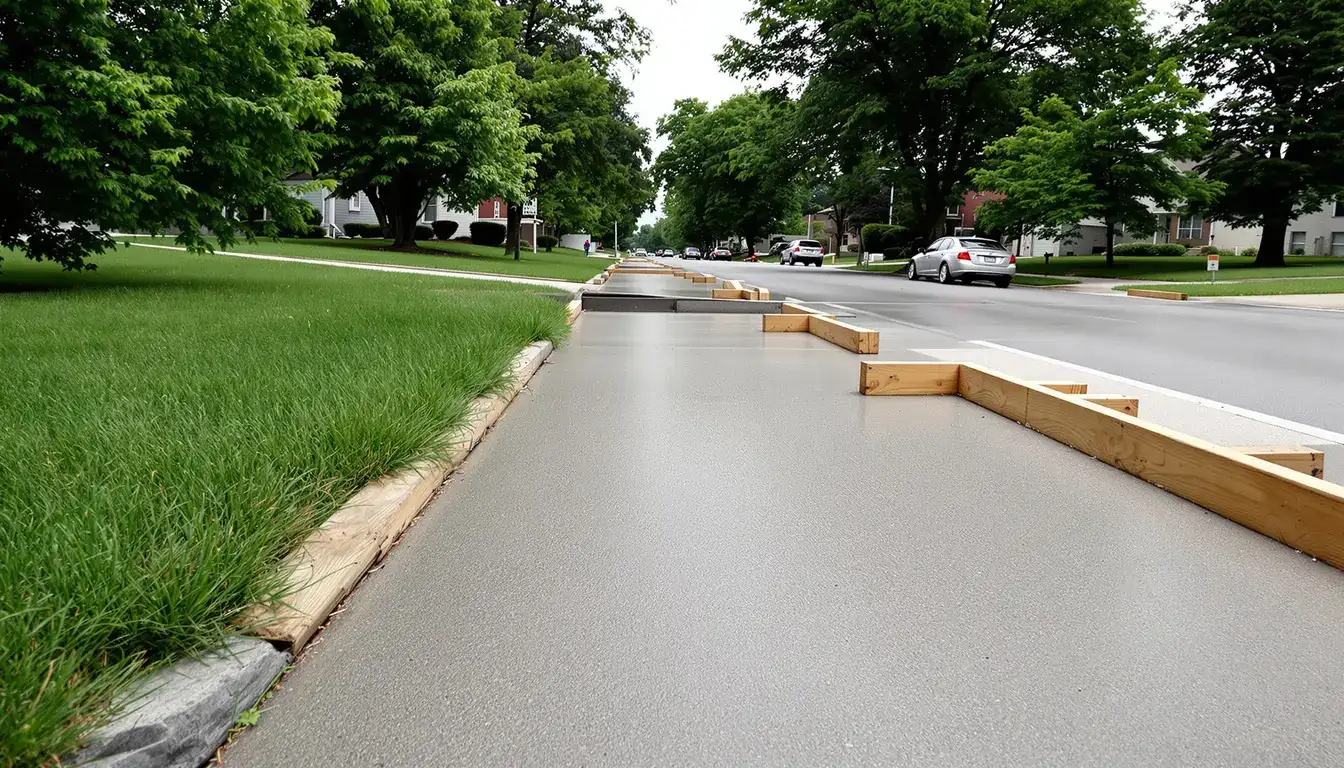
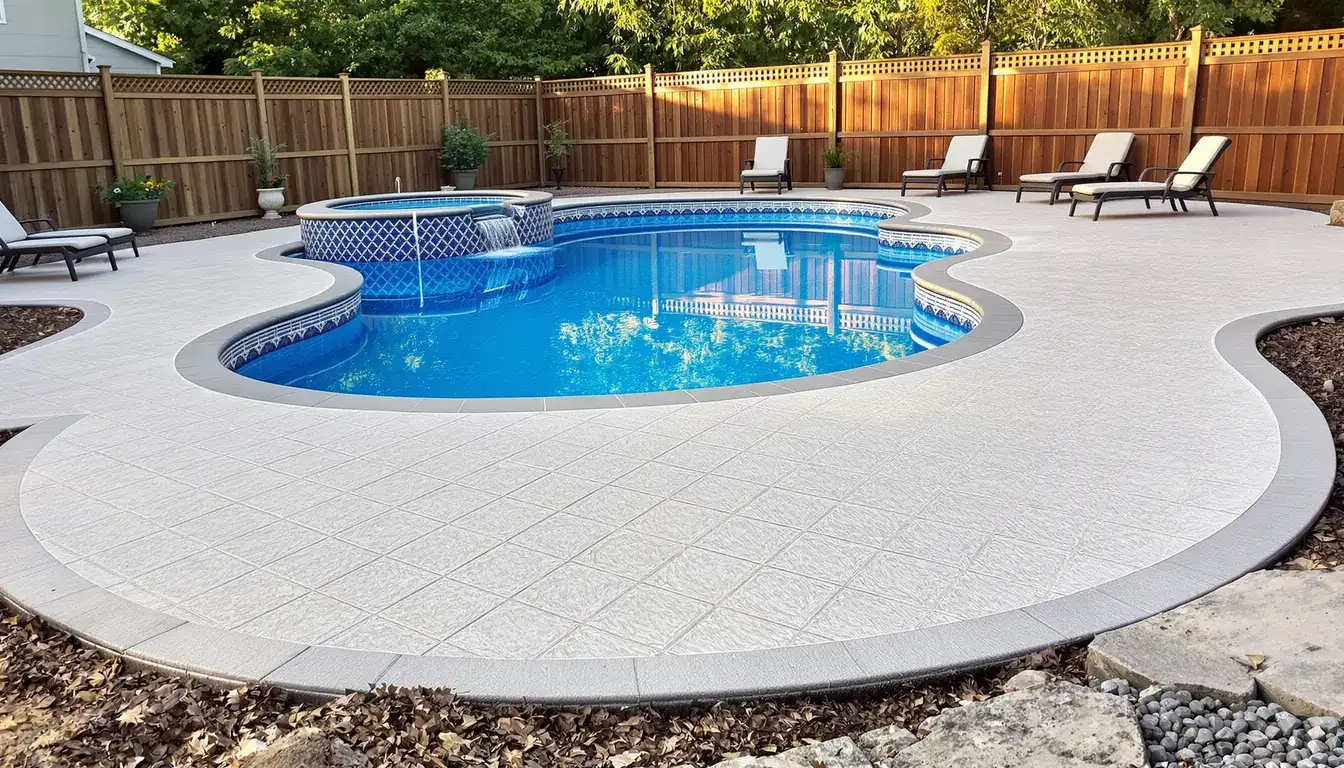
Nearby Greenwood-area projects
Let's build your Greenwood Concrete Patios & Outdoor Spaces
From call to concrete — the fastest in KC.
Get a free, no-obligation estimate for your concrete project. We serve the entire Kansas City metro — call (816) 721-1699 or request your estimate online.