
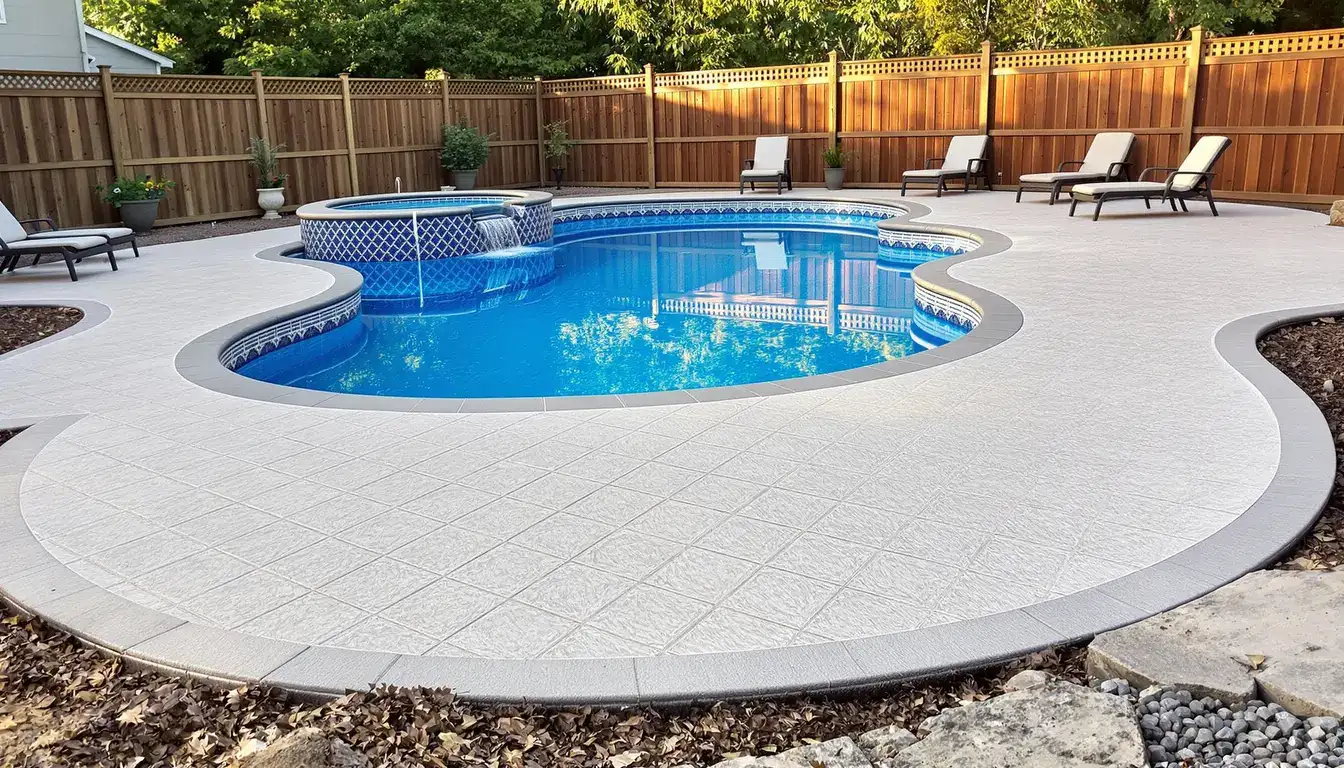
Concrete Pool Decks in Leavenworth, KS
Pool decks built for Leavenworth's bluff ground — the wind-laid loess above the Missouri River that stands tall dry and slumps once it gets wet. From the Historic Downtown to the neighborhoods off 4th Street, we compact the base, route the water clear, and finish it slip-safe.
Concrete Pool Decks in Leavenworth
Slip-resistant concrete pool deck installation and resurfacing for residential and commercial swimming pools. Ford Concrete serves Leavenworth, KS and the entire Kansas City metro with more than a decade of experience and a 5-star reputation.
Leavenworth at a Glance
- Population
- 37,015
- State
- Kansas
- County
- Leavenworth County
- Schools
- Leavenworth Public Schools (USD 453)
What makes a Leavenworth pool deck last?
A Leavenworth pool deck lasts when the ground under it is compacted to firm bearing, the water is graded away before it can soak the soil, an isolation joint keeps the deck loose from the pool shell, and the surface is broomed for slip resistance. On the loess that built this city's bluffs, keeping water off the ground is the detail that carries the whole job.
Leavenworth — the First City of Kansas — sits on scenic bluffs above the Missouri River, its Historic Downtown and the neighborhoods off US-73/K-7 laid over wind-deposited loess. That silt stands in near-vertical bluff faces when it is dry, then softens and slumps once it saturates. A pool deck poured over it has to be built so the loess never gets the chance to take on water. We grade the deck, cut the base to firm bearing, and send runoff away from the slab on purpose.
The loess under a Leavenworth deck
Most of the metro pours decks over clay that swells and shrinks. Leavenworth is different ground. The bluffs above the river are loess — fine silt dropped by the wind over thousands of years, the same soil that lets Fort Leavenworth's terrain hold its steep, wooded faces. Dry loess is firm and carries load well. Wet loess is the problem: saturate it and the grain structure collapses, so a slab set on soaked, loose loess can drop unevenly and crack. The fix is not exotic — it is discipline about water and compaction. We keep the soil dry and packed, and the deck stays flat. You can read more in our guide to KC-area soils.
Keeping the water off the bluff soil
Two things protect a Leavenworth deck: a base that will not settle and a grade that will not let water reach the loess. We cut down to firm subgrade and rebuild the footing as compacted stone in stacked lifts, packing each layer so the deck rides on rock rather than raw silt. Then we grade the deck and the yard to carry runoff away from the slab, so water never stands against the coping and builds hydrostatic pressure under the shell. On a bluff-side lot the fall can be sharp, which helps drainage but invites erosion — so the discharge point is set where the water leaves cleanly instead of cutting a channel down the slope. The drainage plan is drawn before the first yard of concrete.
Why the deck rides free of the pool
The pool shell is locked in the ground while the deck above it moves with heat and frost. Pour the two as one and the shell/deck interface shears on the first hard Leavenworth County freeze, splitting the slab along the waterline. We hold a full-perimeter isolation joint between deck and shell so each travels on its own, and we form a cantilever coping over the bond beam — set loose so it moves with the deck instead of fighting it. It is small work at pour time and the reason the edge stays sound for decades.
A surface that grips when it's wet
A pool deck is walked barefoot and wet, so the top has to bite. We drag a broom finish across it for slip resistance so a wet deck stays sure underfoot, and for a decorative surface we set a stamped concrete sample panel in the yard so the color and texture get approved before the real pour. Leavenworth's older lots often sit near mature trees and historic homes, and we finish the deck to suit the house rather than to stand apart from it.
Sealing the deck for a river-bluff winter
Leavenworth winters run the concrete through repeated freeze and thaw, and an unsealed slab takes that as surface scaling — thin chips lifting off the top. We seal the finished deck and set a reseal interval so the surface sheds water instead of drinking it, which matters doubly on loess ground, where every gallon kept out of the soil is a gallon that can't undermine the base. A sealed deck near the river holds its finish; an unsealed one starts flaking within a few seasons.
Resurfacing an older deck, permits, and the bonding grid
An older deck behind a home in North Broadway or Shrine Park may only want a bonded overlay to reset its surface, provided the slab beneath is still sound; where the base has failed on the loess, we say plainly that a rebuild is the honest spend. A new or rebuilt deck is permitted through the City of Leavenworth, grading falls under KDHE guidance, and the electrical sign-off has to confirm equipotential bonding — the grounding grid that ties the deck into one electrical potential around the water. We book that inspection ahead of the pour so nothing gets closed in before it passes. It is the same discipline our crew carries onto the commercial slabs we pour across the metro, brought down to a Leavenworth backyard.
Ready to build your Leavenworth pool deck?
From call to concrete — the fastest in KC.
In Leavenworth, the deck starts with the bluff soil — compact the base, keep the water off the loess, and seal it for the river winters. We grade the yard, break the deck from the shell, and put a real number on paper. Call (816) 721-1699 for a site visit, usually within a day.
How we build Concrete Pool Decks that lasts in Leavenworth
Read the bluff and the ground
We study how your Leavenworth lot falls, find the low side, and check how the loess under it behaves wet and dry.
Set the drainage first
We fix a discharge point that carries runoff clear of the slab and down the slope without cutting the loess.
Cut and compact the base
We dig to firm subgrade and stack a compacted stone footing in lifts so the deck rides on rock, not raw silt.
Break the deck from the shell
We set an isolation joint around the whole pool perimeter so the deck and shell move independently without shearing.
Place, joint, and broom
We pour 4,000-PSI concrete, cut the contraction joints, and drag a broom finish for slip resistance underfoot.
Form the coping and cure
We form the cantilever coping over the bond beam, hold it loose to the deck, and cure the slab slow for strength.
Bond, seal, and walk it
We schedule the equipotential bonding inspection, seal the deck against freeze-thaw, and walk it with you before we pull out.
When Concrete Pool Decks in Leavenworth is ready to replace
The deck dropping at one corner
A section settling low usually means the loess base took on water and collapsed under load, most often where drainage let runoff pond against the slab.
A crack along the waterline
A split tracing the coping means the deck was cast tight to the shell with no isolation joint, so the two sheared apart on a hard freeze.
Surface flaking off the top
Thin chips lifting away is freeze-thaw scaling, nearly always because the deck was left unsealed through Leavenworth's river-bluff winters.
A washed rut down the slope
Erosion channeling beside a bluff-side deck means runoff was never given a discharge point, so it cut its own path through the loess.
A slick surface when wet
A deck that turns slippery wet has lost its broom texture or was troweled too smooth — a real hazard around a pool with kids.
Standing water against the coping
Water pooling at the edge means the deck wasn't pitched away from the shell, so it soaks the ground and pushes on the pool wall.
Why Leavenworth homeowners call Ford
Built for loess, not clay
Leavenworth's bluff soil is wind-laid loess, firm when dry and weak when wet. We compact the base and route the water so the ground never softens under the deck.
Water kept off the ground
On a bluff-side lot we grade the deck and yard to a discharge point, carrying runoff clear of the slab before it can soak the loess or cut the slope.
Sealed for the river winters
Freeze-thaw scales an unsealed deck. We seal the slab and set a reseal schedule so the surface sheds water instead of flaking.
A number in writing
We read the lot, draw the deck to scale, and hand you a written scope and price — an honest figure with no drift and no pressure to sign.
Where our Concrete Pool Decks crews have delivered
From your driveway to an Amazon warehouse — the same crew, the same standards, every project.
Taco Bell
New Construction
Overland Park, KS
Domino's Pizza
New Construction
Independence, MO
Freddy's
New Construction
Kansas City
Tidal Wave Car Wash
New Construction
Kansas City
Amazon
New Construction
Riverside, MO
Nortian Food Grade Protein Facility
New Construction
Springfield, MO
Get your free Concrete Pool Decks estimate in Leavenworth
Or call us directly: (816) 721-1699
Concrete Pool Decks in Leavenworth — FAQs
Is Leavenworth's ground really different from the rest of the metro?
Why does the base matter so much on loess?
My lot sits on the bluff and falls off sharply — is that a problem?
Why can't the deck be poured against the pool?
Can you resurface my older Leavenworth deck instead of replacing it?
Do I need a permit for a pool deck in Leavenworth?
More Leavenworth concrete services
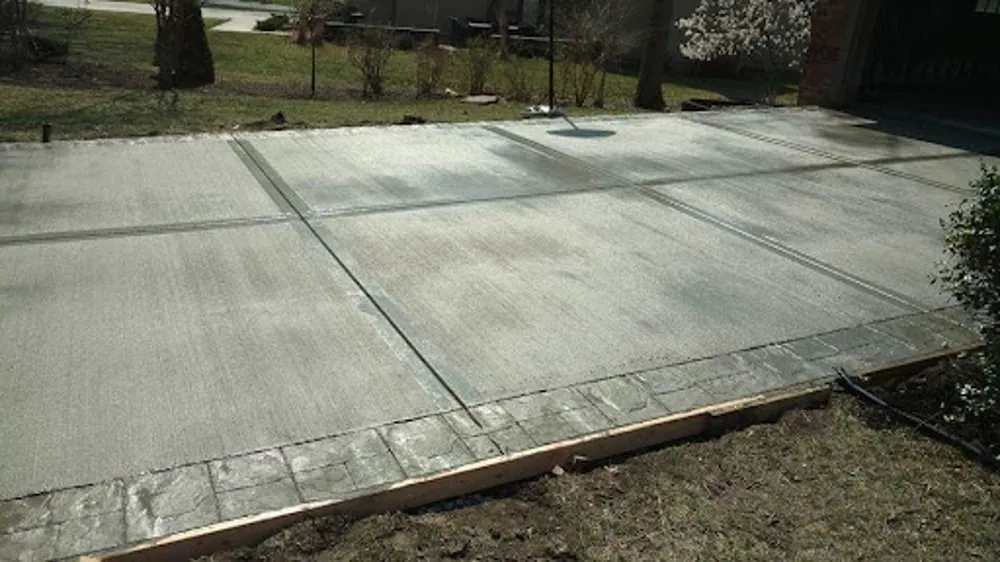
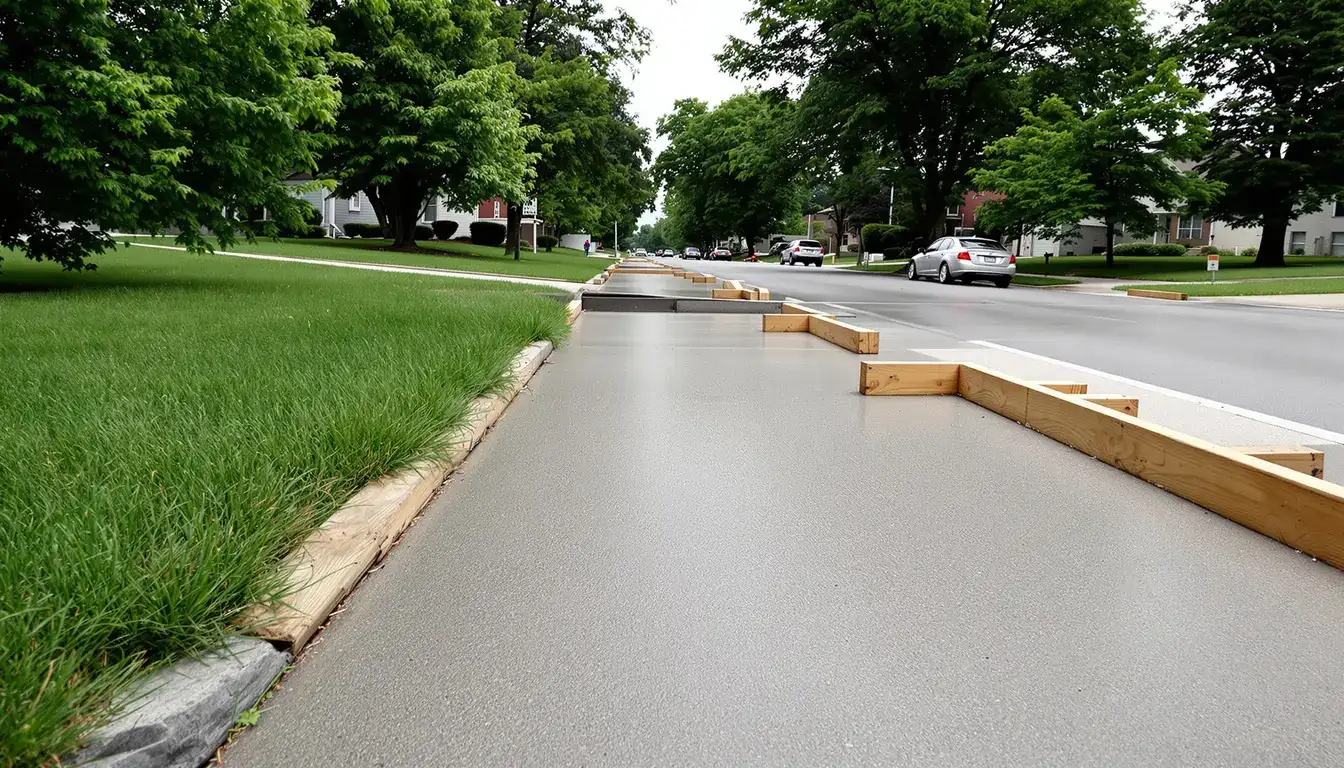
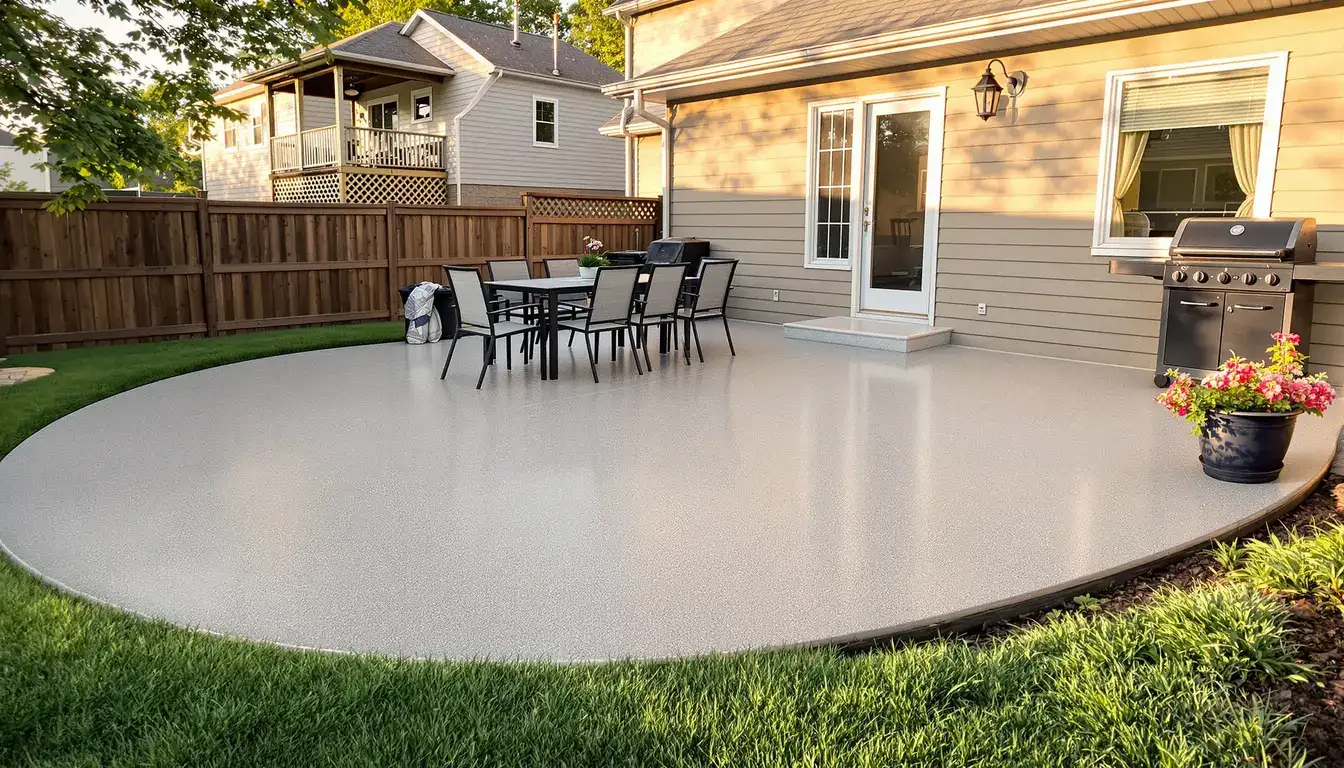
Concrete Pool Decks across the Leavenworth County area
Ready to pour in Leavenworth?
From call to concrete — the fastest in KC.
Get a free, no-obligation estimate for your concrete project. We serve the entire Kansas City metro — call (816) 721-1699 or request your estimate online.