
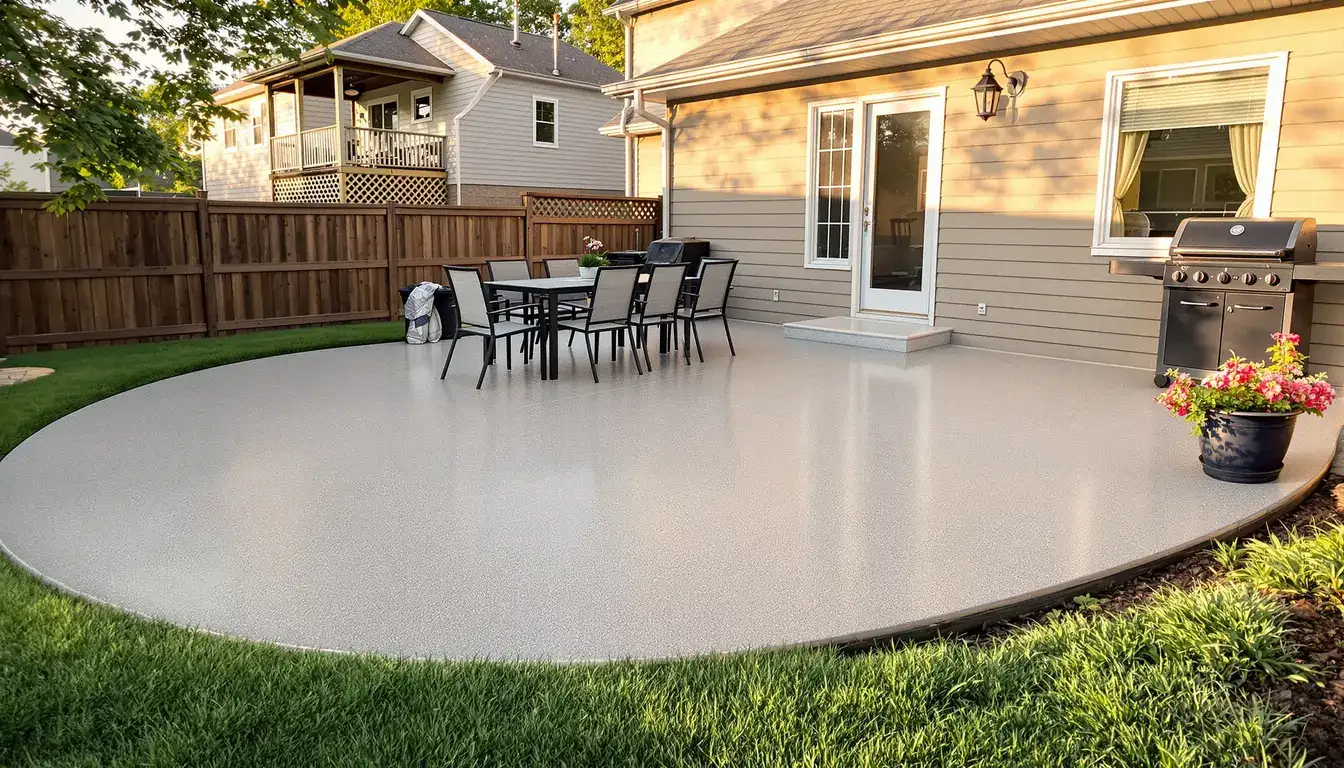
Concrete Patios & Outdoor Spaces in Leavenworth, KS
Concrete patios for Leavenworth — a compacted base, real drainage, and joints built for the loess silt of the Missouri River bluffs, from the neighborhoods near Fort Leavenworth to the historic downtown
Concrete Patios & Outdoor Spaces in Leavenworth
Custom concrete patio design and installation for backyards, outdoor living areas, and commercial courtyards. Ford Concrete serves Leavenworth, KS and the entire Kansas City metro with more than a decade of experience and a 5-star reputation.
Leavenworth at a Glance
- Population
- 37,015
- State
- Kansas
- County
- Leavenworth County
- Schools
- Leavenworth Public Schools (USD 453)
Loess silt is what settles a Leavenworth patio
A concrete patio in Leavenworth holds up when it rides a compacted base, is cut loose from the house with an isolation joint, and sheds water on a positive drainage fall — and on the loess silt of the river bluffs, keeping water out of that ground matters more to how long it lasts than any finish on top.
Leavenworth sits on loess, a wind-laid silt that stands in the near-vertical bluffs above the Missouri River and behaves nothing like the clay under most of the metro. Dry, it's firm and holds a slab well. Let water into it and its open, powdery structure gives way, so a Leavenworth patio doesn't ride up on a swelling soil the way a Jackson County slab does — it drops, settling wherever a downspout or a lost slope has been feeding the silt underneath. Pack the ground right and keep the water off it, and loess carries a patio quietly for decades; neglect either and the slab sinks on the silt's terms.
Building a base that holds silt in place
The build starts underground, because a loess lot is won there. We strip the topsoil and any loose, dry-powdered silt, then bring a compacted base up in lifts, packing each one so the slab bears on stone we've keyed together rather than on silt that was never consolidated. Over it we pour four inches of 4,000-PSI concrete and separate the patio from the house with an isolation joint, so the two can settle on their own without prying at the wall.
Where the patio meets a step or a stoop, we set a restraint point to hold its position while the ground finds its level. On loess the base earns a keep it doesn't have to on clay: it lays a firm, draining blanket between the concrete and a silt that would otherwise soften and compress the first time it stayed wet. That packing and grading is the work that decides whether a Leavenworth patio settles evenly or not at all, and it's all finished before any concrete is ordered.
Keeping water off silt that washes and slumps
On loess, drainage isn't only about a dry surface to sit on — it's about keeping water out of a silt that softens when it's saturated and cuts fast when it runs. Water that stands at a low edge or spills off an ungraded downspout soaks the loess beneath the slab, and that softened silt compresses, dropping the patio unevenly. We build every patio to positive drainage, an unbroken fall away from the house that carries rain off the surface before it can pool or reach the ground below.
Leavenworth's bluff lots add a second problem: plenty of back yards fall toward the river, and running water on bare loess undercuts a slab edge from the side. We fix the threshold elevation so the finished patio sits a step below the door, then carry the grade out and down and protect the low edge where the fall leaves the slab, directing runoff onto ground that can take it rather than letting it gully the silt out from under the concrete. On a steep North Broadway or Shrine Park lot, that bit of edge protection is often what separates a patio that holds from one that slumps toward the drop.
Where a settling slab cracks, and how joints stay ahead of it
Silt rarely cracks a patio all at once; it works a difference — one corner sitting on well-packed base, another over a spot that took on water — until the slab breaks between them. The defense is joints cut before the concrete decides for itself. We saw contraction joints into the fresh slab at a spacing set by its thickness, giving it planned lines to move along as sections settle at slightly different rates. Cut early and deep enough, those lines carry the movement; left out, a loess slab finds its own crack, and it rarely picks a spot you'd want.
Inside corners take the sharpest of that stress. Where a patio wraps a stoop or steps around the back of the house, the pull concentrates at the re-entrant corner, so we run a joint straight out of every notch to relieve it. On the older shaded lots around the historic downtown we also cut back the tree roots that would lever a slab edge up from beneath — root heave and silt settlement working against each other are what age a Leavenworth patio fastest.
Choosing a finish for a historic Leavenworth back yard
Leavenworth's older homes — the brick and stone stock around the historic district — set a high bar for what a back-yard patio should look like, and the finish is where that gets settled. A broom vs stamped finish is the first fork: a broom finish is the durable, slip-resistant, value surface, while a stamped finish presses the texture of stone, brick, or plank into the slab for a finished outdoor room that reads with the house.
Because the color and texture are worked into the concrete as it cures, we pour a mockup on your own ground first, so you approve the exact look in Leavenworth light before the full patio goes down. We also lay the joints to fall in line with the pattern rather than cut across it, so the joint pattern continuity reads as part of the design instead of an afterthought — the detail that makes a stamped patio look built rather than pressed.
Replacing a worn slab in the older neighborhoods
The neighborhoods around the historic downtown carry patios and walks that have been on native silt for decades — thin, unreinforced slabs, cracked through, tilted back toward the house, or spalled down to the aggregate by freeze-thaw and deicers. On a slab that old, a patch buys a season, because the trouble is the ground and the missing base, not the surface you can see.
The call between resurfacing and rebuilding comes down to what's under the wear. A slab that's only surface-worn — still solid underfoot, still pitched right, no cracks crossing it end to end — takes a bonded resurfacing overlay that renews the top without a tear-out. One that's cracked through, lost its slope, or begun shedding water back toward the house needs a rebuild on a real compacted base, and that's the honest call we'll give you. We run the same patio work through Lansing, Basehor, and Tonganoxie, so we read Leavenworth County loess the same from one lot to the next.
Do you need a permit for a patio in Leavenworth?
Leavenworth requires a permit for concrete flatwork, pulled through the City of Leavenworth. A same-footprint replacement is routine; a new patio, a larger footprint, or any change to how the lot drains needs the permit and an inspection, which we file and schedule so the work passes the first time — the same visit that checks the positive drainage runs away from the house. Kansas stormwater is regulated by KDHE, not Missouri's MoDNR, a line that matters the moment a job disturbs enough ground to trip a state threshold.
If you're weighing more than a patio, our Leavenworth services page covers patios, driveways, and repair on a single visit, and the patio service page lays out the full range of finishes. Leavenworth and KC-metro homeowners rate Ford 4.9 on Google across 29 reviews, and the crew that pours heavy commercial flatwork is the same one that builds your back-yard patio. Call (816) 721-1699 for a written estimate after a site visit, usually within 24 hours.
Ready for a Leavenworth patio that settles even and stays flat?
From call to concrete — the fastest in KC.
Loess firms up dry and gives way wet. We pack the base and set the drainage that keeps a slab level on it. Call (816) 721-1699 for a site visit, usually within 24 hours, and a written number.
How we build Concrete Patios & Outdoor Spaces that lasts in Leavenworth
Walk the lot and read the silt
We look at the existing slab or bare ground, trace where water runs across the loess, and lay out what the base needs before any concrete.
Cut down to firm silt
We take out the old slab and dig through the loose, dry surface silt until we reach ground firm enough to carry a base.
Build the base up in lifts
We add clean stone in thin lifts, compacting each one and shaping the fall — the step that decides whether a slab holds its level on loess.
Form and pitch below the threshold
We set the forms to drop the slope a step under the door for positive drainage, with an isolation joint holding the patio off the house.
Pour and finish 4,000-PSI concrete
We place the slab and float in your broom or stamped finish, in a mix air-entrained for the freeze-thaw swings above the river.
Saw the joints and detail the corners
We cut contraction joints early and carry one out of every inside corner, so a settling slab moves along the lines we chose.
Seal, cure, and protect the edge
We seal with an eye on vapor transmission, cure the slab, shield the graded low edge from runoff, and walk the finished patio with you.
When Concrete Patios & Outdoor Spaces in Leavenworth is ready to replace
A patio corner that keeps sinking
A corner dropping while the rest holds is loess that softened and compressed under one spot, usually where water has been getting in.
A slab edge undercut on a slope
A patio edge slumping toward the river bluff is runoff cutting the silt out from beneath it — an erosion problem, not just a crack.
A puddle that won't drain off
Water sitting on the slab after a rain means the fall was lost or never built in, and on loess that standing water is what soaks and softens the ground beneath it.
A crack leaving an inside corner
A split running from the notch of an L-shaped patio is a re-entrant corner with no joint to release the pull a settling slab puts on it.
An old surface pitting and peeling
Flaking on an older Leavenworth slab is freeze-thaw and deicer scaling on concrete poured before air-entrainment was standard practice.
Cloudy patches on a sealed slab
Milky blotches under the sealer usually mean trapped moisture with nowhere to go; a reseal picked for vapor transmission lets it breathe and clears.
Why Leavenworth homeowners call Ford
We build for silt that settles when it's wet
Leavenworth's loess firms up dry and gives way wet. We pack a base and set the drainage so a patio settles evenly and stays flat.
Bluff-edge lots handled right
On a lot that falls toward the river, we protect the low edge so runoff doesn't cut the silt out from under your slab.
Overlay or rebuild, told straight
A surface-worn historic-district slab we resurface. One cracked through we rebuild. You get the honest call, not the bigger invoice.
4.9 stars, 29 Google reviews
Leavenworth and KC-metro homeowners rate Ford 4.9 on Google across 29 reviews for concrete work across the metro.
Where our Concrete Patios & Outdoor Spaces crews have delivered
From your driveway to an Amazon warehouse — the same crew, the same standards, every project.
Taco Bell
New Construction
Overland Park, KS
Domino's Pizza
New Construction
Independence, MO
Freddy's
New Construction
Kansas City
Tidal Wave Car Wash
New Construction
Kansas City
Amazon
New Construction
Riverside, MO
Nortian Food Grade Protein Facility
New Construction
Springfield, MO
Get your free Concrete Patios & Outdoor Spaces estimate in Leavenworth
Or call us directly: (816) 721-1699
Concrete Patios & Outdoor Spaces in Leavenworth — FAQs
What kind of soil is under a Leavenworth patio?
Why does one corner of my patio keep sinking?
Can you build a patio on a lot that slopes toward the river bluff?
Can you resurface my old patio instead of replacing it?
Do I need a permit for a patio in Leavenworth?
How long does a patio take to build in Leavenworth?
More Leavenworth concrete services
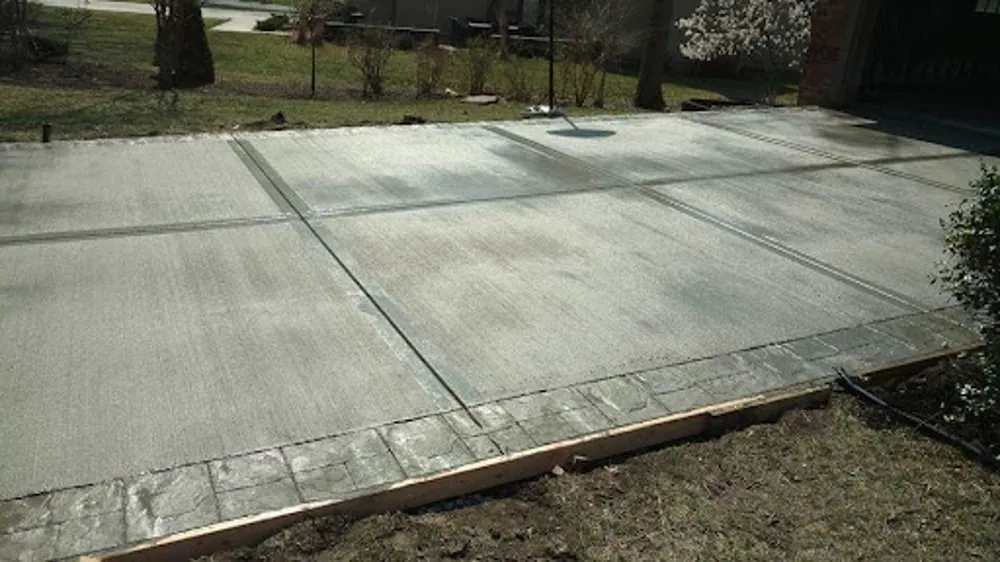
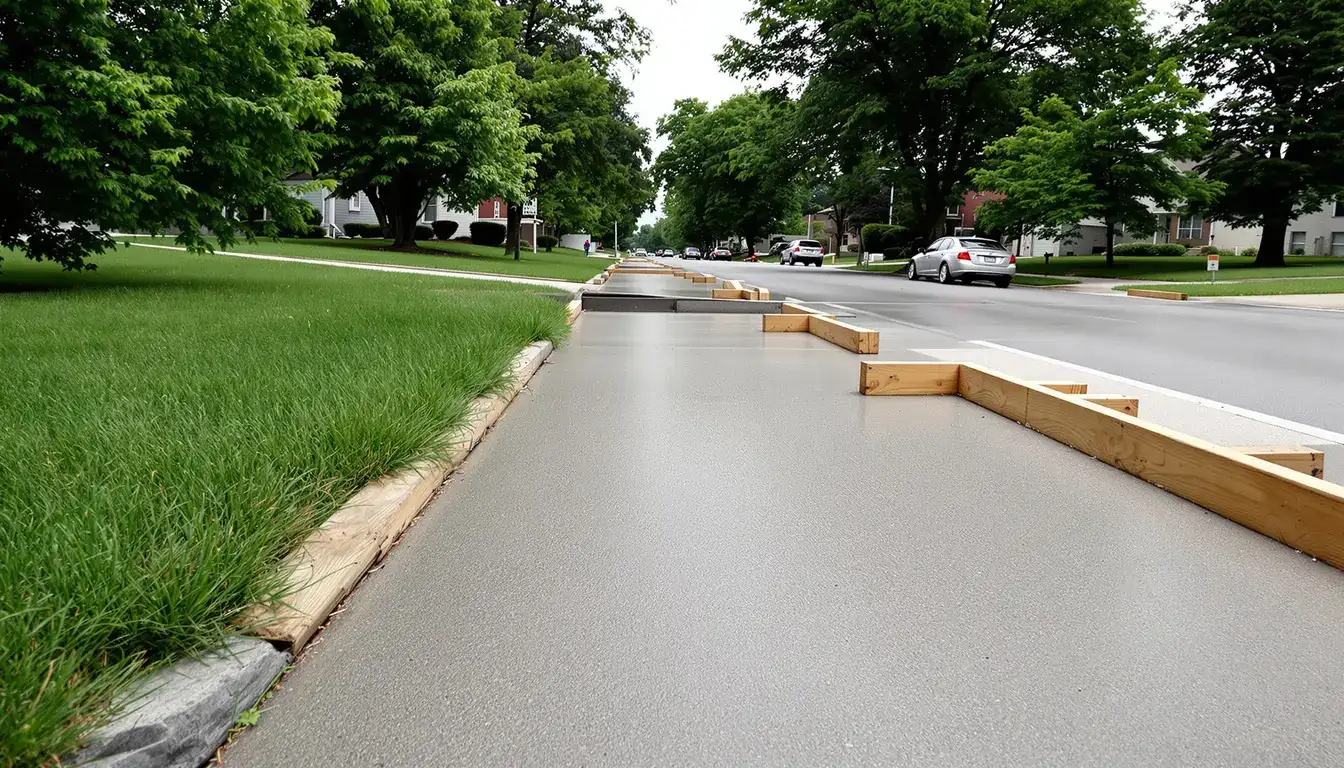
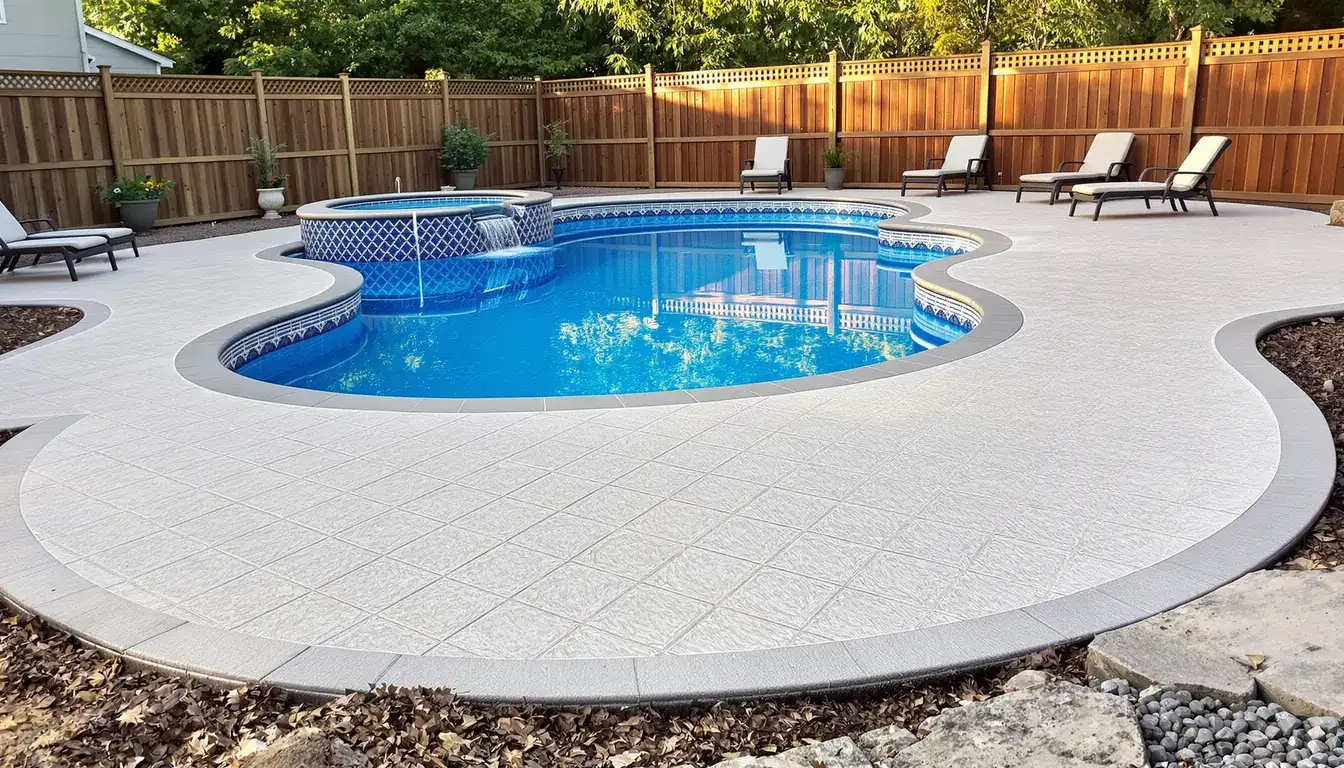
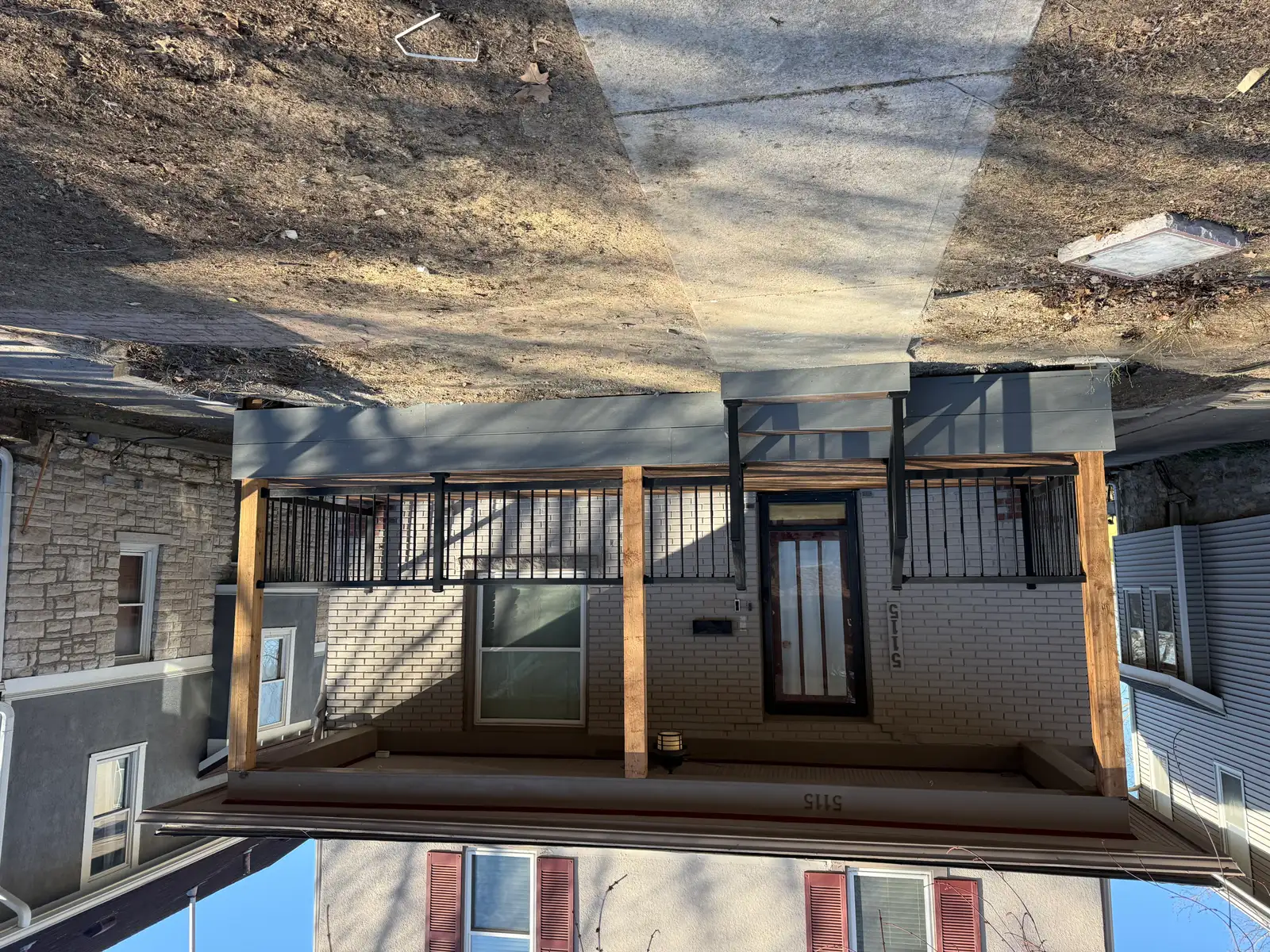
Concrete Patios & Outdoor Spaces across the Leavenworth County area
Ready to pour in Leavenworth?
From call to concrete — the fastest in KC.
Get a free, no-obligation estimate for your concrete project. We serve the entire Kansas City metro — call (816) 721-1699 or request your estimate online.