Concrete Parking Lots in Olathe, KS
Commercial concrete lots for Olathe's I-35 freight corridor — pavement designed for distribution axle loads on Johnson County's shallow-limestone ground, from a truck bay to a staff lot.
Concrete Parking Lots in Olathe
Commercial parking lot construction, expansion, and replacement for businesses, restaurants, and retail centers. Ford Concrete serves Olathe, KS and the entire Kansas City metro with more than a decade of experience and a 5-star reputation.
Olathe at a Glance
- Population
- 143,720
- State
- Kansas
- County
- Johnson County
- Schools
- Olathe Public Schools (USD 233)
What does a concrete parking lot need in Olathe?
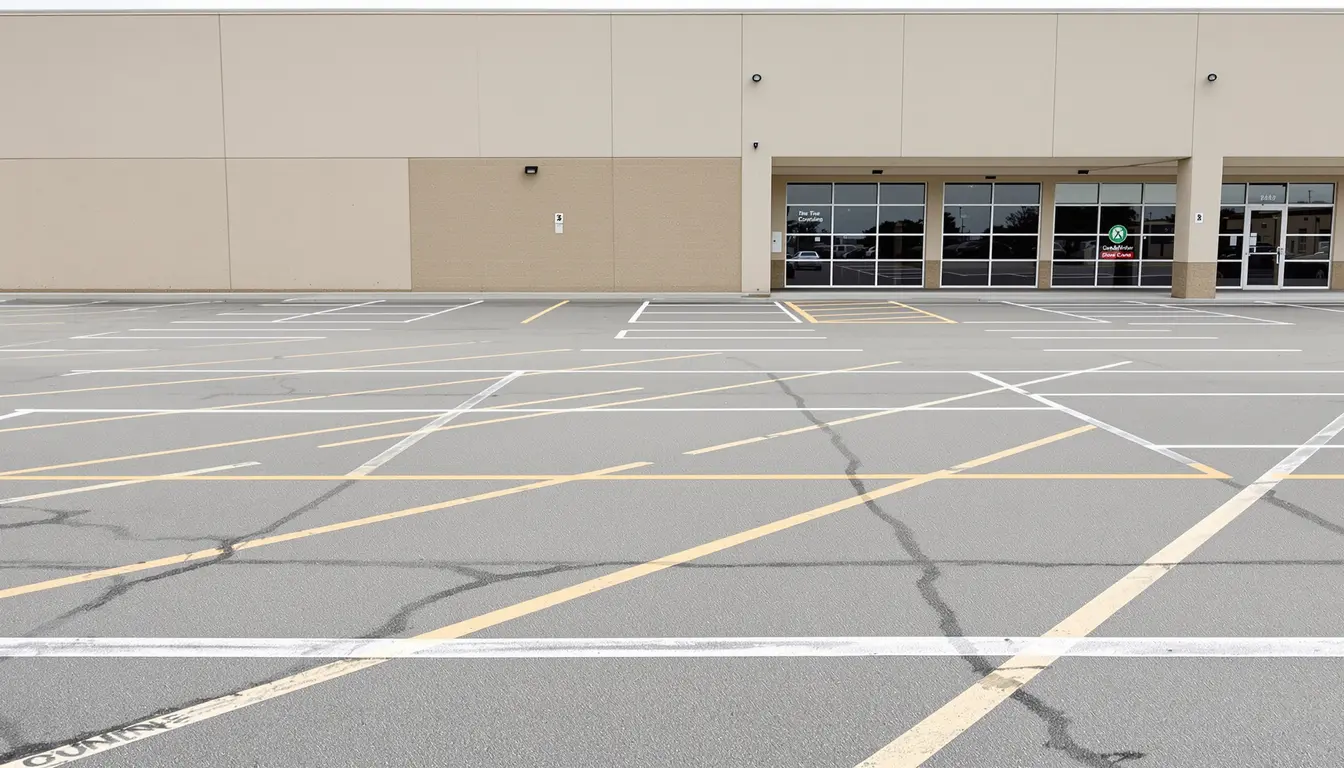
A concrete parking lot lasts in Olathe when the pavement is designed for the freight it carries and the ground it sits on. Along the I-35 corridor that means heavy-duty pavement thickness design for distribution axle loads, a base that reads Olathe's shallow limestone correctly, and jointed concrete pavement that shares load across every joint.
Ford Concrete pours commercial flatwork across the Johnson County seat, and Olathe is a freight town first. I-35 runs constant heavy truck traffic, and the interchanges at 119th, 135th, and 151st see the braking and turning that shoves and ruts pavement. A lot near the 175th Commerce Centre distribution hubs is a structural problem, and we design it as one.
Building on Olathe's shallow limestone
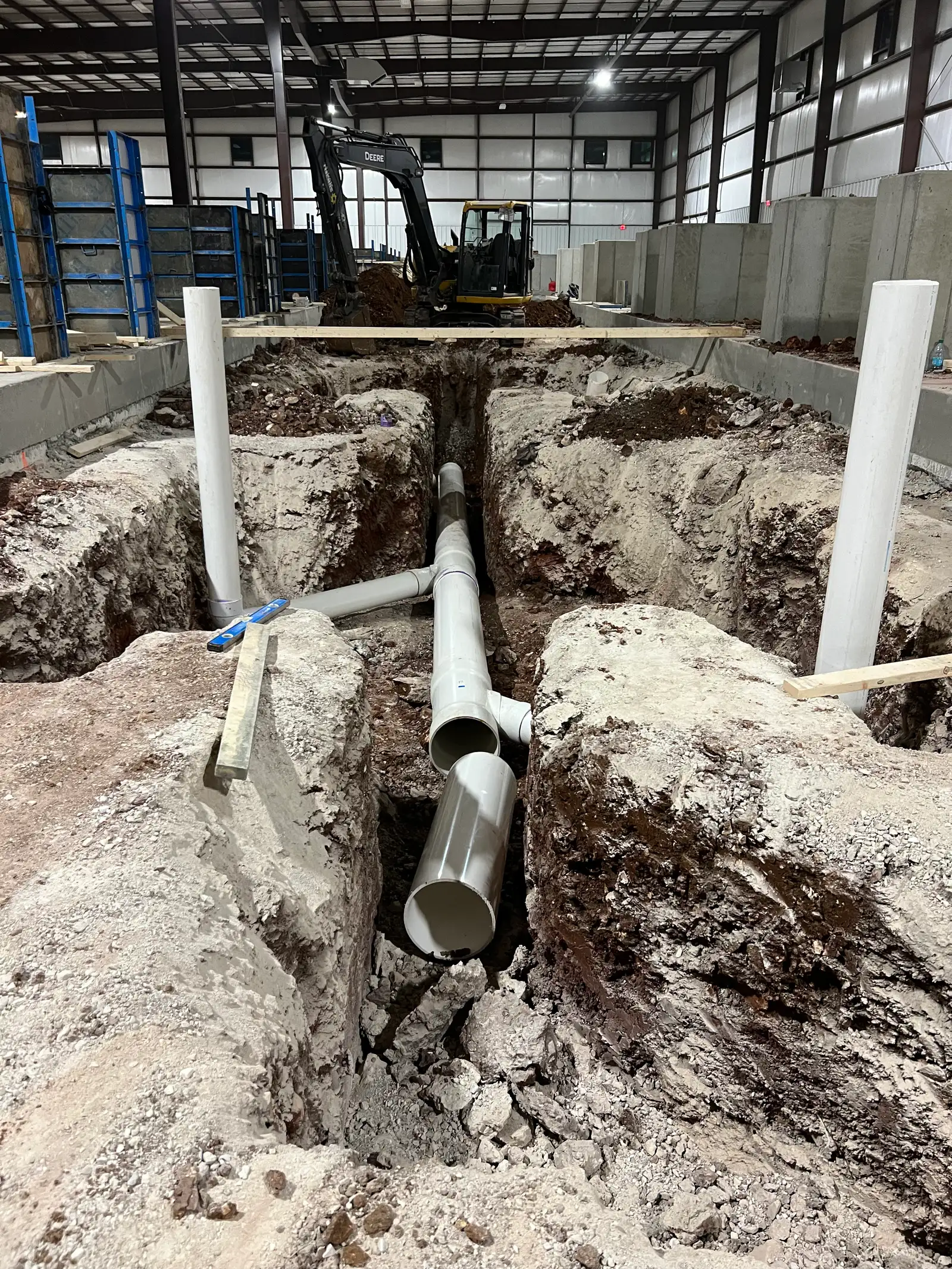
Southern Johnson County sits on shallow limestone — often just three to eight feet down — under a cap of clay-loam. Where the rock is close, it gives excellent bearing and a high k-value, which is good ground for a heavy lot. But the clay cap on top still moves with moisture, and the depth to rock changes across a single site, so the support is not uniform unless we make it so.
We probe the site to find where the limestone runs shallow and where the clay cap is deeper, then use subgrade stabilization to even out the support before any concrete goes down. A lot built to a consistent base is a lot that does not fault where the ground changes. This is the same reading we bring to lots in Gardner and Spring Hill, all on the same shallow-rock ground and all checked against KDHE requirements.
Designing for I-35 freight
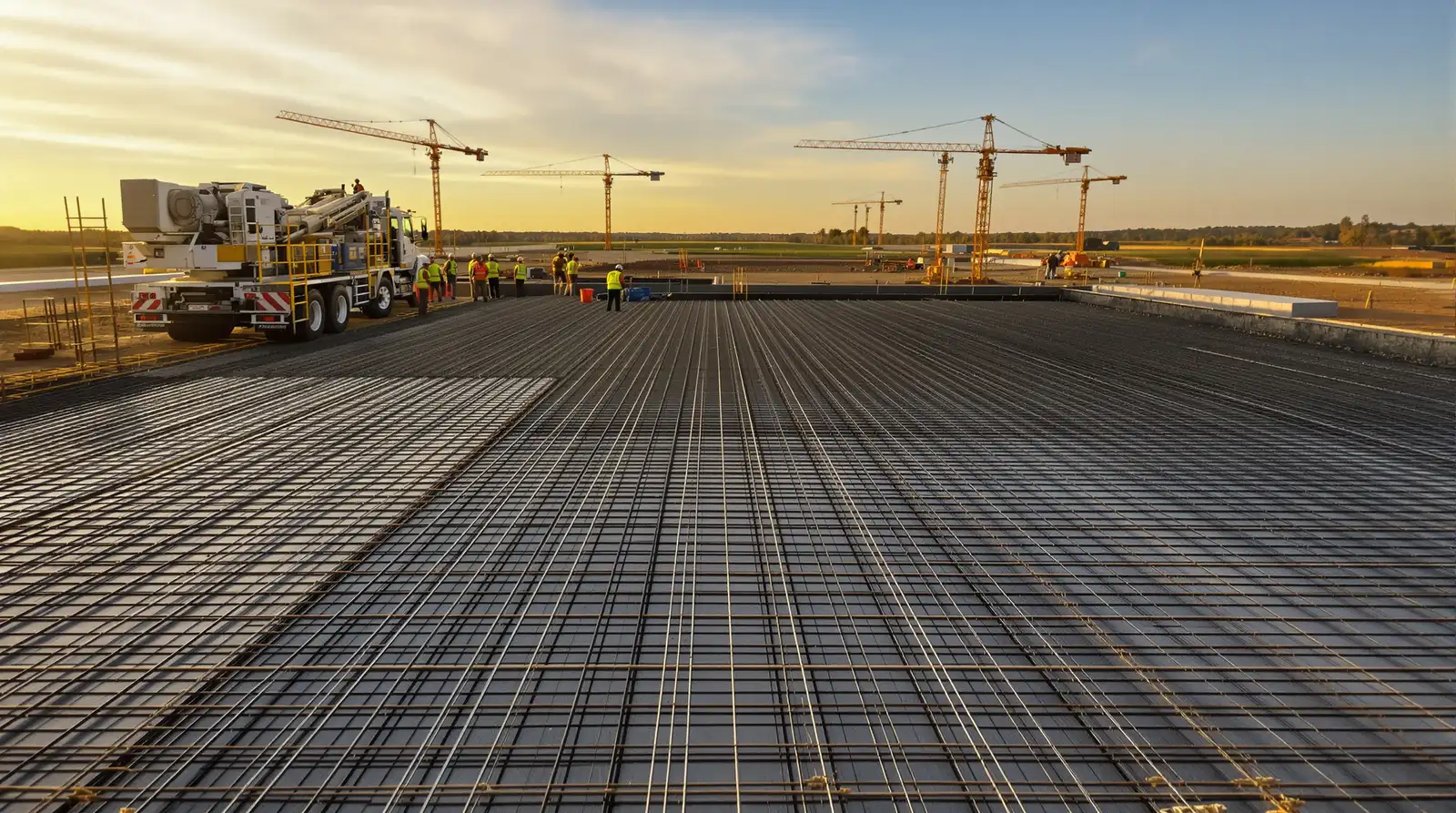
I-35 is a NAFTA superhighway, and the pavement serving it gets designed to ACI 330 against real numbers, not a residential rule of thumb. The heavy zones — distribution entries, truck bays, staging aprons at sites like TransAm and the FedEx and Amazon facilities — carry enormous traffic loading, and we size them from ESAL, the equivalent axle passes the pavement will see over its life.
That is what separates a lot that shoves and ruts at the entrance from one that stays flat. The interchange lots that fail early were built to carry cars and asked to carry Class 8 trucks. We design the freight zones to the freight and let the passenger areas stay lighter, so the concrete lands where the load is.
One lot, two designs: truck bays and staff stalls
A campus like the ones along the I-35 corridor is really two lots in one footprint. The employee parking — the Garmin-style staff fields — sees almost pure passenger load, while the loading docks and truck aprons a hundred feet away take the heaviest movement on the site. We split the design into light vs heavy-duty zones so each gets the thickness it needs and no more.
Pouring one depth across a lot like that either underbuilds the truck bays or wastes concrete in the stalls. Designing the zones separately is how a large commercial lot pencils out and still lasts where it matters.
Joints, dowels, and load transfer under trucks
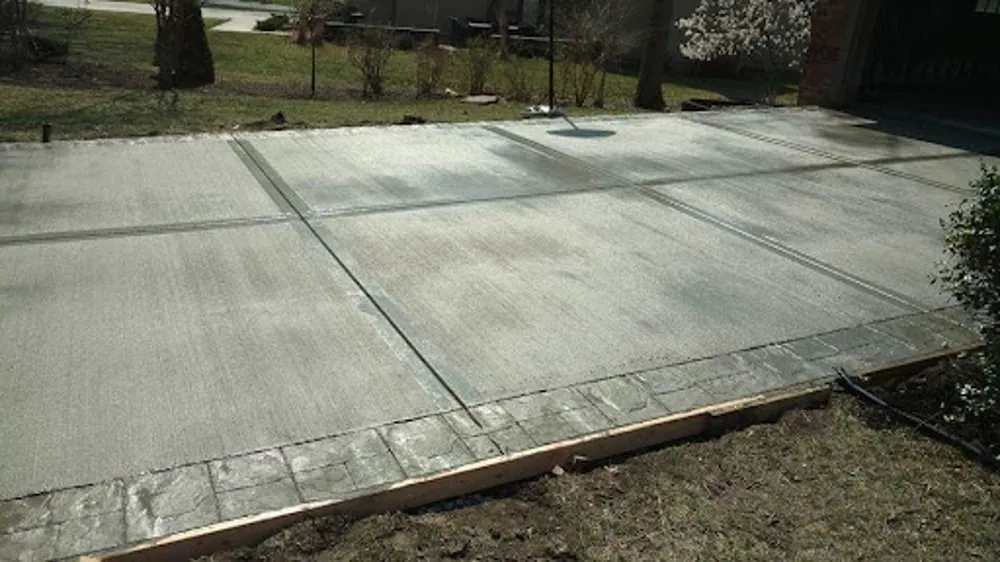
Under freight, the joints do the hardest work. We saw-cut the jointed concrete pavement on a planned grid, and at the construction joints and truck lanes we set dowel bars so adjacent panels carry the load together and stay level — the load transfer that keeps a truck apron flat through years of axle passes. Longitudinal joints get a tie bar so the lanes hold tight against the shoving forces at the interchanges.
Every joint is then filled with a joint sealant to keep water and de-icing salt out of the cut. On a heavy lot, an unsealed joint is where the first failure starts.
Freeze-thaw and the aging Black Bob lots
Olathe winters cycle across freezing repeatedly, and the 1990s retail lots along Black Bob Road and 119th Street show what that does to concrete that was not built for it — panel D-cracking and scaling curbs at the end of their life. We place 4,000-PSI air-entrained concrete so the surface resists that freeze-thaw scaling, and we build the base right so the panels are not fighting a failed subgrade on top of the weather.
Where an older lot is worth saving, a repair or resurfacing may be the smarter spend than a full rebuild — see the concrete repair options. Where it is not, we rebuild it to carry the traffic it actually sees.
ADA and the older Santa Fe strips
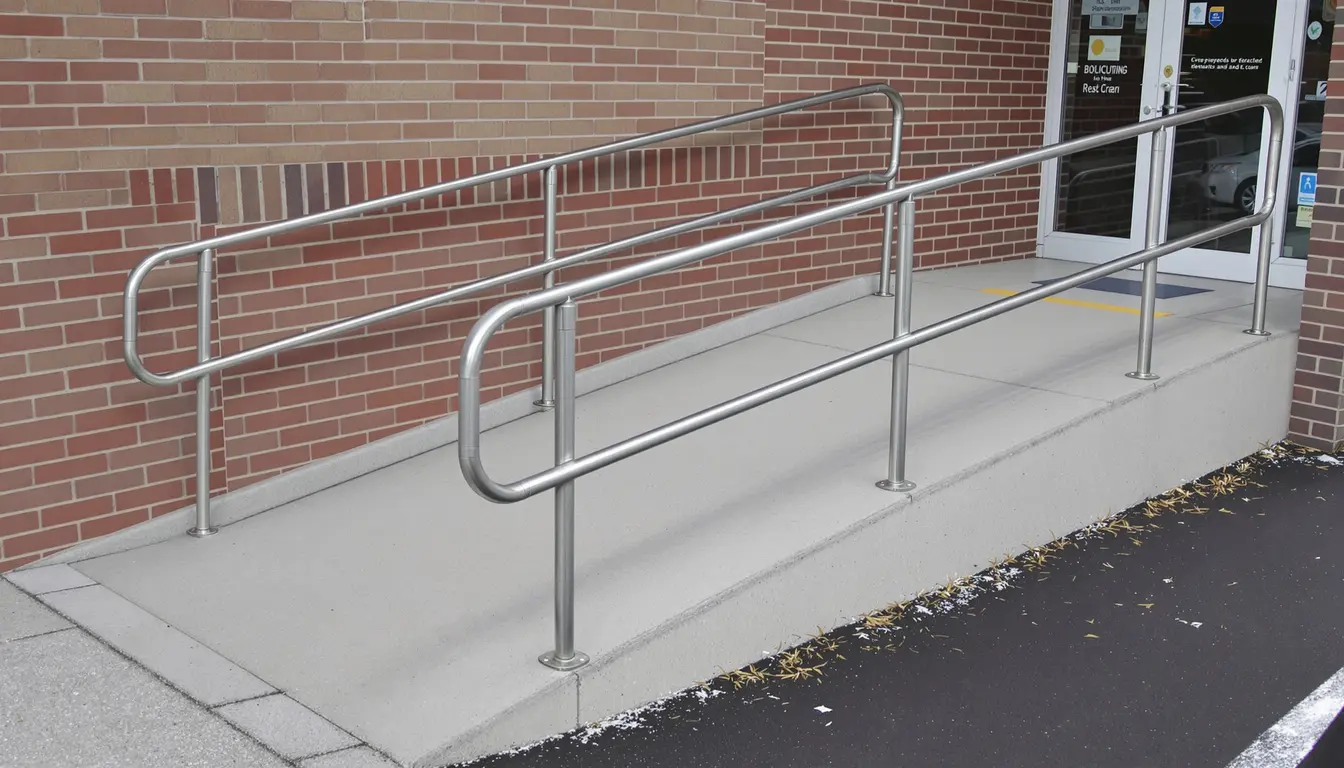
The aging commercial strips along Santa Fe Street carry some of the metro's more common ADA problems — non-compliant slopes, worn striping, and routes that no longer meet code. Bringing a lot up to standard starts with a compliant accessible stall layout: the right count, the right slope, and a clear route from the stall to the building entrance. We build that into every rebuild and can retrofit it on its own; see our ADA ramp and compliance work, or start from the parking lot service overview.
Planning a commercial lot in Olathe?
From call to concrete — the fastest in KC.
We read the limestone, design for the freight, and pour with commercial discipline. Call (816) 721-1699 for a written estimate after a site visit, usually within 24 hours.
Building Concrete Parking Lots for Olathe conditions
Probe the ground and map the traffic
We find where the limestone runs shallow and where the clay cap is deep, and separate the truck zones from the passenger stalls.
Stabilize the subgrade for uniform support
Even out the base across changing depth to rock so the pavement has a consistent k-value end to end.
Design thickness by zone
Heavy-duty truck bays and light staff stalls are sized separately to ACI 330 and the lot’s real axle loading.
Pour 4,000-PSI air-entrained concrete
A mix built for Olathe freeze-thaw, placed and finished for the weather the day of the pour.
Joint for load transfer and seal
Jointed pavement with dowels and tie bars where the trucks run, then every cut sealed against water and salt.
Build the accessible routes to code
Compliant accessible stalls, slopes, and the route to the entrance, striped to close the job out.
What failing Concrete Parking Lots looks like in Olathe
Shoving and rutting at the entrances
D-cracking in older panels
Faulted joints under trucks
Non-compliant accessible stalls
Standing water on a flat apron
Scaling curbs and surfaces
How Ford earns Olathe work
Built for I-35 freight
We design to ACI 330 and size the heavy zones from real axle loads, so distribution entries and truck bays stay flat instead of shoving.
Reads the shallow limestone
We probe for where the rock runs shallow and where the clay cap is deep, then stabilize the subgrade for uniform support.
One lot, designed by zone
Staff stalls and truck aprons get different thicknesses, so a large lot pencils out and still lasts where the load is.
4.9 stars, 29 Google reviews
Olathe and Johnson County property owners rate Ford 4.9 on Google across 29 reviews for commercial concrete work.
The projects behind our name
From your driveway to an Amazon warehouse — the same crew, the same standards, every project.
Taco Bell
New Construction
Overland Park, KS
Domino's Pizza
New Construction
Independence, MO
Freddy's
New Construction
Kansas City
Tidal Wave Car Wash
New Construction
Kansas City
Amazon
New Construction
Riverside, MO
Nortian Food Grade Protein Facility
New Construction
Springfield, MO
Concrete Parking Lots in Olathe — FAQs
How does Olathe’s shallow limestone affect a parking lot?
Can you build a lot for distribution and truck traffic?
Why do the older lots along Black Bob and 119th crack the way they do?
Can you bring an older Olathe lot up to ADA?
Should I repair or replace my Olathe parking lot?
Other concrete work we do in Olathe
Olathe and neighboring communities
Get your Olathe project moving
From call to concrete — the fastest in KC.
Get a free, no-obligation estimate for your concrete project. We serve the entire Kansas City metro — call (816) 721-1699 or request your estimate online.