
Warehouse & Industrial Floors in Raytown, MO
Industrial, shop and back-of-house floors in Raytown's mid-century buildings — priced after we find out what is under the slab, not before.
Warehouse & Industrial Floors in Raytown
High-performance industrial concrete floor installation for warehouses, distribution centers, and manufacturing facilities. Ford Concrete serves Raytown, MO and the entire Kansas City metro with more than a decade of experience and a 5-star reputation.
Raytown at a Glance
- Population
- 28,406
- State
- Missouri
- County
- Jackson County
- Schools
- Raytown C-2 School District
In Raytown the new floor is the easy part
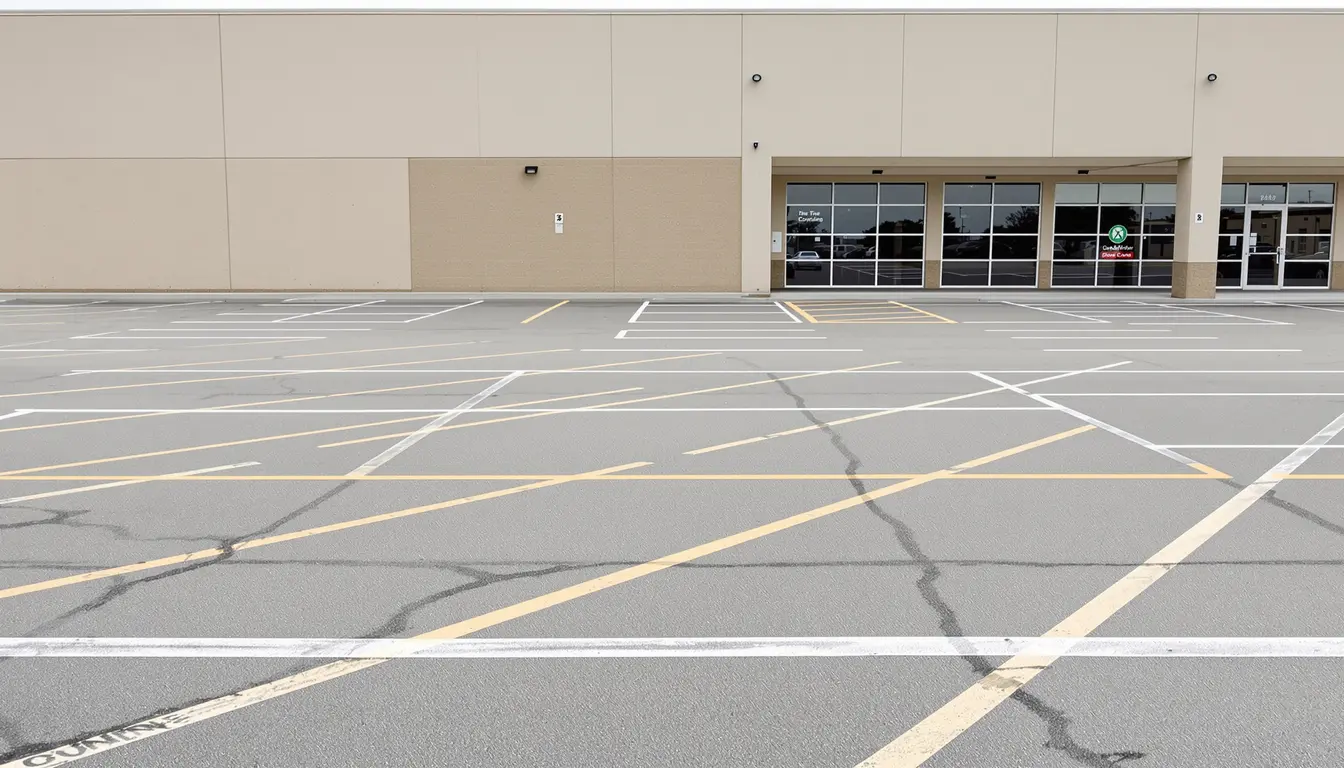
Almost nothing here is a green field. A new industrial floor in Raytown is nearly always a replacement, and the replacement's real work is the demolition. What comes out of the building is the part nobody can see, nobody documented, and nobody can price honestly without looking first.
The commercial stock along the 350 Highway corridor, around Raytown Square, and out on 63rd Street mostly went in during the 1960s through the 1980s. Those buildings have been altered repeatedly. Under their floors sit abandoned trenches, filled-in pits from equipment that left in 1979, footings from a layout nobody has drawings for, drains that go nowhere, utilities that were live once, cinder and sand fill, and now and then an older slab that somebody simply poured over.
What is almost never under them is a vapor retarder, because in 1965 nobody put one there. That single fact is why so many of these floors will not hold a coating, and it is also the opportunity: a replacement is the one chance the building will ever get to have one. Our industrial floor work in this town starts with what is coming out.
The old floor was a lid on the clay, and you are about to take it off
Raytown sits on Jackson County's Wymore and Ladoga clay, which moves with its moisture content. Here is the part that gets missed on a replacement: a slab that has been in place since 1968 has spent every one of those years holding the clay beneath it at a steady moisture. It has been a lid. Nothing rained on that ground, nothing dried it out, and it found an equilibrium and stayed there.
Take the lid off and that stops immediately. The clay is now exposed to weather it has not seen in fifty years, and it begins moving — swelling in a wet week, shrinking in a hot dry one. The subgrade you uncovered on Monday is not the subgrade you pour on if Friday is the day and it rained Wednesday.
Which is why the demolition, the prep and the placement get sequenced tight instead of left open until the schedule gets around to it. An exposed clay subgrade is a clock running, not a condition. If the slab has to stay open, it gets protected and it gets re-proofed before concrete goes on it, because the compaction someone signed off on a week ago is a statement about a week ago.
What we open before we quote
Four things get answered with a saw and a shovel before a number goes on paper. How thick the existing slab actually is, which is rarely what anyone says it is. What is under it — a real base, or fill, or nothing. Whether there is a barrier down there at all. And what the subgrade is once you reach it.
Alongside that: locating the utilities and the abandoned pits, checking whether anything structural is bearing on ground the floor removal is going to disturb, and establishing how long the subgrade will sit open. Those cuts cost a morning. They are the difference between a price and a guess.
Because here is the honest part about bidding this work. Anyone who hands you a firm removal number on a 1965 building without opening it has either guessed or has priced the guess into the job so the guess cannot hurt them. We would rather investigate, quote what we found, and put clear unit pricing against the things that are genuinely unknowable until the floor is out. That is a less comfortable conversation up front and a considerably better one in month three.
350 Highway, 63rd Street, and what the new floor gets that the old one never had
Raytown's lots and floors are at the point where full-depth replacement stops being avoidable, and the city knows it — this is a town actively redeveloping its commercial corridors. City Hall reads the plans and ground disturbance falls under MoDNR's stormwater rules. Our excavation approach covers how we work inside a building that is still standing.
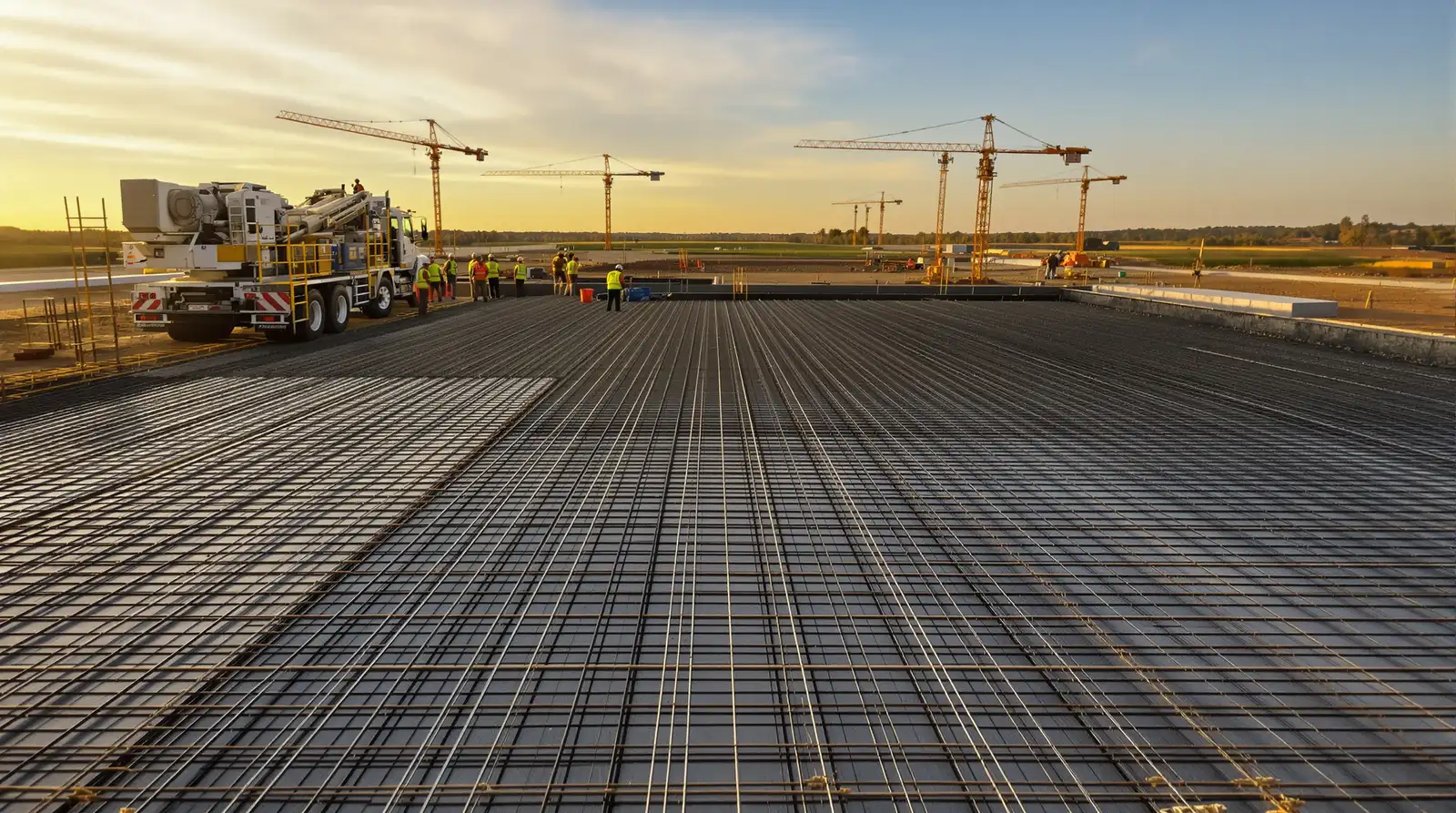
The replacement gets what 1965 could not give it. A base built in compacted lifts on clay that has been proofed the day it is poured on. A vapor retarder directly under the slab rather than under a sand blotter. Joints laid out for the traffic that runs today instead of the traffic that ran when Nixon was in office, with the saw cut going in on the concrete's schedule. And F2170 RH readings before anyone orders a coating, which is a test the old floor would have failed every day of its life.
Honest about what the work here is: shops, service buildings, back-of-house and light industrial space behind mid-century retail. That is random traffic, an overall flatness number covers it, and a VNA tolerance would be money set on fire. Our large-format industrial floors are Amazon's new construction in Riverside and a food-grade protein facility for Nortian in Springfield — neither is a Raytown job and we would rather say so than let the logos do work they have not earned. Around the corner we pour the same floors in Independence, Grandview and Blue Springs. We are at 4.9 stars across 29 reviews, and the gallery is what we would rather be judged on.
Replacing a floor in a Raytown building?
From call to concrete — the fastest in KC.
Let us open it up and tell you what is actually under there before anybody talks price. Call (816) 721-1699 or request a free estimate.
Why Raytown Warehouse & Industrial Floors is built this way
Cut and look
Exploratory openings for thickness, base, barrier and subgrade. Plus locating utilities and any abandoned pits, before a price is written.
Quote what we found
A real number against real conditions, with clear unit pricing on the parts that genuinely cannot be known until the slab is out.
Remove and protect
Demolition sequenced so the clay is not sitting open any longer than it must, with protection on it if the schedule slips.
Proof the subgrade on the day
Compacted lifts and a proof roll the day concrete goes on it. A test from last week is a statement about last week.
Barrier, then place
Vapor retarder directly under the slab, lapped and terminated, joints laid out for the traffic that runs now, and continuous placement.
Cure, test, hand over
A held cure for the full window, F2170 readings before any coating is ordered, and an as-built of what we found under your old floor.
Signs your Raytown Warehouse & Industrial Floors needs attention
A coating that will not stay down on the old floor
A 1960s slab was poured straight on the ground. Moisture has been coming up through it since the day it was placed, and no product beats that.
A soft spot that keeps coming back
Usually a trench or a pit that was backfilled with whatever was handy and never compacted. Patching the surface never reaches it.
The slab is a different thickness everywhere
Decades of alterations. What one crew poured in 1971 for a machine that is long gone has nothing to do with what is ten feet away.
Joint failure across the whole floor
Mid-century floors were jointed for the traffic of their era, if at all. Today's wheels find every one of those lines.
The Ford difference on Raytown Warehouse & Industrial Floors
We open it before we price it
A few cuts and a shovel on a 1960s building answer more than any assumption will. That morning is the difference between a quote and a gamble.
We price the unknown as unknown
Clear unit pricing on what genuinely cannot be seen yet, instead of a firm number with a cushion buried in it that you never get back.
We do not leave clay open
Removal, prep and placement run tight together. An exposed subgrade is a clock, and last week's compaction test describes last week.
The new floor gets a barrier
Your old slab almost certainly never had one. This is the only chance the building will get, and it decides every coating it ever takes.
Proof we pour at any scale
From your driveway to an Amazon warehouse — the same crew, the same standards, every project.
Taco Bell
New Construction
Overland Park, KS
Domino's Pizza
New Construction
Independence, MO
Freddy's
New Construction
Kansas City
Tidal Wave Car Wash
New Construction
Kansas City
Amazon
New Construction
Riverside, MO
Nortian Food Grade Protein Facility
New Construction
Springfield, MO
Price your Raytown Warehouse & Industrial Floors project
Or call us directly: (816) 721-1699
Warehouse & Industrial Floors in Raytown — FAQs
Why will you not just quote the floor from the square footage?
Does taking the old floor out really affect the clay underneath?
Can we save money by pouring a new floor over the old one?
Related concrete services in Raytown
Warehouse & Industrial Floors in communities near Raytown
Start your Raytown concrete project
From call to concrete — the fastest in KC.
Get a free, no-obligation estimate for your concrete project. We serve the entire Kansas City metro — call (816) 721-1699 or request your estimate online.