
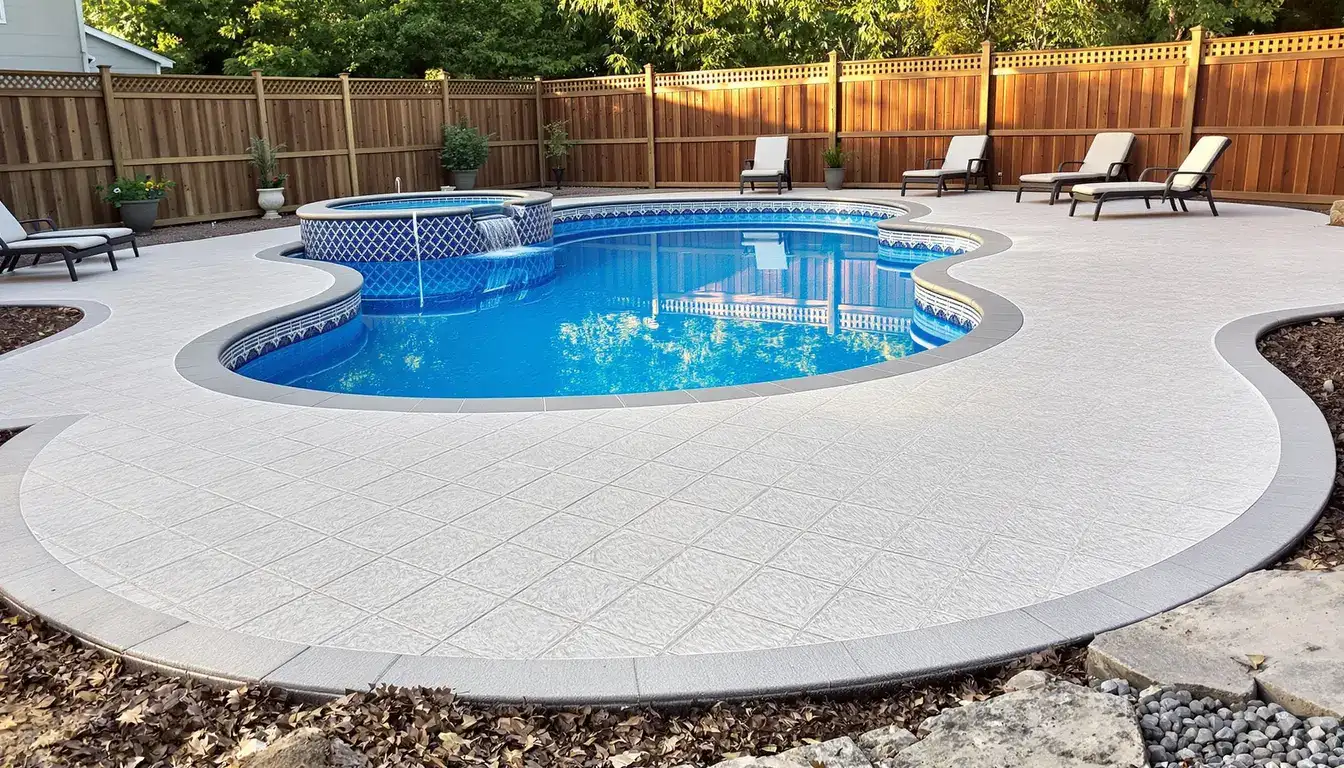
Concrete Pool Decks in Saint Joseph, MO
Pool decks built for St. Joseph's bluff ground — the steep loess above the Missouri River that sheds water fast and erodes faster. From the Victorians of Museum Hill to the newer lots off the Belt Highway, we control the runoff, set a base that holds, and finish the deck to a river city's standard.
Concrete Pool Decks in Saint Joseph
Slip-resistant concrete pool deck installation and resurfacing for residential and commercial swimming pools. Ford Concrete serves Saint Joseph, MO and the entire Kansas City metro with more than a decade of experience and a 5-star reputation.
Saint Joseph at a Glance
- Population
- 71,811
- State
- Missouri
- County
- Buchanan County
- Schools
- St. Joseph School District
What makes a St. Joseph pool deck last?
A St. Joseph pool deck lasts when the runoff is controlled before it can erode or soak the ground, the base is compacted to firm bearing, an isolation joint keeps the deck loose from the pool shell, and the surface is broomed for slip resistance. On the loess bluffs this city was built on, managing the water on a steep lot is the detail that carries the whole job.
St. Joseph — the Pony Express city, reinvented as a manufacturing and bioscience hub — climbs the loess bluffs above the Missouri River. That soil is wind-laid silt: it stands in the dramatic hills the city is known for, but it sheds water fast and cuts easily when runoff is left to find its own path. Whether the deck goes behind a Museum Hill Victorian or a newer home off the Belt Highway, we plan the water first, then build a base the loess can hold flat.
The bluff falls hard — controlling the water
The loess that gives St. Joseph its steep, scenic hills is also easy to erode. On a bluff-side lot, runoff moves fast, and if it leaves the deck without a plan it carves channels, undercuts the slab edge, and washes out the soil that supports it. We grade the deck and yard to a fixed discharge point, then carry the water down the slope in a controlled line — not sheeting loose across bare loess — so it leaves the property without cutting it. Keeping water off the ground also keeps it from standing against the coping and building hydrostatic pressure under the shell. The erosion-control and drainage plan come before the pour, because on a loess bluff the water decides everything.
A base that holds on loess
Loess carries load well when it is dry and packed, and poorly when it is wet and loose. So the base is built to stay both. We cut down to firm subgrade and rebuild the footing as compacted stone in stacked lifts, packing each layer so the deck rides on rock rather than raw silt. Where an older St. Joseph lot was filled or regraded over the years, that fill can still be settling, and we stage the base around any backfill consolidation so the deck only lands on ground that has stopped moving. Grading falls under MoDNR guidance, and Buchanan County's freeze-thaw winters mean the finished slab has to be sealed to keep water out of the surface.
Why the deck rides free of the pool
The pool shell is locked in the ground while the deck above it moves with heat and frost. Pour them as one and the shell/deck interface shears on the first hard freeze, splitting the slab along the waterline. We hold a full-perimeter isolation joint between deck and shell so each travels on its own, and we form a cantilever coping over the bond beam, set loose so it moves with the deck instead of fighting it. Small work at pour time, and the reason the edge stays sound for decades on ground that keeps moving.
A finish for a river city's standard
St. Joseph wears its history — the brick streets, the Museum Hill mansions, Krug Park's stonework — and a pool deck can answer that character without losing its grip. We drag a broom finish for slip resistance so a wet deck stays sure underfoot, and where a homeowner wants the deck to read as stone we pour a stamped concrete sample panel in the yard so the pattern and color are approved before the real pour. A color coat can tune the deck to a period home. The finish suits the house; the texture keeps it safe barefoot.
Resurface or rebuild — reading your deck
St. Joseph has a lot of established homes with decks already in the ground, so the honest first question is whether yours needs replacing at all. Here is how we read it:
- If the slab is sound and only the surface is tired — light cracking, worn texture — a bonded overlay lays a fresh wearing surface over it without a teardown.
- If the deck is settling, panels sit at different heights, or cracks run wide and keep moving, the base underneath has failed, and a coating would only hide it — a rebuild is the right money.
- If the pool is being redone anyway, it is usually the moment to reset the deck too, since the coping and shell work tie together.
We tell you which one your deck is, and why, before any work is scoped.
Permits and the bonding grid
A new or rebuilt deck is permitted through the City of St. Joseph, and the electrical sign-off has to confirm equipotential bonding — the grounding grid that ties the deck into one electrical potential around the water so the pool is electrically safe. We book that inspection ahead of the pour so nothing gets closed in before it passes. It is the same discipline our crew carries onto the commercial slabs we pour throughout the region — St. Joseph is a manufacturing town, and the standard that holds on an industrial floor is the one we bring to a backyard deck.
Ready to build your St. Joseph pool deck?
From call to concrete — the fastest in KC.
In St. Joseph, the bluff decides the plan — control the water, pack the loess into a base that holds, and seal it for the river winters. We read your lot, tell you straight whether to resurface or rebuild, and put a real number on paper. Call (816) 721-1699 for a site visit, usually within a day.
Our Concrete Pool Decks method for Saint Joseph sites
Read the bluff and the lot
We study how your St. Joseph lot falls, find where the water wants to run, and check how the loess under it behaves wet and dry.
Plan the water first
We fix a discharge point and a controlled line down the slope so runoff leaves the property without eroding the loess.
Cut and compact the base
We dig to firm subgrade and stack a compacted stone footing in lifts, staging around any older fill still settling.
Break the deck from the shell
We set an isolation joint around the full pool perimeter so the deck and shell move independently without shearing.
Place, joint, and finish
We pour 4,000-PSI concrete, cut the contraction joints, and lay the finish you chose — broom, stamped, or stained.
Form the coping and cure
We form the cantilever coping over the bond beam, hold it loose to the deck, and cure the slab slow for strength.
Bond, seal, and walk it
We schedule the equipotential bonding inspection, seal the deck against freeze-thaw, and walk the finished work with you.
Is your Saint Joseph Concrete Pool Decks failing?
A rut washing beside the deck
Erosion cutting a channel next to the slab means runoff was never given a controlled discharge line and is carving the loess on its own.
The slab edge undercut
Soil washing out from under the deck edge is the bluff eroding beneath it — a drainage failure that will keep taking ground until it's corrected.
Panels at different heights
Deck sections out of level mean the base settled unevenly, common where older fill under a St. Joseph lot kept consolidating after the pour.
A crack along the waterline
A split tracing the coping means the deck was cast tight to the shell with no isolation joint, so the two sheared apart on a freeze.
Surface flaking off the top
Thin chips lifting away is freeze-thaw scaling, nearly always because the deck was left unsealed through the river-valley winters.
A slick top when wet
A deck that turns slippery wet has lost its broom texture or was troweled too smooth — a hazard around a pool with kids.
Why Ford for your Saint Joseph Concrete Pool Decks
Water controlled on the bluff
St. Joseph's loess erodes fast on a steep lot. We grade to a discharge point and carry runoff down the slope in a controlled line so it leaves without cutting the ground.
A base packed to hold
Loess carries load dry and packed, not wet and loose. We rebuild the footing as compacted stone in lifts so the deck rides on rock through the seasons.
Sealed for a river winter
Buchanan County freeze-thaw scales an unsealed deck. We seal the slab and set a reseal schedule so the surface sheds water instead of flaking.
Straight talk on your options
If a resurface will do, we say so; if the base has failed, we say that too. You get an honest read and a written price before any work starts.
The projects behind our name
From your driveway to an Amazon warehouse — the same crew, the same standards, every project.
Taco Bell
New Construction
Overland Park, KS
Domino's Pizza
New Construction
Independence, MO
Freddy's
New Construction
Kansas City
Tidal Wave Car Wash
New Construction
Kansas City
Amazon
New Construction
Riverside, MO
Nortian Food Grade Protein Facility
New Construction
Springfield, MO
Start with a free Saint Joseph estimate
Or call us directly: (816) 721-1699
Concrete Pool Decks in Saint Joseph — FAQs
Why does the loess under St. Joseph change how you build?
My lot drops off toward the river — is erosion a real risk?
Should I resurface my old deck or replace it?
Why can't the deck be poured against the pool?
Can the deck match my historic St. Joseph home?
Do I need a permit for a pool deck in St. Joseph?
More Saint Joseph concrete services
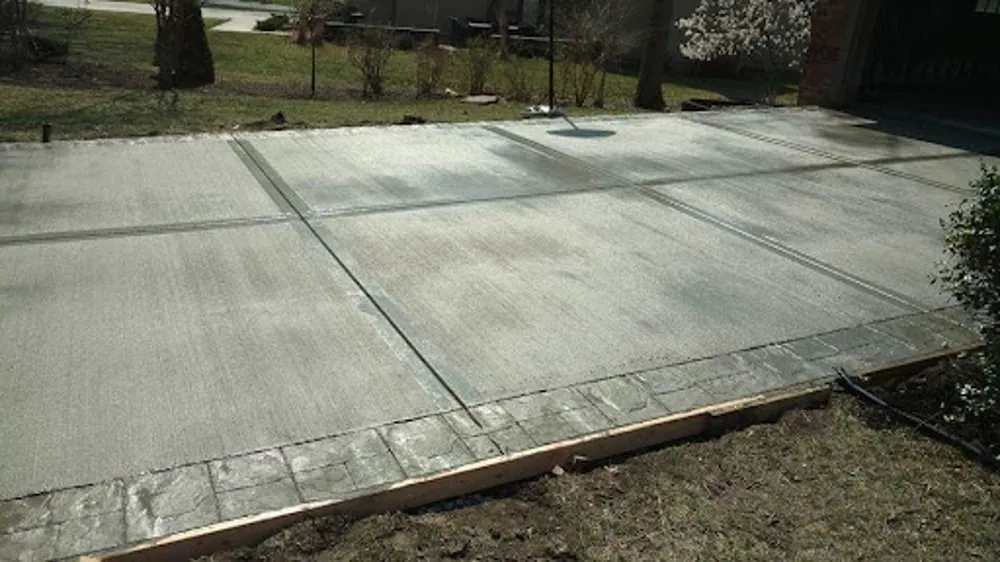
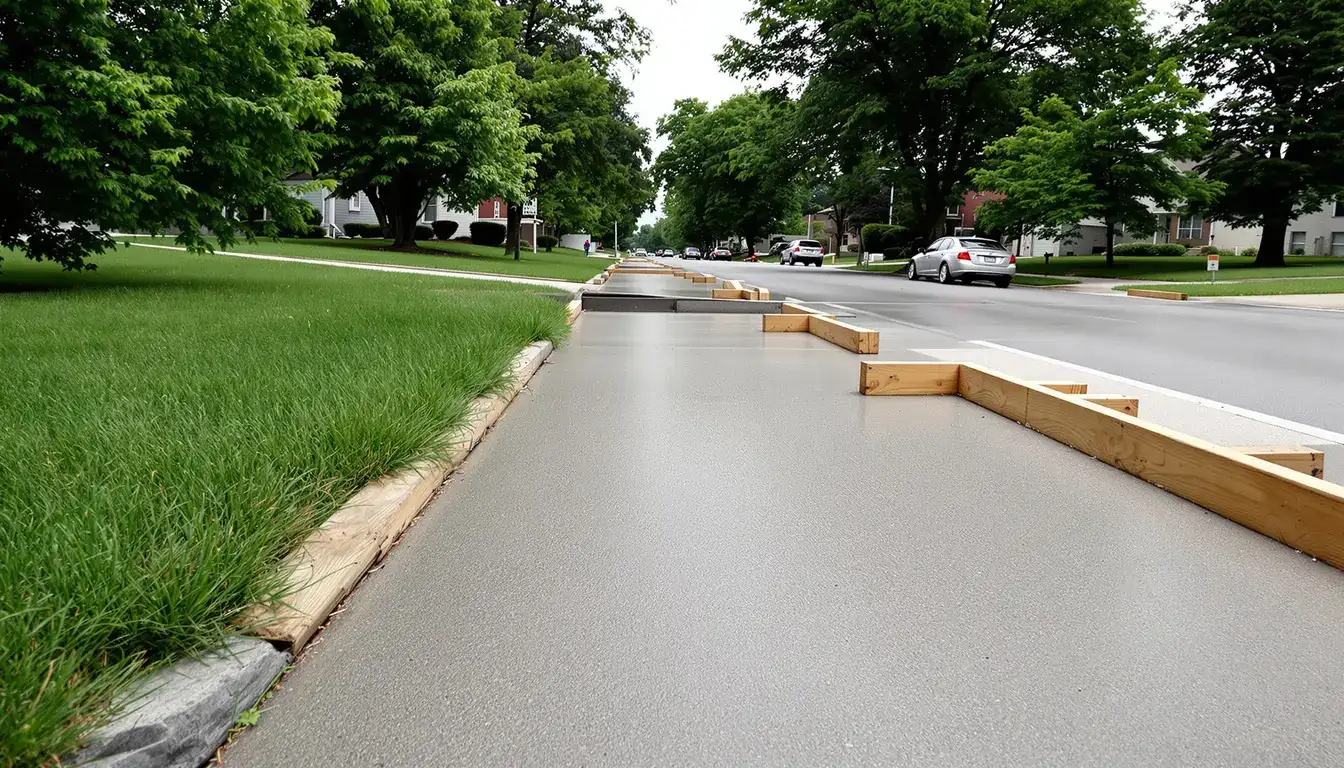
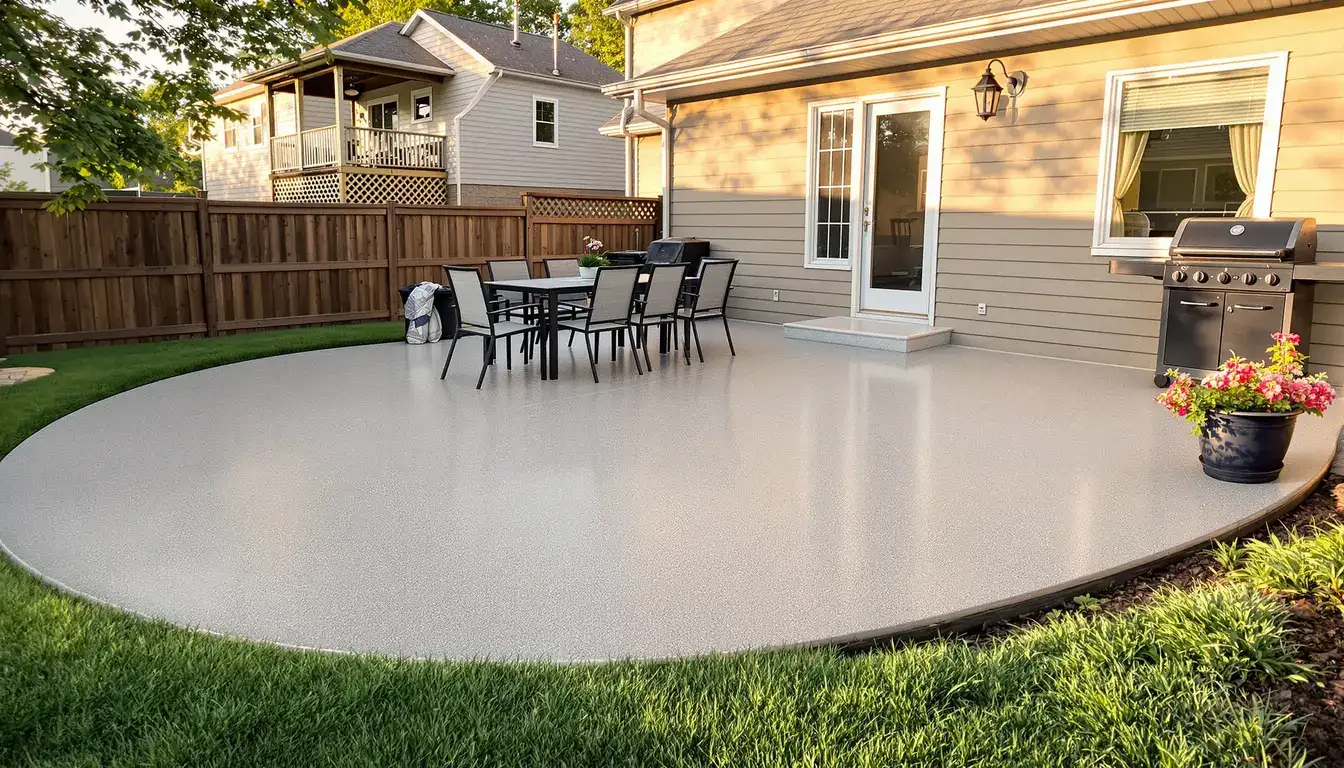
Concrete Pool Decks across the Buchanan County area
Get your Saint Joseph project moving
From call to concrete — the fastest in KC.
Get a free, no-obligation estimate for your concrete project. We serve the entire Kansas City metro — call (816) 721-1699 or request your estimate online.