
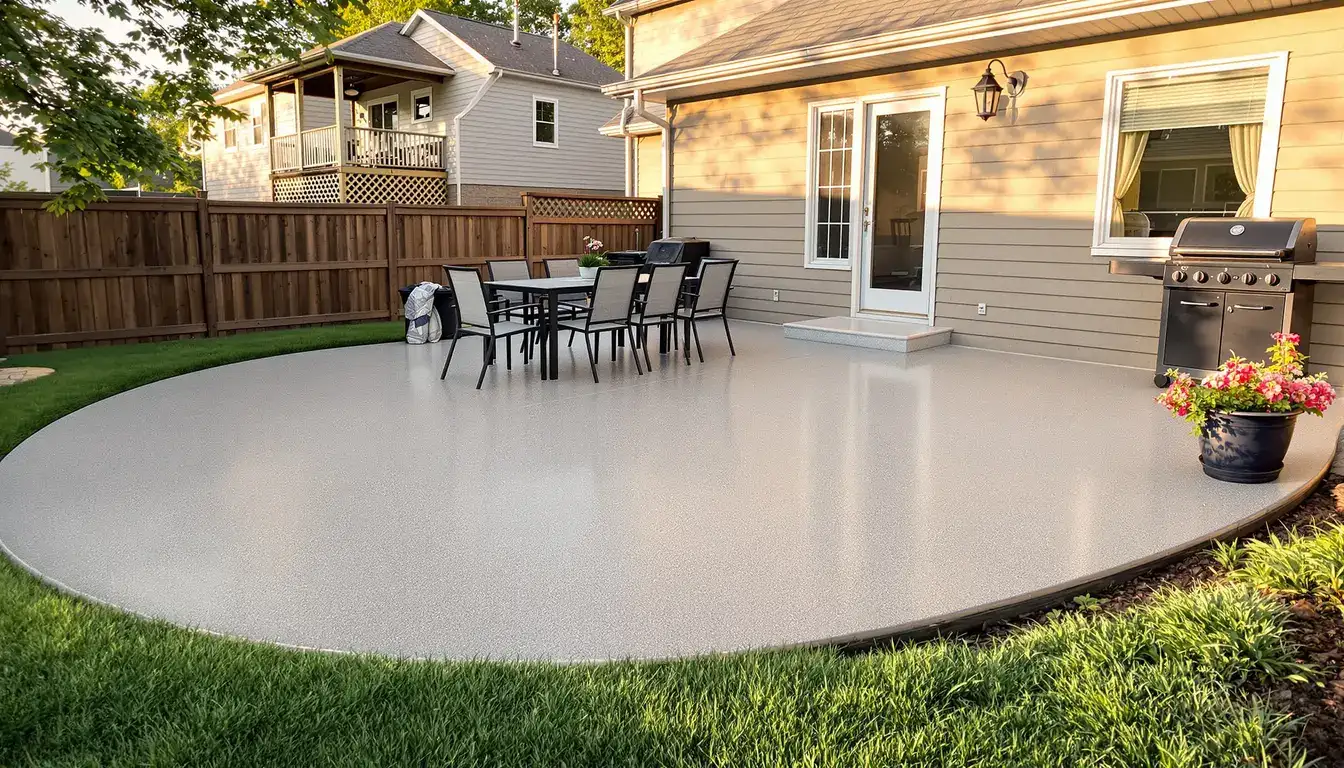
Concrete Patios & Outdoor Spaces in Saint Joseph, MO
Concrete patios built for how a Saint Joseph lot falls — from the Museum Hill bluffs to the level yards of Wyatt Park
Concrete Patios & Outdoor Spaces in Saint Joseph
Custom concrete patio design and installation for backyards, outdoor living areas, and commercial courtyards. Ford Concrete serves Saint Joseph, MO and the entire Kansas City metro with more than a decade of experience and a 5-star reputation.
Saint Joseph at a Glance
- Population
- 71,811
- State
- Missouri
- County
- Buchanan County
- Schools
- St. Joseph School District
What does it take to build a patio on a Saint Joseph bluff lot?
A concrete patio in Saint Joseph lasts when it is built for the way the lot falls: a compacted base cut level into the loess, a four-inch slab of 4,000-PSI concrete pitched for positive drainage away from the house, and a held low edge so the bluff soil can't wash out from under it. On a falling lot, that low-edge detail is the whole job.
Buchanan County sits on loess — wind-laid silt stacked deep along the Missouri River bluffs. Dry, it stands almost vertical, which is why Museum Hill's Victorians perch on such steep ground above the valley. Wet, it gives way. A patio in a level Wyatt Park back yard is a straightforward pour; a patio off the back of a Northside home that drops toward the river is a grade problem before it is a concrete problem. We read the fall of the lot before we quote, and if your existing slab is only worn we can talk about resurfacing instead of a full rebuild.
Cutting the base into the loess above the river
On a sloped Saint Joseph lot the pad has to be carved into the hill, not stacked on top of it. We bench the subgrade level, strip any soft or organic loess, and rebuild the base in compacted lifts so the slab bears on ground that won't keep consolidating. The downhill side gets a restraint point — a thickened, held edge — so the weight of the slab and the pull of gravity don't let the low corner creep out toward the drop.
Loess rewards a base that is built once and built right. It is strong under load when it stays dry and confined, but disturbed and left loose it settles for years. That is why we compact in shallow lifts rather than dumping fill and hoping. The same discipline carries into how we set the slab against the house: an isolation joint keeps the patio and the foundation on their own paths, so a settling low edge never drags a crack back across the pour toward the door.
Why runoff, not frost, is what undercuts a Saint Joseph patio
On the bluffs the thing that ends a patio early is water, not winter. Saint Joseph shares the metro's roughly 36-inch frost line, but loess settles far more than it heaves, so the real enemy is runoff sheeting over the low edge and scouring the silt out from underneath. A patio poured flat, or one that drains toward the downhill corner, feeds that erosion every storm. We set the finished slab just below the door threshold elevation and pitch it so water crosses the surface and leaves at a controlled point, never over the exposed bluff-side edge.
On a terraced or stepped patio we carry that logic down the slope: each level sheds to a planned outlet, and the ground below the last step is protected so it isn't undercut. Getting the water off the low side is what keeps a bluff-lot patio flat for decades instead of tipping toward the valley. It is the same drainage thinking we bring to a pool deck, where a slick low edge is a safety problem, not just a maintenance one.
Where a Saint Joseph patio cracks — and why it settles instead of heaves
Most patio cracks here start at an inside corner. An L-shaped or wrapped patio has a re-entrant corner — the notch where two runs of edge meet — and that point gathers stress from both directions at once. With no joint running out of it, the slab tears from that corner the first time the ground moves or the temperature swings hard. Because loess consolidates rather than expanding, the movement you see in Saint Joseph is usually a slow settle at one edge, not the seasonal lift a clay lot gives you.
We control it with layout, not luck. A contraction joint runs out of every re-entrant corner, and the joints are spaced close to the slab thickness — roughly every eight to ten feet on a four-inch pour — so no panel spans more soft ground than it can bridge. On a lot that falls, that joint plan matters even more, because a settling low corner needs a planned line to relieve against instead of a random crack across the middle of the slab.
Broom or stamped: matching a patio to a Museum Hill back yard
A finish choice is worth making before the pour, not after. A broom vs stamped finish is the first fork: a broomed surface is the durable, honest workhorse that hides wear and grips underfoot, while stamped concrete borrows the look of cut stone or plank at a fraction of the upkeep of the real thing — a fit for the older, detailed homes on Museum Hill and the Hall Park streets. We pour a small mockup in your chosen color and pattern so you see it on your own ground, in your own light, before we commit the full patio.
Layout is part of the look. We run the joint pattern continuity so the control joints line up with the edges of the house, the steps, and any planned outdoor kitchen instead of wandering across the surface — the joints read as design lines, not afterthoughts. On a stamped slab we finish with a breathable sealer, because sealer vapor transmission lets the slab release ground moisture instead of trapping it and clouding the surface a season later.
Replacing a worn patio on the Northside or downtown
Much of Saint Joseph's core housing predates the war, and the original patios behind those homes are long past their service life. The tell is rarely one clean crack — it is a surface that has scaled and flaked, panels that rock when you step across them, and a slope that now tips runoff back toward the basement. A rebuild is the moment to fix the grade the first slab got wrong, cut a real joint plan, and give a bluff lot the held low edge it never had.
Whether to resurface or rebuild comes down to what is under the wear. A slab that is still solid underfoot can take an overlay; one that is settling or hollow needs to come out. We pull the old concrete, cut back soft loess, rebuild the compacted base, and pour with a proper plan — and it is the natural time to size the patio up rather than pour a plain gray square. Ford runs the same patio work north through Kearney, Smithville, and Platte City, so the crew knows how north-Missouri ground changes from the river up to the ridge. Finished slabs are on our project gallery.
Do you need a permit for a patio in Saint Joseph?
An at-grade patio replacement inside the same footprint is usually simple, but a new patio, an enclosure, or work that changes the positive drainage across a property line runs through the City of Saint Joseph. We pull the permit, build to the setback and drainage standards, and schedule the inspection so it clears the first time. Missouri stormwater falls under MoDNR — a line that matters once a job on a bluff lot disturbs enough ground to trigger a state rule.
The paperwork is part of the job, not a line-item surprise. If you are lining up more than one project, our Saint Joseph services page lays out patios, driveways, and repair together, and the patio service page walks the full range of finishes before you decide. Call (816) 721-1699 for a site visit and a written number, not a guess from the curb.
Ready to build your Saint Joseph patio?
From call to concrete — the fastest in KC.
On the Saint Joseph bluffs the grade decides everything and drainage decides the rest. Ford reads how your lot falls, cuts the base into the loess, holds the low edge, and hands you a written number instead of a guess from the curb. Call (816) 721-1699 for a site visit.
Our Concrete Patios & Outdoor Spaces method for Saint Joseph sites
Walk the lot and read the fall
We check which way your Saint Joseph lot drops, read how water crosses it, and decide whether the patio needs to be terraced or can sit on one level.
Set the layout and threshold
We lay the patio out to the door, fixing the finished height just below the threshold so water always leaves toward a planned outlet, never over the bluff-side edge.
Bench and compact the base
We cut the pad level into the loess, strip soft or organic soil, and rebuild the base in compacted lifts so the slab bears on ground that won't keep settling.
Form, grade, and hold the low edge
Forms set the quarter-inch-per-foot fall for positive drainage, a thickened restraint point holds the downhill side, and an isolation joint separates the slab from the house.
Pour 4,000-PSI concrete
We place and finish a four-inch slab, choosing a broom or stamped finish with you before the pour so the surface matches the plan for the yard.
Cut the joints on time
Contraction joints are cut early, run out of every re-entrant corner, and spaced to the slab thickness so the concrete settles and cracks where we planned it to.
Seal, cure, and walk it with you
We seal against scaling with a breathable finish, cure the slab, clean the site, and show you how to protect the low edge and the surface through the first winter.
Is your Saint Joseph Concrete Patios & Outdoor Spaces failing?
The low edge is washing out
Soil scoured out from under the downhill side of a bluff-lot patio means runoff is crossing the low edge and taking the loess with it — the slab loses its support from the bottom up.
A crack out of an inside corner
A crack running off the notch of an L-shaped patio means the re-entrant corner had no joint to relieve it. On a falling lot it opens faster.
One edge tipping toward the valley
A patio dropping along its downhill side points to a base that settled or a low edge that was never restrained — common on the steep loess lots above the river.
Flaking, scaling surface
A patio that flakes and sheds after a few winters is freeze-thaw scaling, usually a sealer that failed or was never put down.
A widening gap at the house
A gap opening where the patio meets the house shows the two were never isolated and are now pulling against each other as the slab settles.
Panels that rock underfoot
Slabs that see-saw when you cross them have lost their base support, common where loose loess fill was never compacted before the first pour.
Why Ford for your Saint Joseph Concrete Patios & Outdoor Spaces
We read how the lot falls first
On a Saint Joseph bluff lot the grade decides the patio. We read the fall, plan the terrace and the held low edge, and set drainage from what the ground actually does — not from a template that treats every lot as flat.
The crew that works north up I-29
Ford runs flatwork across the north metro and up I-29 into Buchanan County. Far enough north to know the loess bluffs, close enough to walk your Saint Joseph site and give you a real date.
Commercial-scale finishing on a backyard slab
The same crew that places tens of thousands of square feet of commercial floor pours your patio. That control shows in the joints and the surface — see the commercial work.
4.9 stars, 29 Google reviews
KC-metro homeowners rate Ford 4.9 on Google across 29 reviews, and we schedule most estimates within 24 hours.
The projects behind our name
From your driveway to an Amazon warehouse — the same crew, the same standards, every project.
Taco Bell
New Construction
Overland Park, KS
Domino's Pizza
New Construction
Independence, MO
Freddy's
New Construction
Kansas City
Tidal Wave Car Wash
New Construction
Kansas City
Amazon
New Construction
Riverside, MO
Nortian Food Grade Protein Facility
New Construction
Springfield, MO
Start with a free Saint Joseph estimate
Or call us directly: (816) 721-1699
Concrete Patios & Outdoor Spaces in Saint Joseph — FAQs
How does Saint Joseph's loess ground affect a concrete patio?
Can you build a patio on a steep or sloped Saint Joseph lot?
Why does my patio crack at the inside corner?
Should I choose a broom finish or stamped concrete?
How long does a patio installation take in Saint Joseph?
Can you make my old patio bigger when you replace it?
More Saint Joseph concrete services
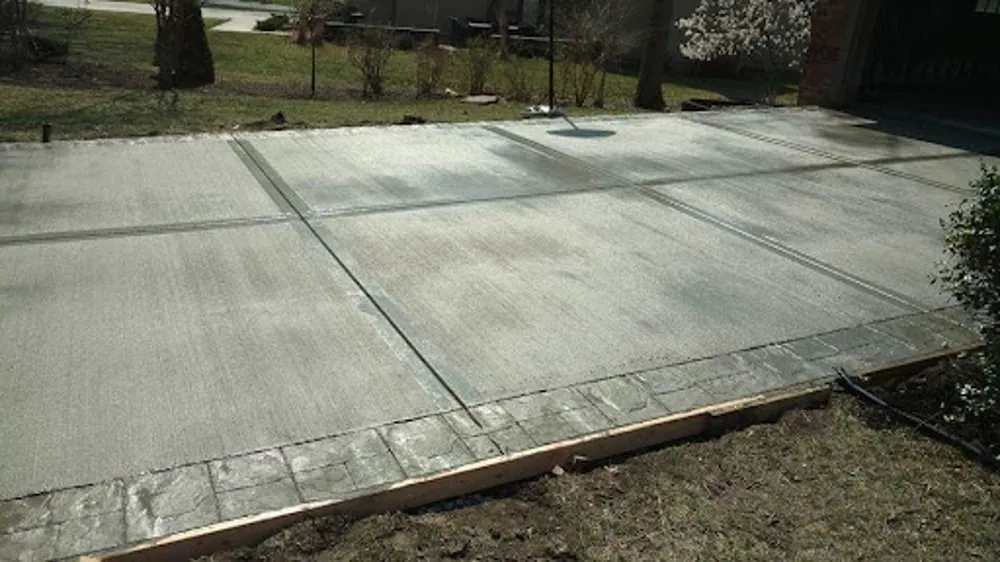
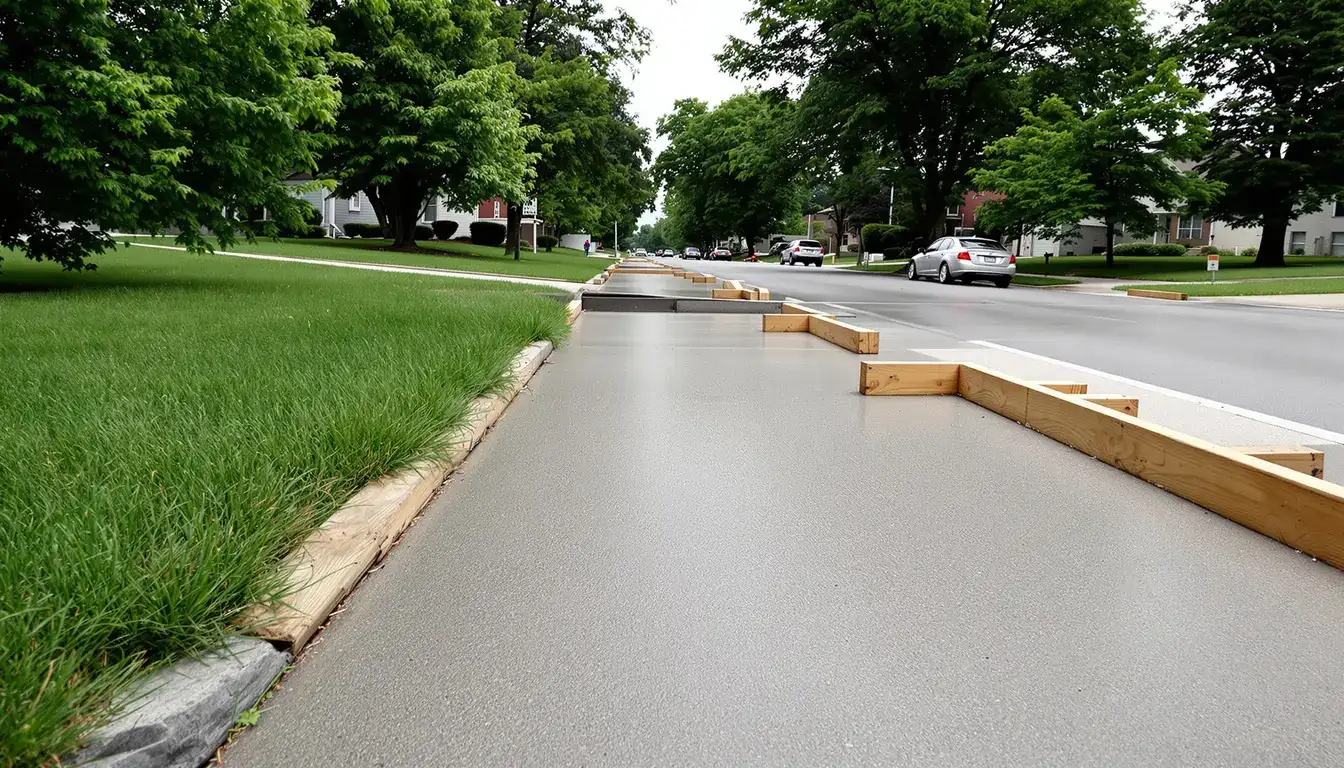
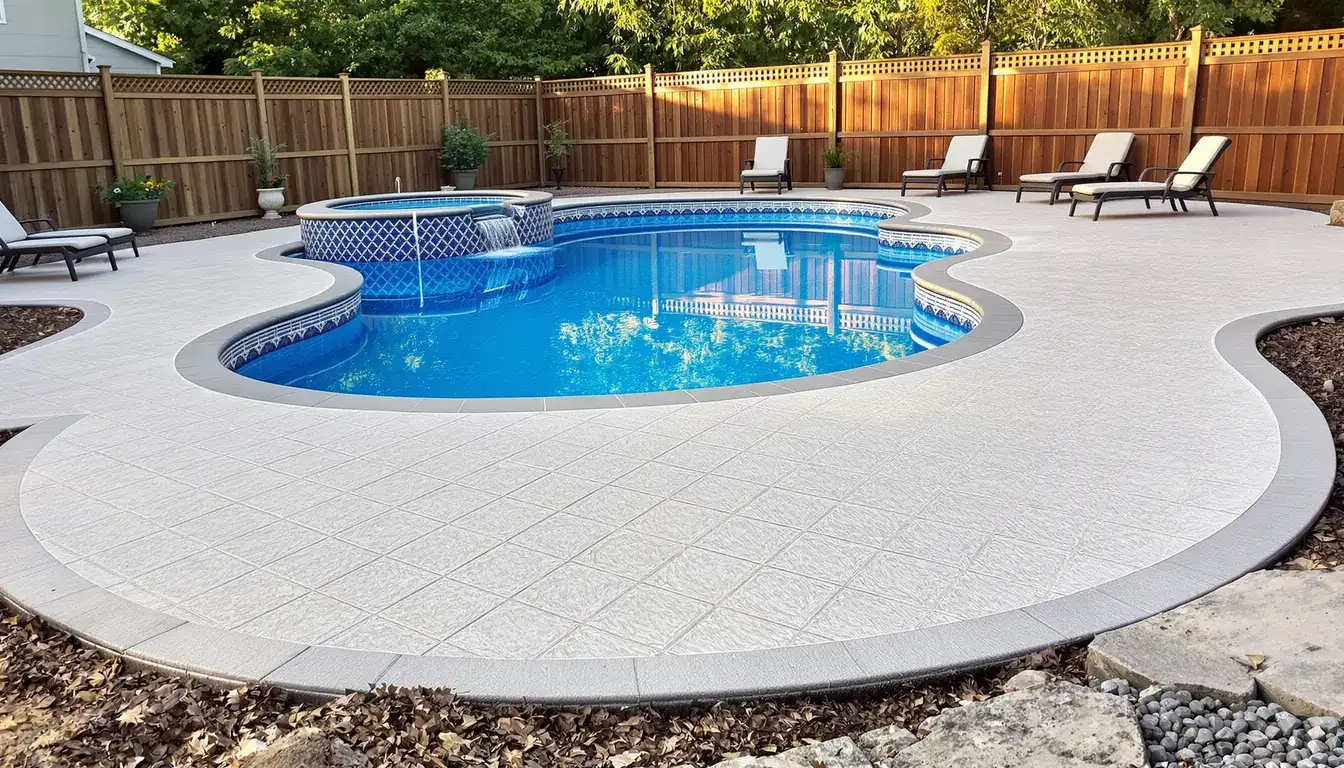
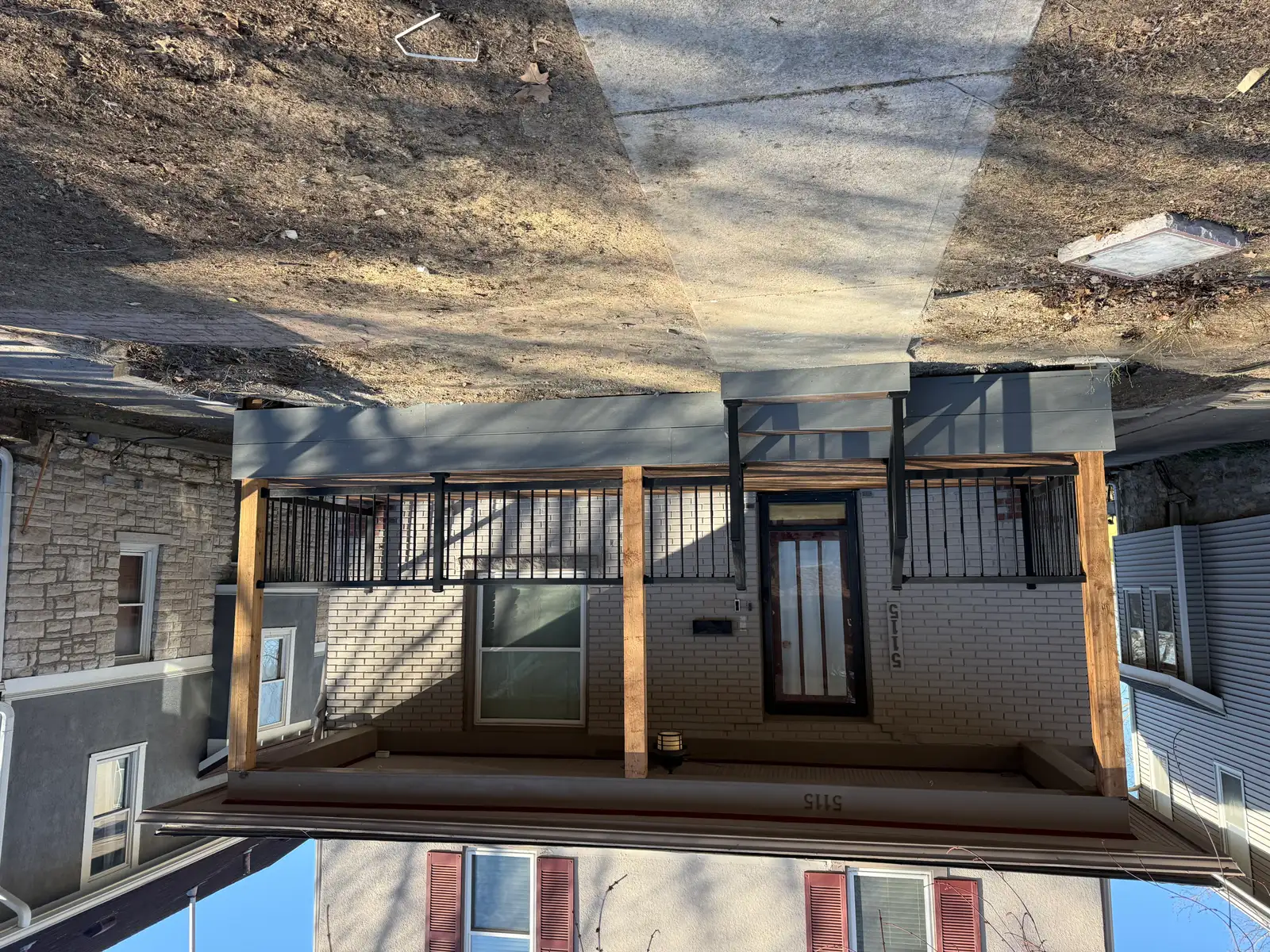
Concrete Patios & Outdoor Spaces across the Buchanan County area
Get your Saint Joseph project moving
From call to concrete — the fastest in KC.
Get a free, no-obligation estimate for your concrete project. We serve the entire Kansas City metro — call (816) 721-1699 or request your estimate online.