Concrete Overlays & Resurfacing in Buckner, MO
Concrete overlays and resurfacing for Buckner — from the Jefferson Street (MO-24) commercial strip to the Buckner Industrial Park aprons and the lots serving Fort Osage
Concrete Overlays & Resurfacing in Buckner
Concrete overlay and resurfacing solutions that restore and transform existing concrete surfaces without full replacement. Ford Concrete serves Buckner, MO and the entire Kansas City metro with more than a decade of experience and a 5-star reputation.
Buckner at a Glance
- Population
- 3,014
- State
- Missouri
- County
- Jackson County
- Schools
- Fort Osage R-I School District
Can you resurface a raveling concrete lot in Buckner, MO?
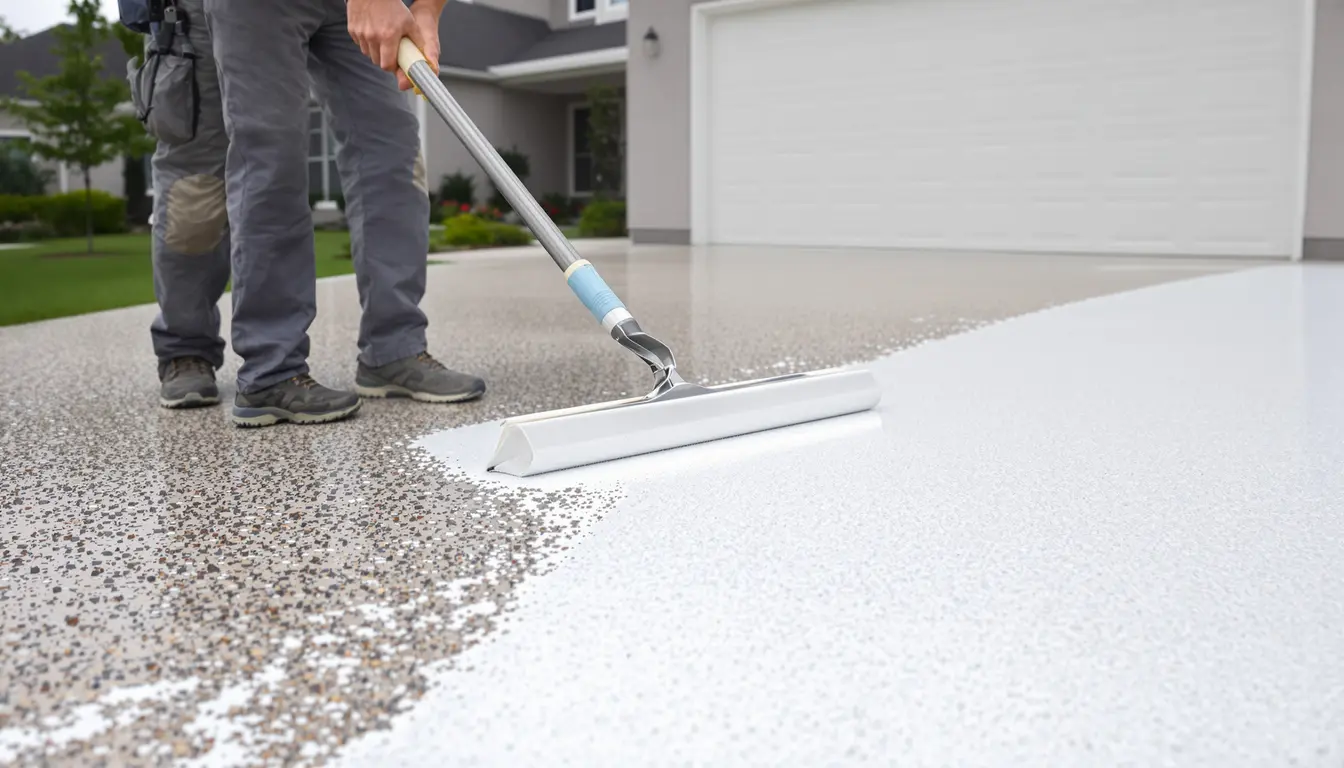
Often yes. When Buckner's surface is raveling — the top paste worn away and coarse aggregate working loose — but the slab underneath still rings solid, a textured bonded overlay re-establishes one monolithic wearing surface. The gate is whether the raveling stopped at the surface or the base has gone with it.
That read is what we run on aging lots across eastern Jackson County — the same question we answer for owners in nearby Grain Valley and Oak Grove. Our concrete overlays and resurfacing overview walks through what a topping can and can't fix on a worn slab.
Raveled-but-sound resurfaces; disintegrated reconstructs
Raveling and full disintegration look alike from a truck window and need opposite fixes. Raveling is a surface condition — the cement paste at the wearing surface has weathered off, exposing the aggregate and letting stone pop loose. If the concrete below still sounds solid, that lot is a clean resurface, and a textured overlay locks a fresh wearing course onto it.
The failure case is when the wear ran deep: the concrete itself is breaking down, or the base beneath has softened and lost support. A topping bonded to disintegrating concrete comes apart with it. So we test substrate soundness by sounding the slab before we quote — a hollow, drummy response or a face that flakes under a chisel means the lot is spent, and the honest answer is a tear-out, not a resurface.
Why the Jefferson Street strip ravels before it fails
Buckner's commercial concrete takes its heaviest wear along Jefferson Street — the MO-24 corridor carrying through-traffic between Independence and the river towns east of town. Constant tire abrasion polishes and then plucks at the surface paste, and the freeze-thaw swing does the rest: water works into the microtexture, freezes, and lifts flakes off the top. Winter deicing accelerates the scaling that starts a raveled face.
None of that means the slab is done. Surface raveling from traffic and weather is exactly the condition a resurface is built for — as long as the wear stopped at the wearing surface. A textured bonded overlay is designed to renew a sound-but-worn surface, which is what most of the MO-24 lots and the municipal parking off the strip actually have.
Wymore clay decides what happens under the slab
Under most of Buckner sits Jackson County's Wymore and Ladoga series clay — expansive ground that swells when it takes on water and shrinks as it dries, per MoDNR mapping. On a lot with poor drainage that clay stays wet, and a slab over saturated clay drives moisture vapor up through the concrete. Bond a topping to a slab that's actively pushing vapor and you invite debonding — the new layer lifts off in sheets within a season or two.
So drainage and moisture come before any topping goes down. We check where water sits and where it should run, and on a slab reading high moisture we correct grading and address the vapor path first. Owners weighing whether a lot has passed that point can read our Kansas City soil conditions guide, and for the runoff side, our storm drainage overview.
The prep is the resurfacing
A resurface is only as good as the bond beneath it, and the bond is made during prep. We start by stripping the weathered, raveled skin and the weak surface laitance down to sound concrete. Then scarification opens the surface to a coarse, textured profile — the ICRI CSP the manufacturer specifies for the system we're placing. That profile is what a topping grips.
On the profiled surface we place a bonding primer coat to chemically tie the new layer to the old, then screed the overlay into it. Where load matters — the Buckner Industrial Park access aprons, say — we can verify the finished bond with a pull-off strength test rather than take it on faith. Prep is unglamorous, and it is the whole difference between an overlay that holds for years and one that peels in months.
Minimum thickness, honored joints, and small-lot cost
A bonded overlay has a minimum thickness it must hold to carry traffic without cracking up — feather-edging a topping to nothing at the perimeter is where cut-rate resurfacing fails first. We hold the specified depth across the lot and detail the edges properly. And every control and expansion joint in the old slab gets carried up through the new surface: skip that joint honoring and the slab's movement telegraphs through as reflective cracking inside a year.
Buckner lots run small, which usually works in an owner's favor — a sound surface resurfaced is a fraction of a tear-out and reopens the lot in days, not weeks. When the base is gone, we say so and point you toward full replacement instead. Finished flatwork is in our gallery, and commercial permitting is covered in our permits and regulations guide. For KC-metro property owners, our record backs the read — Ford holds a 4.9-star rating across 29 reviews.
Aggregate working loose on a Buckner lot?
From call to concrete — the fastest in KC.
Raveling that stopped at the surface is a clean resurface; raveling that took the base with it is a tear-out. We sound the slab and hand you a written answer, usually within 24 hours. Call (816) 721-1699.
What Buckner Concrete Overlays & Resurfacing projects require
Sound the slab
Strip laitance and profile
Prime the surface
Place and honor joints
Texture and verify
Signs your Buckner Concrete Overlays & Resurfacing needs attention
Exposed, loose aggregate
A crumbling, flaking surface
A past overlay that lifted
Cracks tracing the old joints
What sets Ford apart in Buckner
Raveled surface, sound slab
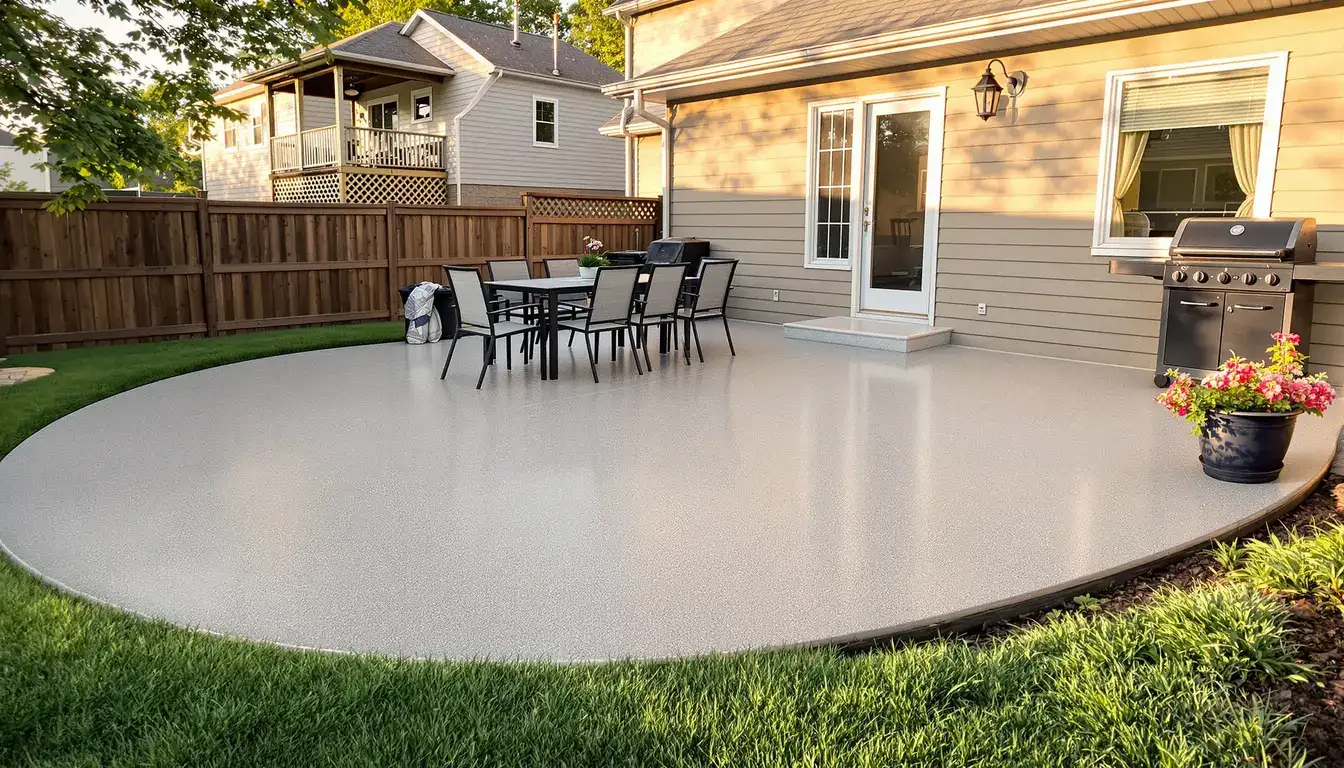
When traffic and weather strip Buckner’s surface paste but the slab still rings solid, a textured overlay re-establishes the wearing surface.
Raveling isn’t always surface-deep
If the concrete is disintegrating or the base has softened, a topping fails with it. We sound the slab before quoting.
Wymore clay sets the terms
Expansive Jackson County clay drives moisture up through wet slabs. We correct drainage and the vapor path before any overlay goes down.
The bond is built in prep
Stripping laitance and scarifying to a clean profile is what makes an overlay hold. We can pull-off test the result.
Proof we pour at any scale
From your driveway to an Amazon warehouse — the same crew, the same standards, every project.
Taco Bell
New Construction
Overland Park, KS
Domino's Pizza
New Construction
Independence, MO
Freddy's
New Construction
Kansas City
Tidal Wave Car Wash
New Construction
Kansas City
Amazon
New Construction
Riverside, MO
Nortian Food Grade Protein Facility
New Construction
Springfield, MO
Price your Buckner Concrete Overlays & Resurfacing project
Or call us directly: (816) 721-1699
Concrete Overlays & Resurfacing in Buckner — FAQs
Can you resurface a raveling lot in Buckner?
How do you tell if my Buckner lot is too far gone to resurface?
Will an overlay hold on Buckner’s clay soil?
How long does a resurfaced Buckner lot last?
Does resurfacing cost less than replacing in Buckner?
Other concrete work we do in Buckner
Where else we pour near Buckner
Start your Buckner concrete project
From call to concrete — the fastest in KC.
Get a free, no-obligation estimate for your concrete project. We serve the entire Kansas City metro — call (816) 721-1699 or request your estimate online.