
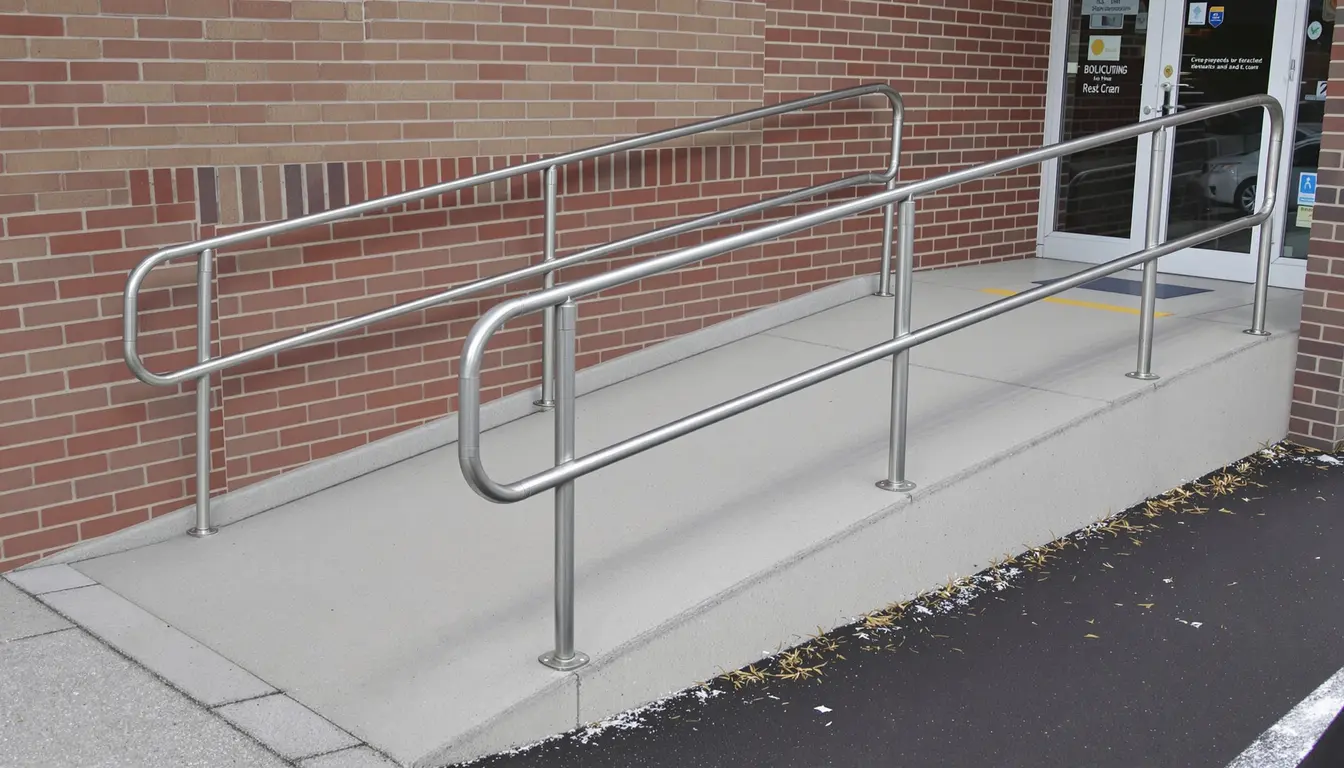
ADA Ramps & Compliance in Independence, MO
Accessible ramps and curb ramps for Independence, MO — bringing aging Noland Road strips up to the 1:12 slope, 36-inch width, and detectable-warning standards inspectors check today, on Jackson County clay built to last.
ADA Ramps & Compliance in Independence
ADA-compliant concrete ramp construction for commercial buildings, municipal facilities, and public spaces. Ford Concrete serves Independence, MO and the entire Kansas City metro with more than a decade of experience and a 5-star reputation.
Independence at a Glance
- Population
- 121,629
- State
- Missouri
- County
- Jackson County
- Schools
- Independence Public School District (ISD)
What has to be true for an ADA ramp to pass in Independence, MO?
An ADA ramp in Independence, MO passes when the running slope stays at or under 1:12, the cross slope under 1:48, and the clear width at 36 inches or more, with level landings top and bottom — the federal 2010 ADA Standards, held to a digital level rather than judged by eye.
In a city this old, most of that work is corrective. Independence grew up around the Square and the pioneer trails long before those standards existed, and its busiest retail — the Noland Road corridor especially — is full of ramps that were legal when poured and now read non-compliant — too steep, or missing a detectable warning at the bottom. Bringing them current is a rebuild, and the ground it happens on is Jackson County clay.
We know the local ground because we build on it: Ford poured the new-construction concrete for the Domino's on Independence's own retail strip. The same read on slope, drainage, and subgrade that a commercial pad needs is what makes an accessible ramp last here.
The Noland Road strips and their ADA problem
Noland Road and the older centers around Independence Center carry decades of retail traffic on pavement that predates current accessibility rules. The typical failure is a ramp that is simply too steep now — over the 1:12 max running slope — with no detectable warning where the route crosses into the drive, and a curb breaking apart at the transition.
A compliant fix is not a patch. It means the right running slope, a level landing, and a rebuilt curb ramp with a full-width warning strip — usually removing the old concrete and rebuilding the transition rather than skim-coating over it. We shoot the existing grades first and tell you plainly what has to move. It is the same corrective work we bring to Blue Springs, Lee's Summit, and Liberty, and to our concrete repair jobs.
Wymore clay and where a ramp's slope goes
Independence sits on Jackson County's Wymore and Ladoga clay — soil that swells when wet and shrinks when dry with every season. That movement is what quietly steals a ramp's slope: it tips a landing, opens a lip at the grade break, and pushes a run that started compliant back over tolerance a few winters later.
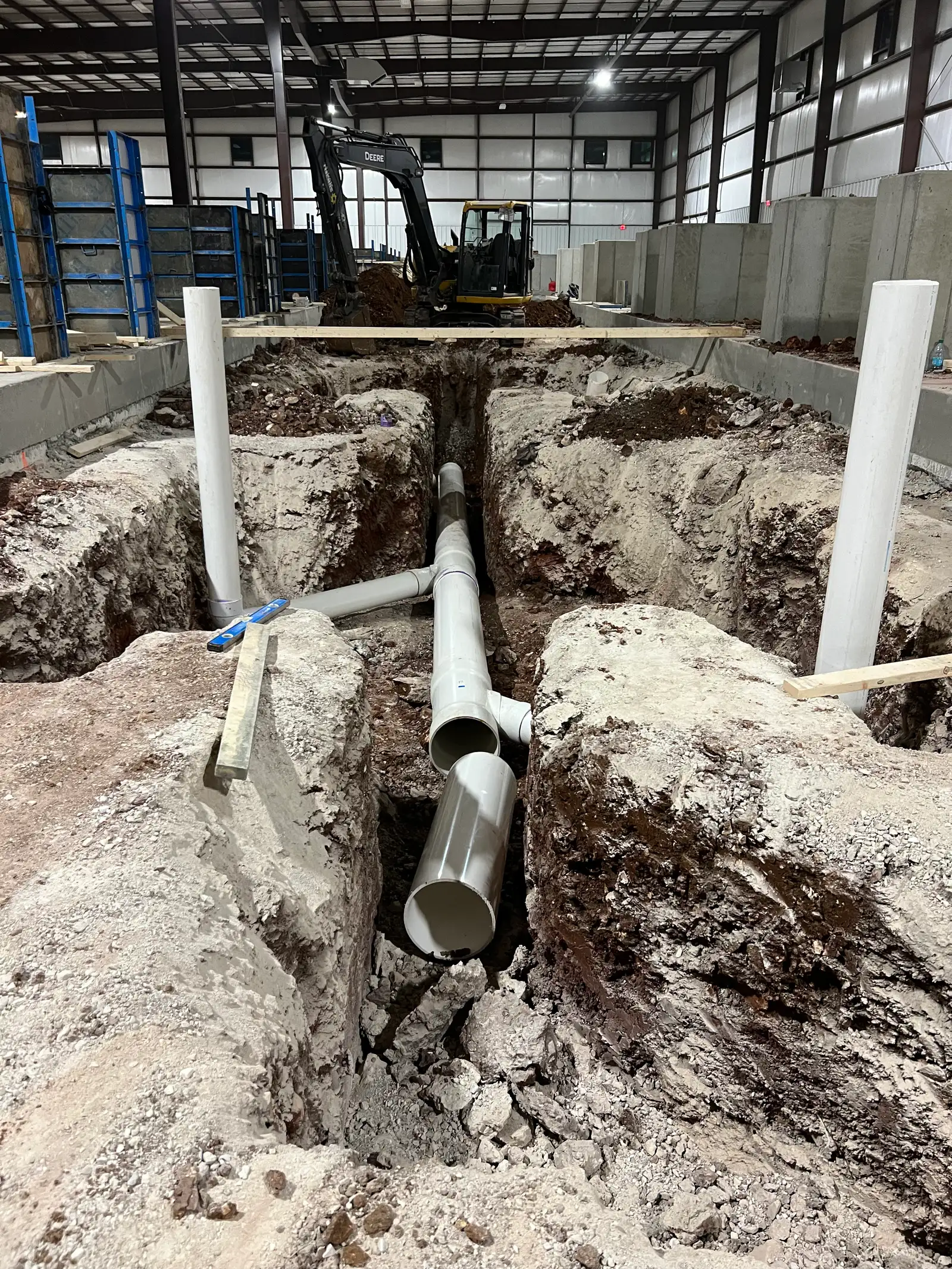
A ramp built without addressing that base is a ramp built to fail twice. We stabilize and drain the subgrade so water is not sitting under the slab to drive the clay, then set the slope with margin to spare. How the ground behaves across the metro is laid out in our Kansas City soil guide.
Detectable warnings on the Square and the Truman routes
Around Independence Square and the public approaches to the Truman Presidential Library, the pedestrian traffic is constant and the routes are public — which puts them under PROWAG as well as the ADA. Every place an accessible route crosses into traffic needs a truncated-dome detectable warning across its full width.
We set the domes flush and squared to the run, with a clean grade break into the gutter so no lip stops a caster or a cane. On raised runs we add edge protection so a wheel can't roll off the side. Public-route work like this overlaps with our municipal projects.
From the lot to the door at Independence Center and Centerpoint
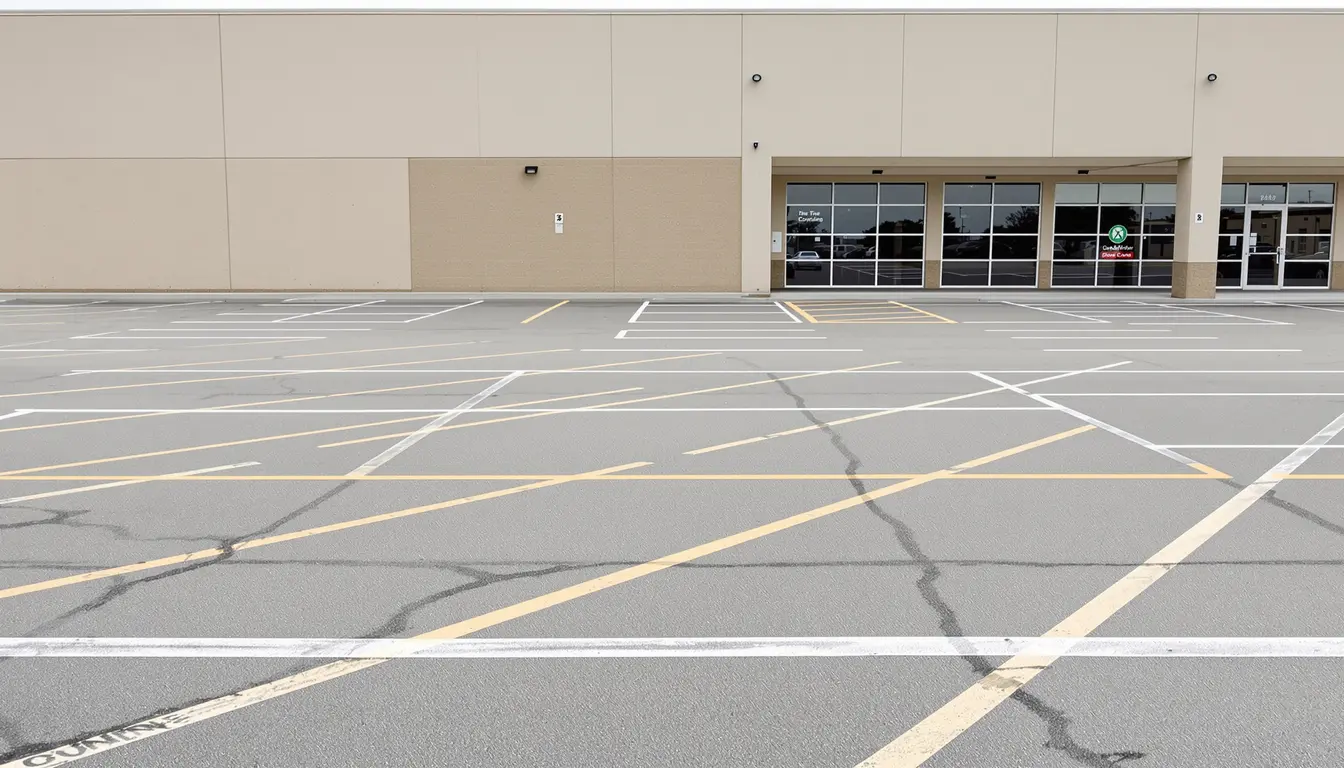
At the big destinations — Independence Center, the Centerpoint Medical Center campus, the Noland Fashion Square strips — accessibility is about the whole path, not one ramp. A person has to get from an accessible stall across the lot and into the building without hitting a slope, a lip, or a gap that stops them.
We map the full route, place the ramps where the path actually runs, and hold the cross slope under 1:48 max cross slope so a wheelchair does not drift on the way. At a medical campus that margin is not optional — it is the difference between an entrance that works and one that only looks accessible. See related retail work and our sidewalks and walkways.
Poured below the max, checked as-built
There is a difference between a ramp designed to 1:12 and a ramp that reads 1:12 after it cures. Forms move, concrete settles, and a run poured right at the limit can finish just over it. That is why we design below the maximum — design-slope-below-max — and give the clay something to move into before it pushes the ramp out of tolerance.
Then we prove it. Every ramp closes with as-built slope verification: a digital-level pass across the run and the landings confirming the finished numbers, not the intended ones. If a reading is off, we fix it before we leave, not after an inspector flags it.
Winter, salt, and staying compliant in Independence
Once the ramp is right, the season goes after it. Freeze-thaw cycling and de-icing salt attack the surface, and on Jackson County clay the ground keeps working underneath, ready to open a lip at the grade break. A ramp has to be built to take both.
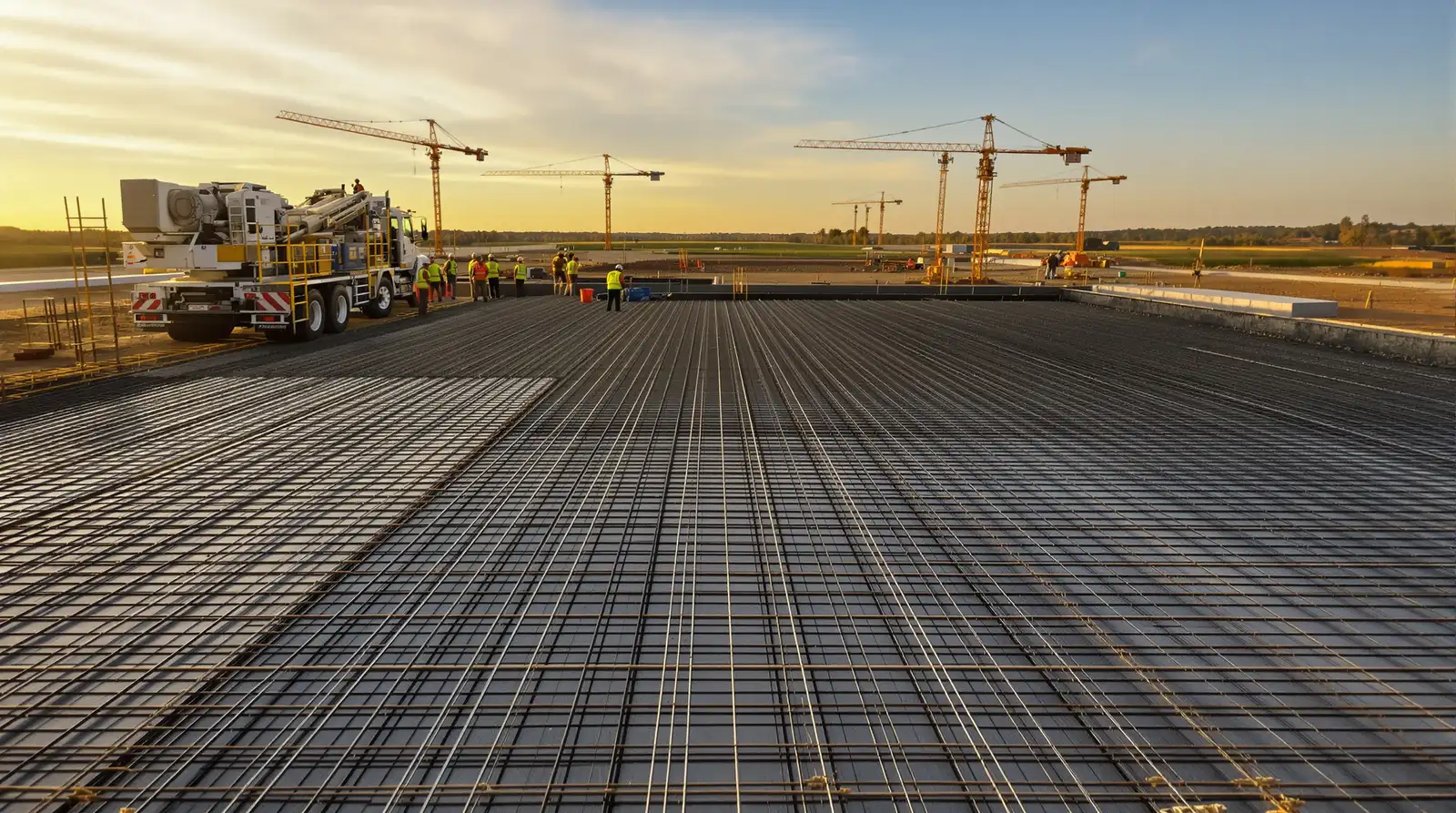
We place air-entrained 4,000-PSI concrete, broom a slip-resistant texture into the run, and seal the joints against salt so meltwater is not driving into the slab or the base. Built that way, an Independence ramp keeps its footing and its slope for years. Start with the ADA ramp service or our permits and regulations guide. Ford holds a 4.9 rating on Google across 29 reviews.
Ramp overdue for ADA compliance in Independence?
From call to concrete — the fastest in KC.
We shoot the existing grades, tell you what has to move, and rebuild it to pass — verified with a digital level. Call (816) 721-1699 for a written estimate after a site visit, usually within 24 hours.
What goes into an Independence ADA Ramps & Compliance job
Shoot the existing route
Grades from stall to door to find where slope, width, or landings miss the marks.
Read the subgrade
Jackson County Wymore and Ladoga clay sets the base plan for the rebuild.
Design below the max
Running slope under 1:12, cross slope under 1:48, with margin for clay movement.
Remove and rebuild the base
Out with the old concrete, in with a stabilized, drained subgrade and formed edges.
Set edges and warnings
Edge protection on raised runs, detectable-warning fields squared to the bottom.
Pour and texture
Air-entrained 4,000-PSI concrete, broom-finished for traction.
Verify and seal
Digital-level slope check across run and landings, then joint sealant against de-icing salt.
Is your Independence ADA Ramps & Compliance failing?
Ramp steeper than 1:12
A pre-standard Noland Road ramp that now reads over 1:12 is non-compliant and a liability.
No detectable warning
Missing truncated domes where a route crosses into a drive is the most common ADA gap on older Independence ramps.
Alligator cracking at the ramp
A ramp surface breaking into a web of cracks has lost its slope accuracy and its footing — a rebuild, not a patch.
Curb failure at the transition
Broken curb where the ramp meets the lot means the transition has to be rebuilt to pass.
Tipped or settled landing
Jackson County clay movement pulls a landing out of level and out of compliance.
Lip at the grade break
A step where the ramp meets the gutter stops a front caster and shows the panels have moved.
The Ford difference on Independence ADA Ramps & Compliance
Corrective ADA specialists
We bring Independence's older Noland Road ramps up to current 1:12 slope and detectable-warning standards, not skim-coats.
We build here
Ford poured the new-construction concrete for the Domino's in Independence — the same read on subgrade that makes a ramp last.
4.9 stars across 29 reviews
KC-metro property owners rate Ford 4.9 on Google over 29 reviews for concrete flatwork.
Verified, not assumed
Every ramp closes with a digital-level as-built check that the finished slope actually reads compliant.
Proof we pour at any scale
From your driveway to an Amazon warehouse — the same crew, the same standards, every project.
Taco Bell
New Construction
Overland Park, KS
Domino's Pizza
New Construction
Independence, MO
Freddy's
New Construction
Kansas City
Tidal Wave Car Wash
New Construction
Kansas City
Amazon
New Construction
Riverside, MO
Nortian Food Grade Protein Facility
New Construction
Springfield, MO
Price your Independence ADA Ramps & Compliance project
Or call us directly: (816) 721-1699
ADA Ramps & Compliance in Independence — FAQs
Can you bring an old Noland Road ramp up to ADA code?
What is the maximum slope for an ADA ramp?
Do the ramps around Independence Square have to meet different rules?
Why does my ramp need truncated domes?
How do you keep the ramp from failing again on clay?
Other concrete work we do in Independence
Nearby Independence-area projects
Start your Independence concrete project
From call to concrete — the fastest in KC.
Get a free, no-obligation estimate for your concrete project. We serve the entire Kansas City metro — call (816) 721-1699 or request your estimate online.