
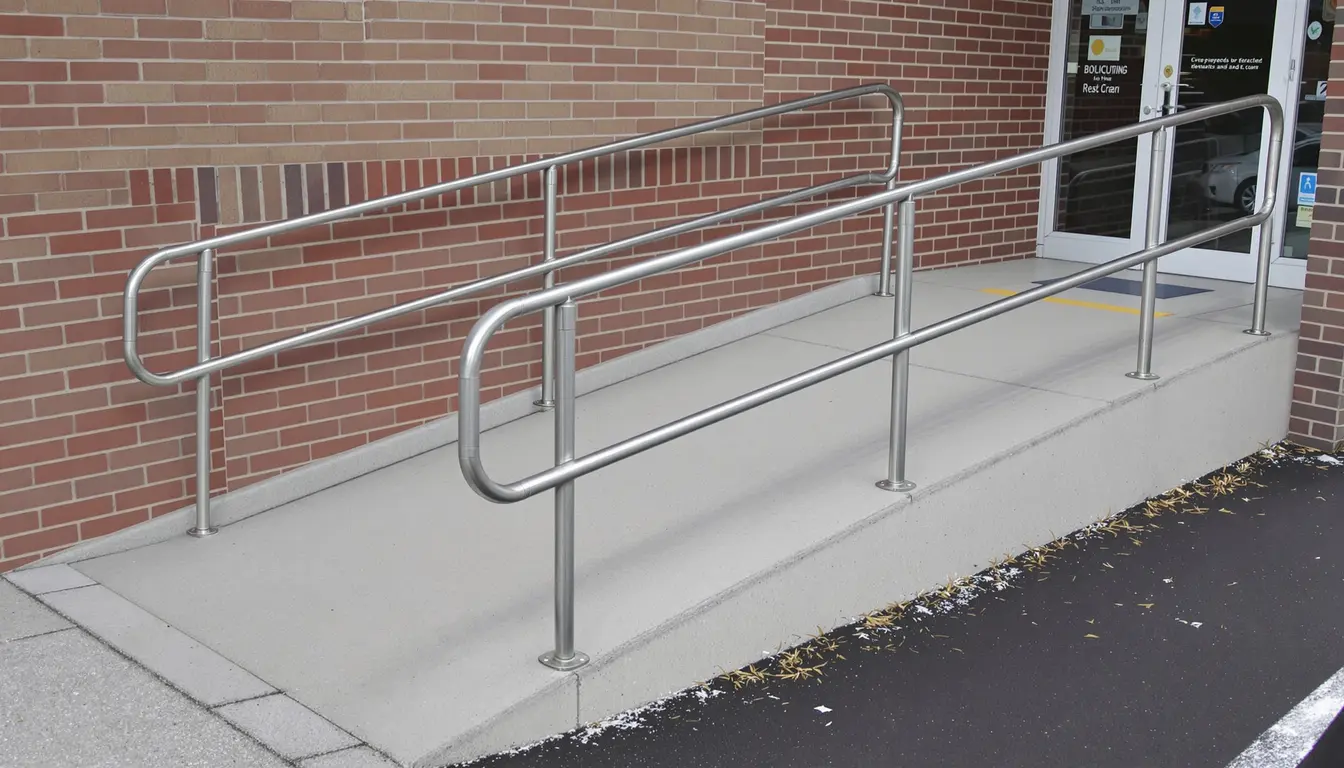
ADA Ramps & Compliance in Kearney, MO
Accessible ramps and curb ramps for Kearney, MO — engineered to the 1:12 slope, 36-inch width, and detectable-warning standards a high-standard town enforces, from the I-35 and MO-92 retail nodes to the schools and Jesse James Park, over Clay County clay.
ADA Ramps & Compliance in Kearney
ADA-compliant concrete ramp construction for commercial buildings, municipal facilities, and public spaces. Ford Concrete serves Kearney, MO and the entire Kansas City metro with more than a decade of experience and a 5-star reputation.
Kearney at a Glance
- Population
- 10,565
- State
- Missouri
- County
- Clay County
- Schools
- Kearney R-I School District
What has to be true for an ADA ramp to pass in Kearney, MO?
A Kearney ramp passes when the running slope holds at or under 1:12 max running slope, the cross slope stays under 1:48 max cross slope, the walking surface keeps a firm 36 inches of clear width, and level landings sit at both ends — the 2010 ADA Standards, verified on the poured slab. Public street and sidewalk ramps follow PROWAG.
Kearney is a high-growth Northland town with a reputation for strict development codes, and that reputation reaches the concrete. A curb ramp here is inspected against the standard and the city's own expectations, so there is no margin for a run that measures right on a good day and drifts on a bad one.
A high-standard town and the code behind its ramps
Kearney enforces its development and hard-surface codes tightly, which is why a ramp built to the bare minimum tends to come back on the punch list. We build the way a strict-code town rewards — the run poured to design-slope-below-max, the landings held flat, the flatwork finished clean enough to pass a close look. That is the same standard we carry as a general-contractor partner and across the metro on ramps in Liberty and Smithville, and it is why our reviews cite responsiveness and follow-through rather than a callback.
Civic and retail lots at their structural limit
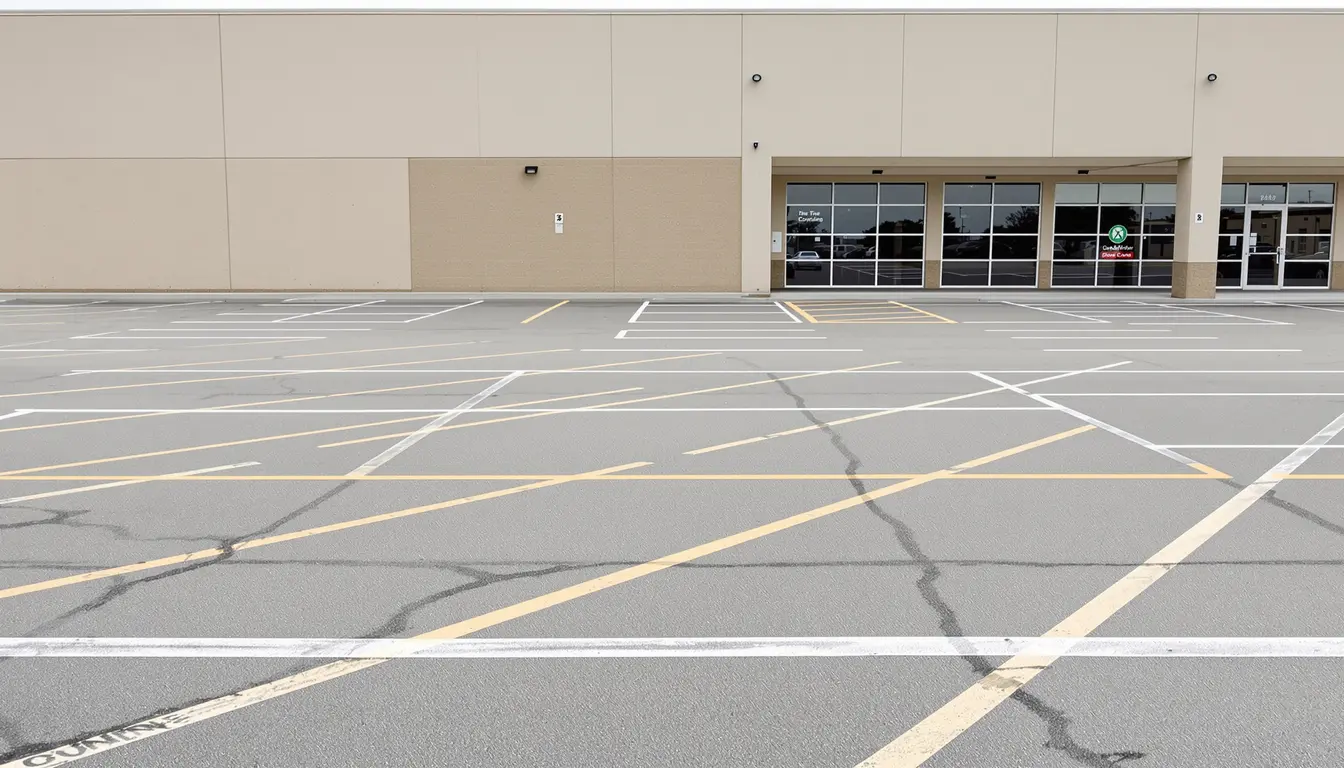
Many of Kearney's primary retail centers and civic lots — the MO-92 shopping corridor, the schools, the community facilities — were built in the 1990s and 2000s and are now reaching a 20-year structural limit. When one of those lots is resurfaced or rebuilt under code, the accessible route has to come with it, and a curb ramp that has spent two decades on shifting ground rarely still meets slope. We replace those corners outright rather than skim over them, so the new run starts from a true base. Our planning guide covers how a full replacement compares to a patch on aging pavement.
Clay County clay and where a ramp's slope goes
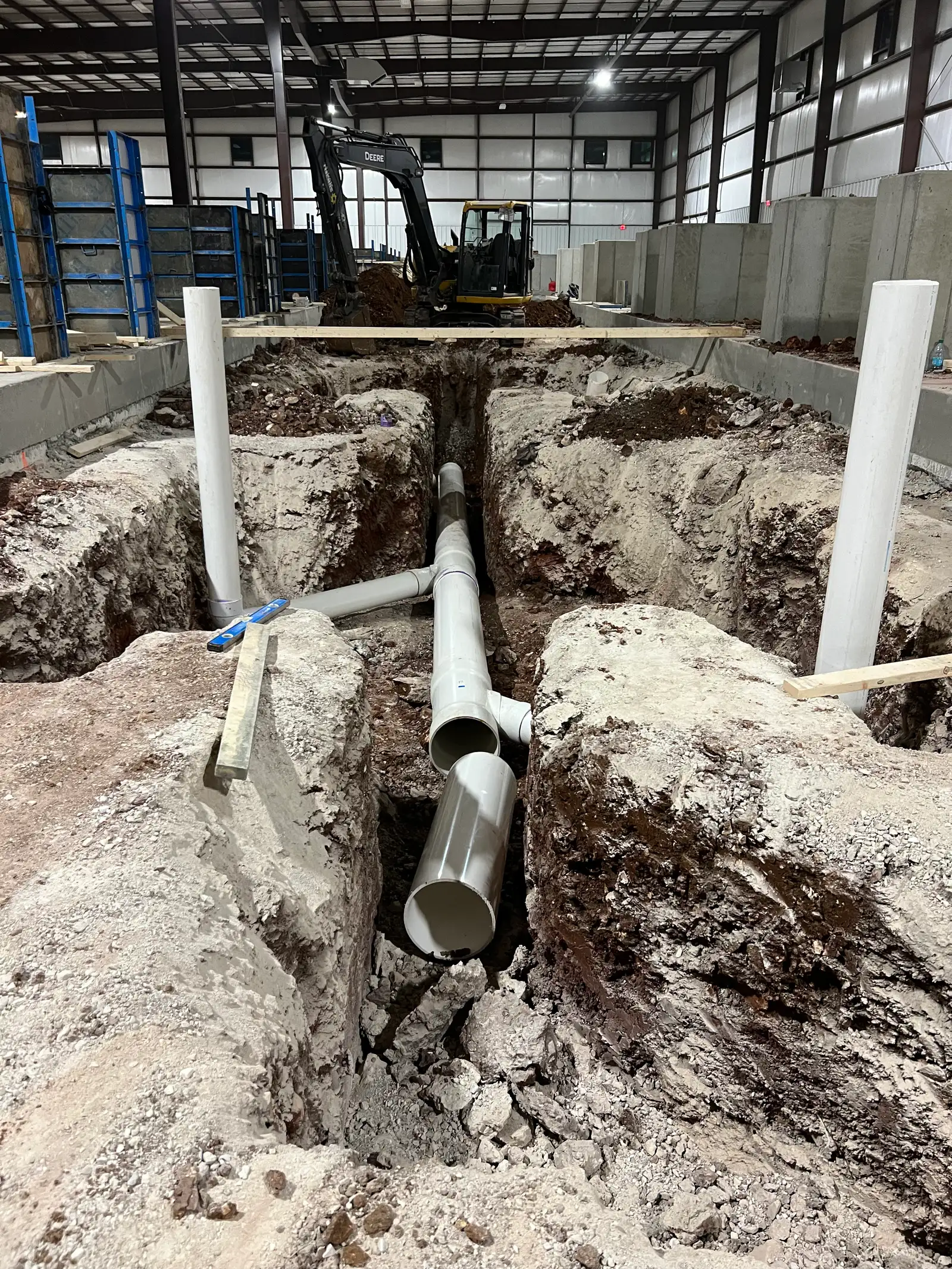
Kearney sits on Clay County silty clay, and much of its new development is on former farmland where that clay has never carried a slab. It swells with moisture and shrinks in a dry stretch, lifting and dropping concrete through the seasons, and on a ramp that movement is stolen slope. We compact the subgrade at the right moisture, build a drained base, and set the grade break to carry water off instead of trapping it against the landing. Our soil guide explains how this ground behaves, and it is why we pour the run shallow and confirm it with as-built slope verification.
Curb ramps and detectable warnings from the schools to Jesse James Park
Kearney's heaviest pedestrian load lands on its school and athletic lots and at civic draws like Jesse James Park and the amphitheater, where event nights put a crowd across the same corners at once. At each point where a walk meets a street or drive lane, a detectable warning is cast into the wet slab so a cane and a low-vision user get the same cue at every crossing. Where a ramp carries a drop at its side, edge protection holds a wheel on the path, and the landings are sized so a chair can turn without leaving the level. We hold the same detail on sidewalks and walkways and curb and gutter across the site.
Designed below the max, verified as-built
A slope drawn under the limit only counts if the finished concrete matches it, so a Kearney ramp is measured twice — once when we stake it and once when it has cured. We set the run to design-slope-below-max on purpose, then read the finished grade with a digital level and record it, because a ramp poured at exactly 1:12 the day it sets has nowhere to go but out of compliance the first time the clay moves. That record is what lets a strict-code inspection close on the first visit instead of the third.
Freeze-thaw, de-icing salt, and keeping a Kearney ramp compliant
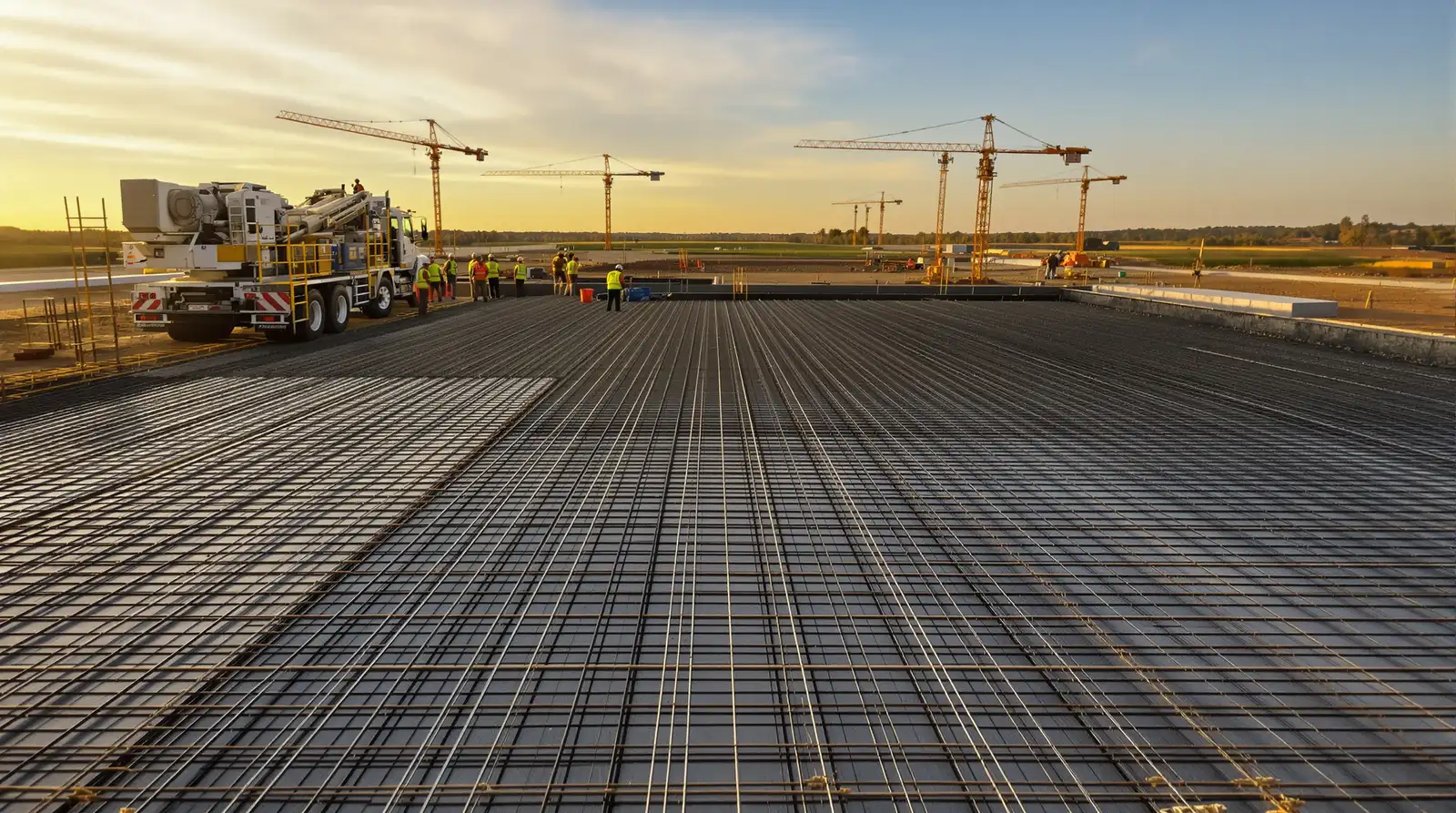
A Clay County winter runs a ramp through repeated freeze-thaw and a season of de-icing salt, and both hit hardest right at the grade break. We pour air-entrained 4,000 PSI concrete so the mix takes the cycling, broom-finish the surface for grip when it is iced, saw-cut the joints to steer cracking away from the landings, and detail the drainage so melt sheds off the run instead of glazing it. Built and sealed this way, a Kearney ramp holds its slope and its warnings for the long run. See our finished work in the project gallery and the reviews; Ford Concrete is licensed, bonded and insured, and rates 4.9 on Google across 29 reviews for concrete work across the Kansas City metro.
Building to Kearney's code on the MO-92 corridor or a school lot?
From call to concrete — the fastest in KC.
We build Kearney's ramps below the slope maximum on a base made for Clay County clay, rebuild aging corners from scratch, and verify each finished run with a digital level. Call (816) 721-1699 for a written estimate after a site visit, usually within 24 hours.
Our ADA Ramps & Compliance method for Kearney sites
Shoot the corners
We level the retail, civic, and school corners to map what falls short of the standard.
Stake under the limit
We set running and cross slope below the maximums, leaving the clay room to move.
Rebuild the base
We remove aging pavement, compact the clay subgrade at proper moisture, and pitch it to drain.
Form and embed
We form the run and landings and cast detectable-warning panels into the wet slab.
Pour and broom
We place 4,000 PSI air-entrained concrete, broom it for traction, and saw the control joints.
Verify the slope
We read the cured grade with a digital level and record that it holds under the maximums.
Seal for winter
We detail drainage and seal the surface so freeze-thaw and de-icing salt do not scale the ramp.
Signs your Kearney ADA Ramps & Compliance needs attention
Aging lot corner over 1:12
Curb with no domes
Sunk landing on new ground
Caster-catching lip
Landing over 1:48
Salt-scaled ramp face
The Ford difference on Kearney ADA Ramps & Compliance
Built for a strict code
The run is poured below the maximum and the flatwork finished clean, so a Kearney ramp closes on the first inspection.
Replaced, not skimmed
An aging civic or retail corner is rebuilt from a true base, not overlaid on ground that already moved.
Base for new farmland ground
On former farmland the clay subgrade is compacted and drained before the pour, so nothing settles under the ramp.
Measured, then recorded
We read the cured slope with a level and log it, which is what a strict-code sign-off wants to see.
The projects behind our name
From your driveway to an Amazon warehouse — the same crew, the same standards, every project.
Taco Bell
New Construction
Overland Park, KS
Domino's Pizza
New Construction
Independence, MO
Freddy's
New Construction
Kansas City
Tidal Wave Car Wash
New Construction
Kansas City
Amazon
New Construction
Riverside, MO
Nortian Food Grade Protein Facility
New Construction
Springfield, MO
Start with a free Kearney estimate
Or call us directly: (816) 721-1699
ADA Ramps & Compliance in Kearney — FAQs
Does Kearney's strict code change how a ramp is built?
Why replace an old ramp instead of resurfacing it?
How does building on former farmland affect a ramp?
Can you handle ramps at the school and event lots?
What keeps a Kearney ramp from scaling in winter?
More Kearney concrete services
Serving Kearney and the surrounding metro
Get your Kearney project moving
From call to concrete — the fastest in KC.
Get a free, no-obligation estimate for your concrete project. We serve the entire Kansas City metro — call (816) 721-1699 or request your estimate online.