Concrete Parking Lots in Lawrence, KS
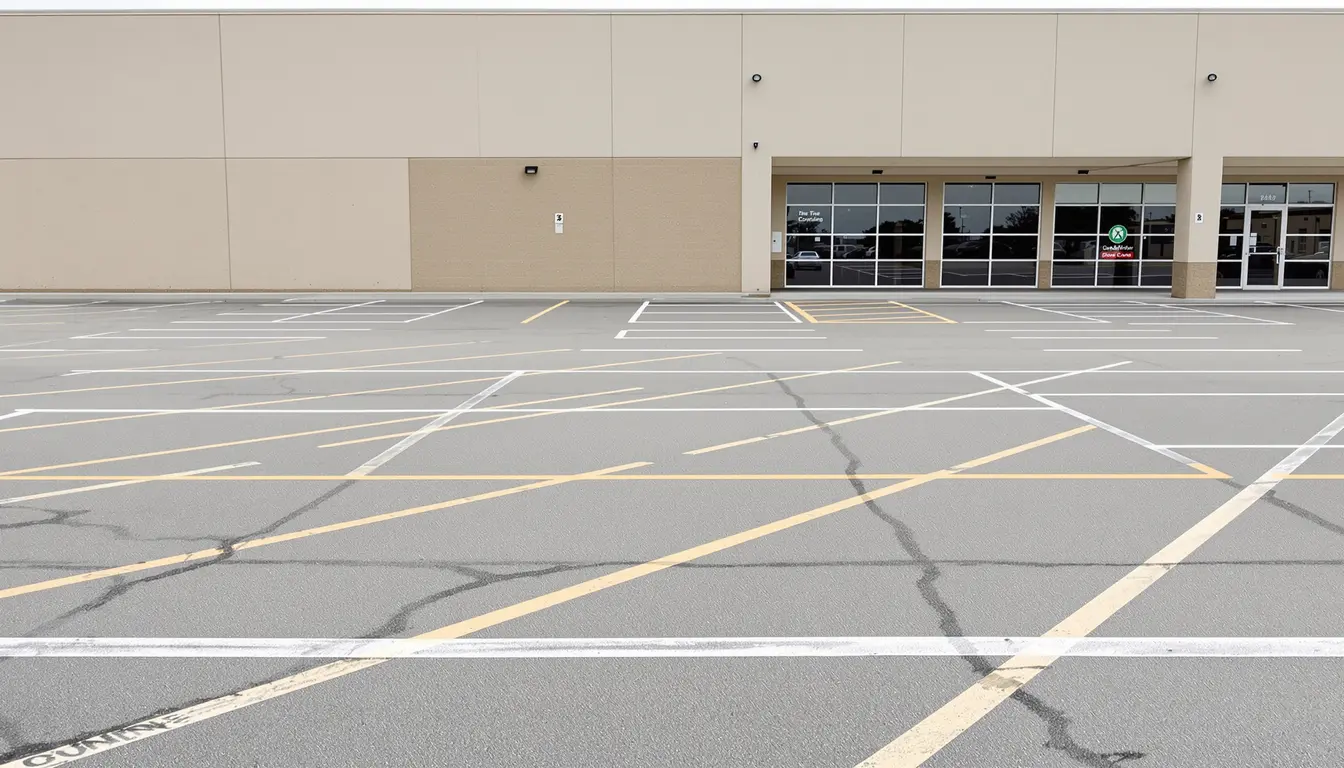
Commercial concrete lots for Lawrence — designed for the turnover a university town puts on pavement and built to Douglas County ground, from a Massachusetts Street block to an Iowa Street retail corridor.
Concrete Parking Lots in Lawrence
Commercial parking lot construction, expansion, and replacement for businesses, restaurants, and retail centers. Ford Concrete serves Lawrence, KS and the entire Kansas City metro with more than a decade of experience and a 5-star reputation.
Lawrence at a Glance
- Population
- 97,411
- State
- Kansas
- County
- Douglas County
- Schools
- Lawrence Public Schools (USD 497)
What makes a concrete parking lot last in Lawrence?
A Lawrence lot lasts when it is designed to how a college town uses it and built for the ground under it. That means matching traffic loading to the turnover a university crowd puts on the drive aisles, a base set for the river bottoms or the upland, and a joint plan that holds flat.
Ford pours commercial flatwork across the metro out to Lawrence, the western anchor. A lot near the University of Kansas or along Massachusetts Street sees a very different life than a private drive off the South Lawrence Trafficway, and we plan the pavement to that life before we place it — to Douglas County and KDHE requirements.
A lot built for how a college town uses it
Lawrence pavement earns its wear differently than a suburban retail lot. Around KU, Mass Street, and the Iowa Street corridor, the same stalls turn over dozens of times a day, event weekends surge the whole system at once, and move-in and game days concentrate traffic into a few entrances. That constant cycling grinds the drive lanes and the turning points far harder than the number of stalls would suggest.
We design for the cycles, not just the count. The high-turnover aisles and entrances get their thickness set from the ESAL the site really generates — the equivalent axle passes over the pavement’s life — while the parking bays are built to what they carry and no more. A student-housing lot near campus, a Lawrence Memorial hospital approach, and a Rock Chalk Park event lot are three different problems, and we treat them that way.
Two grounds under Lawrence: the bottoms and the upland
Where a Lawrence lot sits decides how its base is built. In North Lawrence and along the Kansas River, the ground is Kaw-valley alluvium — soft, moisture-heavy, and low-bearing, so it needs subgrade stabilization and a base engineered to raise the support before any concrete goes down. On the Mount Oread upland and the south-side neighborhoods, the Douglas County silty clay-loam drains better but still moves with the seasons.
Either way we build the base to a consistent k-value so the pavement has uniform support end to end, and we probe graded fill on the newer west-Lawrence sites before we form anything. Reading the ground first is the same standard we bring to Eudora and De Soto lots down the Kaw valley — see how the metro’s soils differ in our soil-conditions guide.
Designing the pavement to the traffic each zone carries
Most of a Lawrence lot carries almost nothing — passenger cars in the stalls barely register. The wear lives in the drive aisles, the entrances off Iowa or 23rd Street, and the loading and dumpster zones behind the building. We separate the lot into light vs heavy-duty zones and give each the thickness it needs, following ACI 330, the concrete parking lot standard.
The industrial side of town raises the load again. The Hallmark and Berry Global plants and the K-10 corridor put real freight on their pavement, so a distribution apron there is designed to a heavier section than a Mass Street retail lot. Getting the pavement thickness design right by zone is what keeps the drive lanes from rutting while it keeps money out of stalls that will never need it.
Joints, dowels, and load transfer
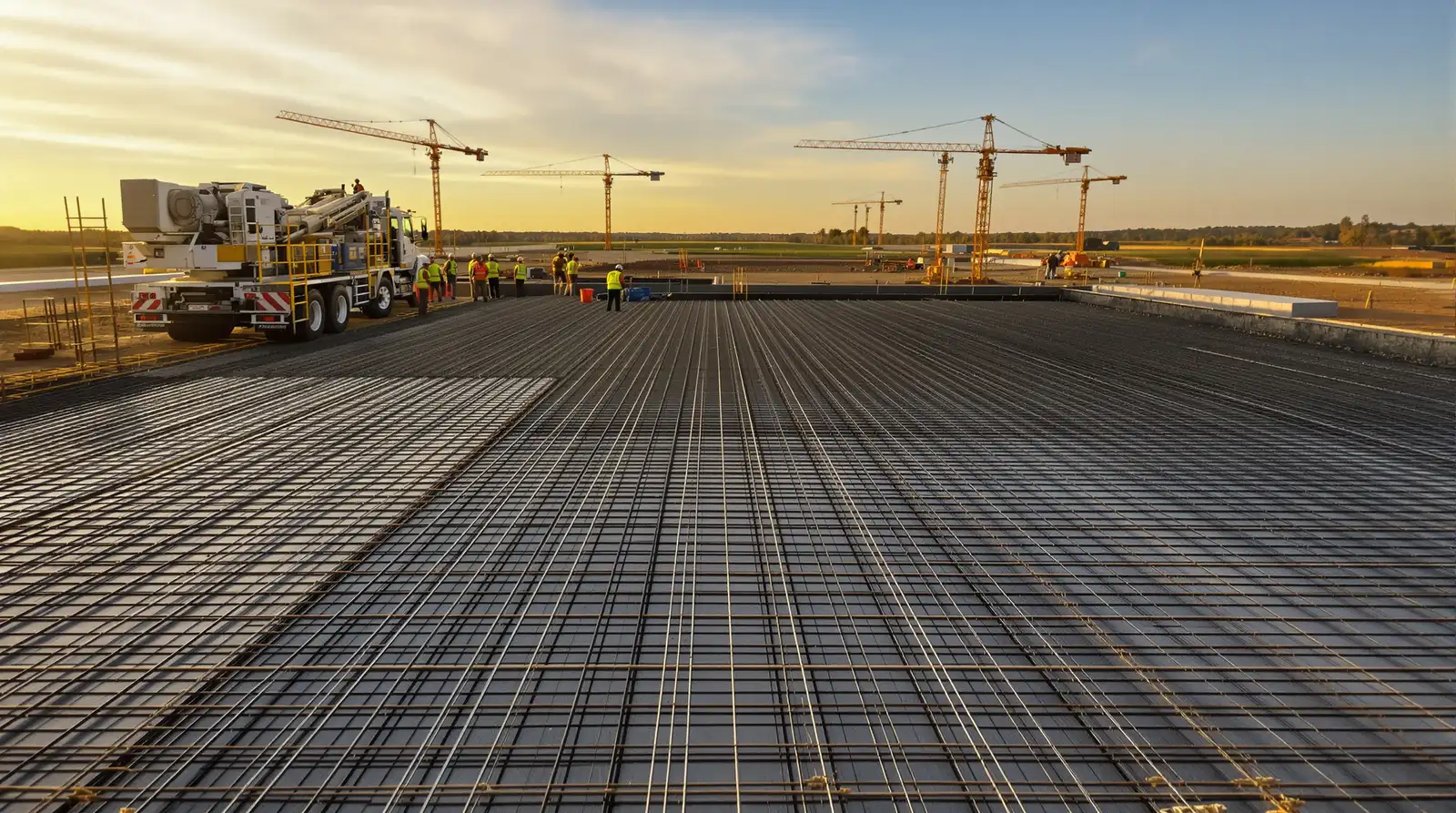
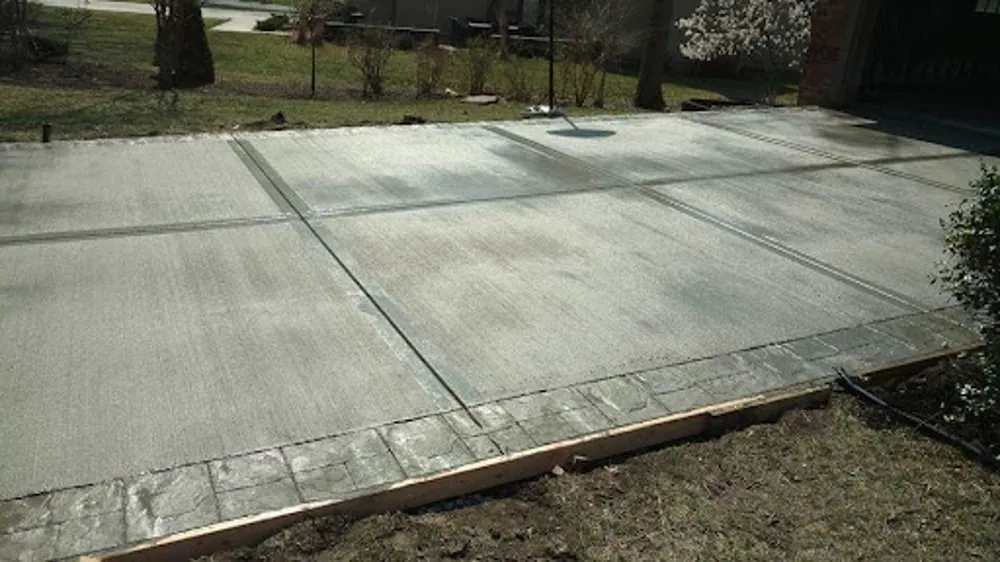
Concrete cracks; the job is to control where. We saw-cut the jointed concrete pavement on a planned grid sized to the slab thickness, and at the construction joints and the loaded entrances we set dowel bars so adjacent panels share the load and stay level — the load transfer that keeps a high-turnover entrance flat through years of cycling traffic. Longitudinal joints get a tie bar to keep the lanes from separating.
Every joint then gets a joint sealant to keep water and de-icing salt out of the cut, because Douglas County’s 34-inch frost depth and freeze-thaw winters punish any opening left unsealed. The concrete is placed at 4,000 PSI and air-entrained so the surface resists the scaling that pits an untreated lot.
Freeze-thaw and the aging Iowa Street lots
A lot of Lawrence’s commercial pavement along South Iowa Street and 23rd Street has been carrying retail turnover for decades, and it shows — raveling surfaces, faulted joints, and curb lines that no longer drain. Not all of it needs a full rebuild. When the base is still carrying and the failure is on the surface, a targeted repair buys years; when the subgrade is the problem, the panels come out.
We read the difference before quoting either, and fix the water first — a lot that ponds will fail again no matter how good the concrete is. That rehab judgment ties into our concrete repair service, and the surrounding curb and drainage work into our curb and gutter crew.
Keeping a live campus or corridor open
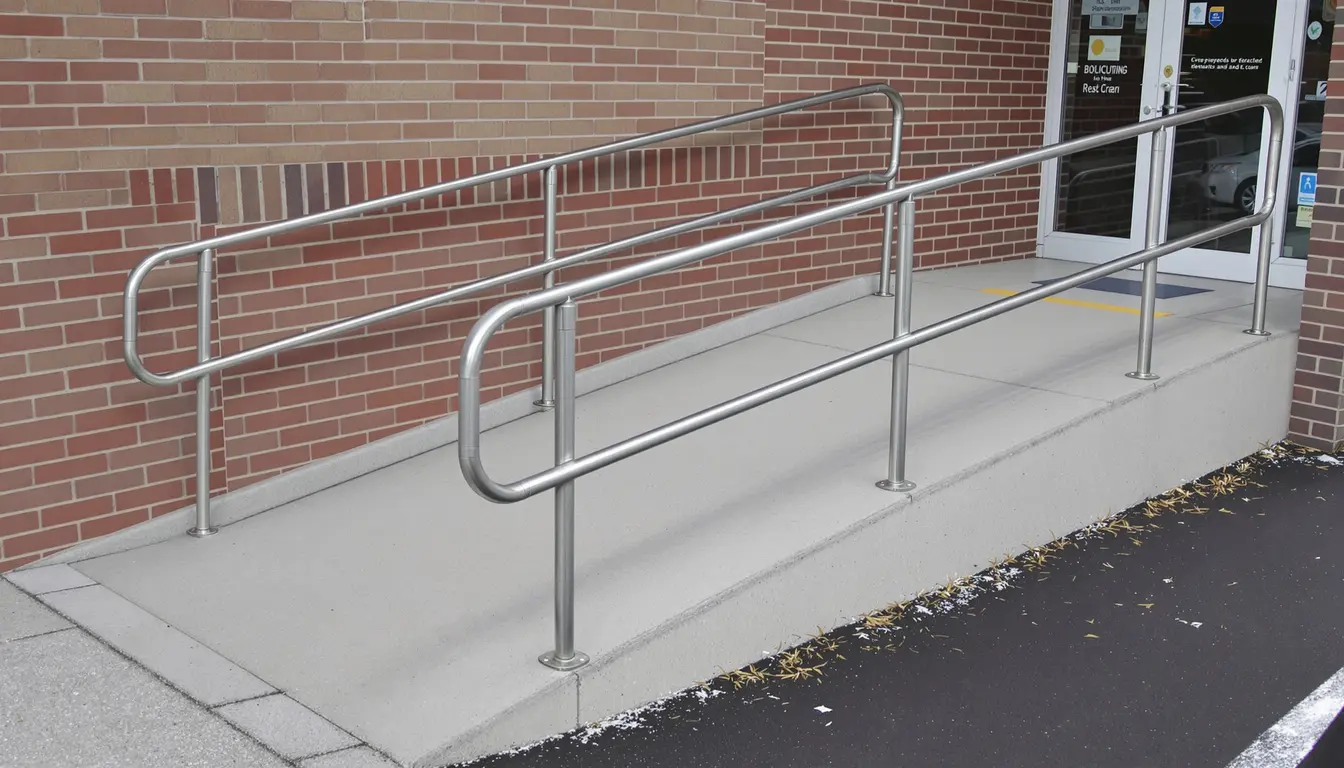
A student-housing lot or an Iowa Street retail center cannot close, so we plan the work in stages. Phasing the demolition, subgrade, and pours lets one part of the lot keep operating while another cures, and we sequence the entrances so tenants, customers, and deliveries still reach the building. Where an older lot has ADA gaps, the rebuild brings the accessible stall count, slope, and building approach into compliance as part of the work — tied into our ADA ramp service.
Ford is a KC-metro commercial crew: the same discipline that placed the concrete at the Amazon build in Riverside goes under a Lawrence retail or campus lot. It does not change with the size of the job — it changes with the load. Reviews across the metro put Ford at 4.9 on Google over 29 reviews; see the retail and commercial range or start from the parking lot service.
Planning a commercial lot in Lawrence?
From call to concrete — the fastest in KC.
We design to your traffic and the Douglas County ground, then pour with commercial discipline. Call (816) 721-1699 for a written estimate after a site visit, usually within 24 hours.
How we pour Concrete Parking Lots in Lawrence
Walk the site and map the traffic
We separate where cars park from where they turn, cycle, and load, then probe the ground — river-bottom alluvium or upland clay-loam changes the base plan.
Design to load and to code
Pavement sections, drainage, and accessible routes are designed to ACI 330 and Douglas County standards before we submit for permit.
Stabilize and build the base
Raise soft alluvial subgrade with stabilization and compact every base to a uniform k-value so support is even end to end.
Pour 4,000-PSI air-entrained concrete
A mix built for Douglas County freeze-thaw, with thickness set by zone from the lot’s real axle loading.
Cut joints and set load transfer
Jointed pavement on a planned grid, with dowels and tie bars where the traffic cycles, then seal every cut.
Phase the work around the campus
Stage the pours so the site keeps operating, bring accessible stalls into compliance, and stripe to close out.
Warning signs on Lawrence Concrete Parking Lots
Rutting in the drive aisles
Raveling on old Iowa Street lots
Soft, pumping panels in North Lawrence
Faulted, stepped joints
Ponding after a rain
A non-compliant accessible stall
How Ford earns Lawrence work
Designed for turnover
A college town cycles the same stalls dozens of times a day and surges on event weekends. We design the aisles and entrances to the ESAL that really generates, not the stall count.
Built to the right ground
North Lawrence river bottoms and the Mount Oread upland are two different bases. We stabilize the alluvium and build every base to a uniform k-value.
Zoned to load
We design to ACI 330 and split light stalls from heavy-duty drive lanes and K-10 freight aprons, so the pavement thickness matches the real load.
4.9 stars, 29 Google reviews
Lawrence, Douglas County, and KC-metro property owners rate Ford 4.9 on Google across 29 reviews.
The projects behind our name
From your driveway to an Amazon warehouse — the same crew, the same standards, every project.
Taco Bell
New Construction
Overland Park, KS
Domino's Pizza
New Construction
Independence, MO
Freddy's
New Construction
Kansas City
Tidal Wave Car Wash
New Construction
Kansas City
Amazon
New Construction
Riverside, MO
Nortian Food Grade Protein Facility
New Construction
Springfield, MO
Start with a free Lawrence estimate
Or call us directly: (816) 721-1699
Concrete Parking Lots in Lawrence — FAQs
Does a college town really wear a parking lot differently?
How does the ground differ across Lawrence?
Can you repair an old Iowa Street lot instead of replacing it?
How thick does the pavement need to be?
Can you build the lot in phases so we stay open?
Related concrete services in Lawrence
Lawrence and neighboring communities
Get your Lawrence project moving
From call to concrete — the fastest in KC.
Get a free, no-obligation estimate for your concrete project. We serve the entire Kansas City metro — call (816) 721-1699 or request your estimate online.