Concrete Overlays & Resurfacing in Lexington, MO
Concrete overlays and resurfacing for Lexington — from the historic downtown and Lafayette County Courthouse district to the MO-13 and US-24 retail and industrial corridor
Concrete Overlays & Resurfacing in Lexington
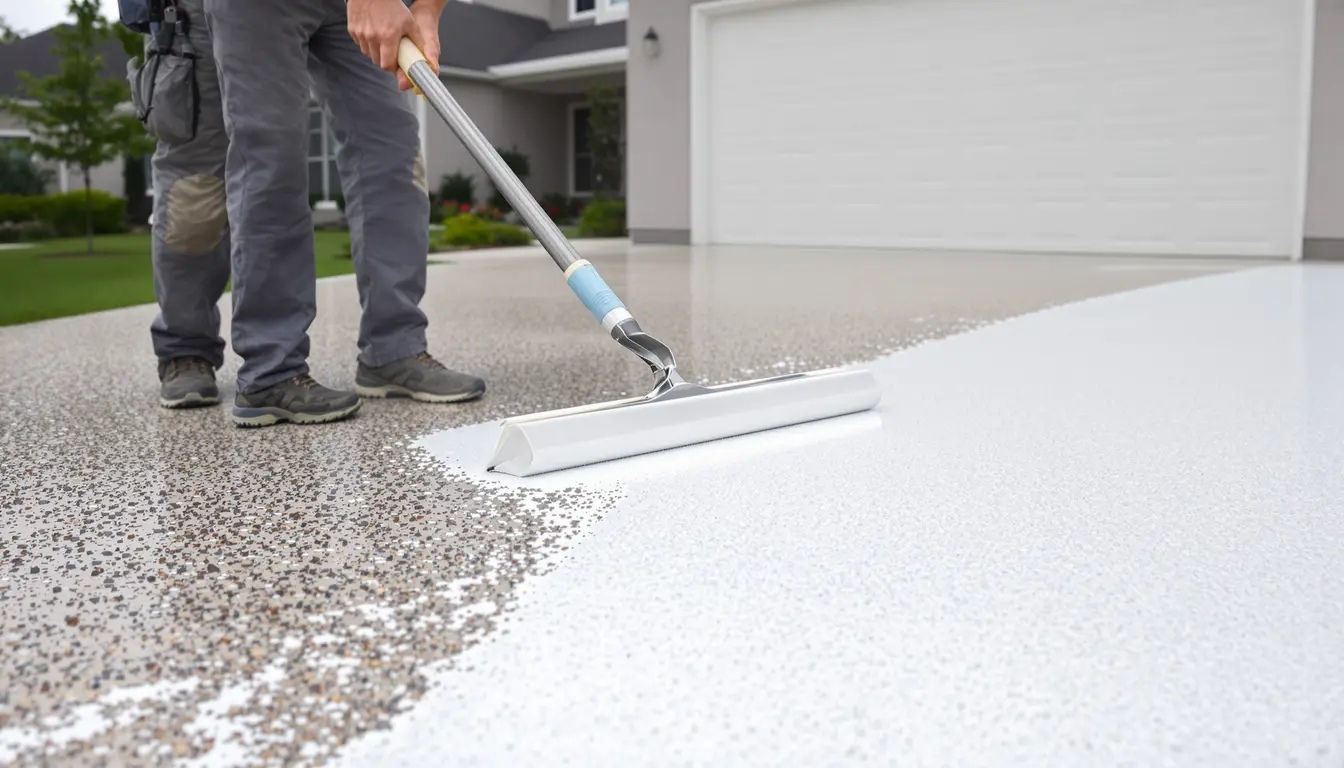
Concrete overlay and resurfacing solutions that restore and transform existing concrete surfaces without full replacement. Ford Concrete serves Lexington, MO and the entire Kansas City metro with more than a decade of experience and a 5-star reputation.
Lexington at a Glance
- Population
- 4,652
- State
- Missouri
- County
- Lafayette County
- Schools
- Lexington R-V School District
Will resurfacing hold on a 50-year-old Lexington downtown lot?
Only if what's under it is sound. Many downtown Lexington lots run 50 years and older, and the deciding factor isn't the worn surface — it's whether the original subbase is still stable. Where it is, a bonded overlay renews the lot; where the base is gone, no topping saves it.
We bring that read to nearby Odessa, Independence, and Grain Valley. Our concrete overlays and resurfacing overview covers what a topping can restore, and where the subbase has failed, concrete repair or reconstruction is the honest path.
Fifty years of Lexington downtown underfoot
Lexington's historic downtown and the lots around the Lafayette County Courthouse carry concrete that predates most of the metro's commercial stock — assets over 50 years old. At that age the question isn't whether the surface is worn; it's whether the subbase poured under it decades ago is still carrying the load. Original subbases from that era were often thin or unstabilized by today's standards.
That's why we lead with the base, not the surface. We prove substrate soundness by sounding the slab and reading for movement, voids, and settlement, because a beautiful new topping over a subbase that's given out just fails again on the same timeline. Getting that read right is the whole job downtown.
The river bluff and its loess ground
Lexington sits on the Missouri River bluffs, and the bluff ground is loess — the wind-deposited silt soil that runs this stretch of the river, per MoDNR mapping. Loess can migrate and erode where water moves through it, undermining a subbase at a lot's downhill edge and letting moisture vapor rise into the slab above.
For an overlay that means two checks before anything goes down: is the ground under the lot still supporting it, and is the slab dry enough to hold a bond. On a bluff lot we read drainage and the moisture path first, because a topping placed over eroding loess or a damp slab won't stay put.
Spalling on the courthouse-district walks
The public walks around the courthouse and the historic Main Street storefronts show their age in spalling — surface concrete flaking off after decades of freeze-thaw and winter salt. Where that damage is shallow over sound concrete, a bonded overlay or partial-depth renewal restores a smooth, safe walking surface. Where it's gone deep and the slab beneath is breaking up, it's a replacement, and we don't paper over that.
Restoring these walks keeps a high-visibility, high-foot-traffic district safe and presentable — while respecting the grades and lines that tie into century-old buildings.
Prep on aged concrete
Half-century-old concrete carries a weathered, contaminated skin and heavy laitance that no overlay will bond to. Prep is the difference-maker: we strip the tired surface and cut a CSP profile by scarification or shot-blast so the topping keys into solid concrete underneath, not the worn face on top.
On downtown lots where the stakes and the traffic are high, we confirm the result with a pull-off strength test before the lot reopens. That's how we know the bond will hold rather than hoping it does.
Honoring joints so cracks don't return
Old lots move at their joints, and an overlay that ignores them fails fast. When a working joint gets buried under a topping, the slab keeps flexing and the crack telegraphs straight up through the new surface — reflective cracking that reopens the old lines within a season.
We carry every working joint through the overlay — joint honoring — so the surface moves where the slab moves instead of tearing. On concrete this old, detailing the joints is often what determines whether the resurface lasts years or months.
Why Lexington owners call Ford
KC-metro property owners call us because we start with the base, not the sales pitch. On 50-year downtown concrete that honesty matters — we'd rather tell you the subbase is gone than sell a topping that fails. It's behind our 4.9-star rating across 29 reviews, where clients cite straight answers and crews that show up on schedule.
Where a lot is a real candidate, a bonded overlay costs a fraction of a full reconstruction — our cost guide breaks down the drivers. We sound the slab, put the recommendation in writing, and hand you the honest call, usually within 24 hours. See finished work in the gallery.
Is your Lexington downtown lot worth resurfacing?
From call to concrete — the fastest in KC.
On 50-year concrete the base decides it. We sound the slab and tell you straight — resurface or rebuild — in writing, usually within 24 hours. Call (816) 721-1699.
Why Lexington Concrete Overlays & Resurfacing is built this way
Sound the base
Read the bluff drainage
Strip and profile
Prime, place, honor joints
Verify the bond
Warning signs on Lexington Concrete Overlays & Resurfacing
A downtown lot that keeps failing
Spalling on public walkways
Settlement at a bluff-side edge
Cracks reopening along old joints
What sets Ford apart in Lexington
We read the base first
On 50-year downtown lots the subbase decides it, not the surface. We sound the slab before recommending a topping.
The bluff sets the moisture read
Loess ground erodes and drives vapor up through slabs. We check drainage and moisture before an overlay so it holds.
Safe, presentable walks
Shallow spalling on courthouse-district walks resurfaces to a smooth surface that respects the historic grades.
Joints honored on old concrete
Aged slabs move at the joints. We carry them through the overlay so reflective cracks don't reopen the old lines.
Proof we pour at any scale
From your driveway to an Amazon warehouse — the same crew, the same standards, every project.
Taco Bell
New Construction
Overland Park, KS
Domino's Pizza
New Construction
Independence, MO
Freddy's
New Construction
Kansas City
Tidal Wave Car Wash
New Construction
Kansas City
Amazon
New Construction
Riverside, MO
Nortian Food Grade Protein Facility
New Construction
Springfield, MO
Price your Lexington Concrete Overlays & Resurfacing project
Or call us directly: (816) 721-1699
Concrete Overlays & Resurfacing in Lexington — FAQs
Can you resurface a 50-year-old downtown Lexington lot?
Does Lexington's river-bluff soil cause problems for overlays?
The walkways by the courthouse are spalling — can they be resurfaced?
Why do overlays fail on old lots?
How do you confirm the overlay will actually bond to old concrete?
Does resurfacing cost less than replacing a downtown lot?
Beyond Concrete Overlays & Resurfacing: our Lexington work
Nearby Lexington-area projects
Start your Lexington concrete project
From call to concrete — the fastest in KC.
Get a free, no-obligation estimate for your concrete project. We serve the entire Kansas City metro — call (816) 721-1699 or request your estimate online.