
Warehouse & Industrial Floors in Peculiar, MO
Industrial, shop and back-of-house floors along the I-49 corridor — poured on the concrete's clock, because the surface is the part you actually use.
Warehouse & Industrial Floors in Peculiar
High-performance industrial concrete floor installation for warehouses, distribution centers, and manufacturing facilities. Ford Concrete serves Peculiar, MO and the entire Kansas City metro with more than a decade of experience and a 5-star reputation.
Peculiar at a Glance
- Population
- 6,251
- State
- Missouri
- County
- Cass County
- Schools
- Raymore-Peculiar R-II School District
In Peculiar the floor is lost in an hour nobody put on the schedule
A shop or warehouse floor in Peculiar is decided in the window between the last screed pass and the first trowel pass. Close the surface while bleed water is still rising and you trap that water under a hardened skin. The concrete underneath stays sound. The top quarter inch — the only part anything ever touches — is already gone.
Nearly everything commercial in this town is new. The retail at the I-49 and Y Highway node, the Peculiar Way Design District, the light industrial and service buildings in the Peculiar Business Park — most of it has gone up since 2010, on schedules written by people who need the building open. That is the pressure that costs floors here. Not the ground, and not the mix. The pressure to finish and go home.
Cass County ground here is upland and holds water rather than shedding it, so the base and the site grading get real attention. But a slab placed on a perfectly built base and closed forty minutes early still fails, and it fails invisibly. The floor looks finished, and it stays looking finished until the first pallet jack breaks the skin loose. That top layer is the entire abrasion resistance of your floor, which is why our slab work treats the finishing window as the main event rather than the last step.
Delamination is not a mix problem, and that is why it keeps happening
Fresh concrete bleeds. Water is the lightest thing in the mix, so it rises, and it keeps rising until the solids have settled as far as they intend to. That is normal and it is healthy — the slab is consolidating. The damage comes from what happens on top of it while that is still going on.
A power trowel densifies and closes the surface. Run it while water and air are still working upward and they have nowhere to go. They gather in a thin plane just beneath the closed skin. What cures is a floor with a quarter-inch lid on it, bonded to nothing. It sounds hollow underfoot if you know to listen for it. Otherwise it announces itself months later, when a hard wheel or a dropped pallet breaks a sheet loose and the floor starts shedding in plates.
What makes this worse is cool, damp, still weather — the exact conditions that feel like an easy pour day. Bleeding slows, so the surface skins over on top while the body of the slab is still pushing water up. The floor reads as ready an hour before it is. A crew working the clock closes it early. A crew working the concrete waits, and the same mix, same base and same day gives you a floor that will hold a dry-shake hardener and carry twenty years of traffic.
The sheet under your slab is the right call, and it moves your finishing window
We put the vapor retarder directly under the slab rather than under a sand blotter layer. That is the correct detail. It is the only thing standing between ground moisture and whatever hardener, sealer or coating eventually goes down, and a sand layer between the sheet and the concrete is a reservoir that feeds the slab from underneath for years.
It also carries a consequence nobody mentions to the owner. With a sheet directly beneath it, the slab cannot lose a drop downward — everything leaves through the top. So it bleeds longer, and later, than the same mix would on open dirt. A crew whose timing was learned pouring on bare ground will close that floor early nearly every time, because the habit is calibrated to a slab that had two ways out.
So the day gets planned around it. Placement starts early enough that finishing does not run into the dark, when the pressure to close up and leave is at its worst. The saw cut goes in on the concrete's schedule — early enough to relieve shrinkage, late enough not to ravel the edges — because a floor can be lost to a late cut as easily as to an early trowel. Getting the ground right underneath is our excavation approach; the rest is timing.
Peculiar Way, the overlay districts, and what we will honestly claim
Peculiar takes its commercial review seriously. The Downtown Overlay District and the design overlays along Peculiar Way and the C/J Highway corridor exist because the town decided what its growth would look like before the growth showed up. City Hall reads the plans, and ground disturbance falls under MoDNR's stormwater rules. Those reviews govern the site. Nothing in them governs your slab's finishing window, which is exactly why that part sits on us.
Scale, honestly: this is a town of 6,251, and industrial work here means service buildings, shops, storage and back-of-house — not distribution centers. What runs on those floors is carts, jacks and a lift, which is random traffic, and an honest overall flatness number covers it. A VNA tolerance would be money spent on nothing, and we will say so before you pay for it rather than after.
Our large-format industrial floors are Amazon's new construction in Riverside and a food-grade protein facility for Nortian in Springfield. Neither is a Peculiar job, and we would rather say that than let the logos do work they have not earned. What carries across is the discipline about the finishing window, which is identical on a food-grade floor and on a 4,000-square-foot shop. Up I-49 we pour the same floors in Raymore and Belton, and south of here in Harrisonville. We are at 4.9 stars across 29 reviews, and the gallery is what we would rather be judged on.
Putting a floor in a Peculiar shop or service building?
From call to concrete — the fastest in KC.
Tell us what runs on it and when the building has to open, and we will tell you what the pour day has to look like. Call (816) 721-1699 or request a free estimate.
Our Warehouse & Industrial Floors method for Peculiar sites
Build and prove the base
Compacted lifts on Cass County upland ground that holds water, graded so the site drains away from the building rather than into the base.
Sheet directly under the slab
Vapor retarder laid tight against the concrete, lapped and terminated. No sand layer, because a sand layer is a reservoir with a schedule of its own.
Set the pour window
Start time chosen so the finishing window lands in usable light, with trucks staged so the placement never stops mid-slab.
Wait for the bleeding to finish
The surface gets worked when the concrete says so. Nobody closes it on a wristwatch, and nobody closes it to beat the dark.
Cut and cure on the concrete's clock
Saw cuts early enough to relieve shrinkage and late enough to hold an edge, then a held cure for the full window.
Test before anything goes down
F2170 relative humidity readings before a hardener, sealer or coating is ordered. We hand you the numbers we actually got.
When Warehouse & Industrial Floors in Peculiar is ready to replace
The floor is shedding in thin plates
Classic delamination. The surface was closed while bleed water was still rising, and the skin cured bonded to nothing. Traffic finds it eventually.
A hollow sound under your heel
Tap it and listen. A hollow ring across a panel means there is a void under the finished layer, and it will break through where the wheels run.
Small round blisters that pop open
Air and water trapped under a prematurely closed surface. They are the visible version of the same problem the hollow spots are hiding.
A new floor already dusting
A weak wear surface gives up its fines under traffic. On a young slab that is a finishing and curing story, not a strength story.
Why Ford for your Peculiar Warehouse & Industrial Floors
We finish on the concrete, not the clock
The slab tells you when it is ready. A crew that closes the surface to make a schedule is spending your floor to save its afternoon.
We plan the pour day around the finish
Placement starts early enough that troweling never runs into the dark. That single decision saves more floors here than any admixture.
The barrier goes directly under the slab
No sand blotter. It is the right detail, it lengthens the bleed, and we build the schedule to respect that instead of ignoring it.
We spec to your scale
Shops, storage and service buildings run carts and a lift. We will talk you out of a flatness number you have no way to use.
The projects behind our name
From your driveway to an Amazon warehouse — the same crew, the same standards, every project.
Taco Bell
New Construction
Overland Park, KS
Domino's Pizza
New Construction
Independence, MO
Freddy's
New Construction
Kansas City
Tidal Wave Car Wash
New Construction
Kansas City
Amazon
New Construction
Riverside, MO
Nortian Food Grade Protein Facility
New Construction
Springfield, MO
Start with a free Peculiar estimate
Or call us directly: (816) 721-1699
Warehouse & Industrial Floors in Peculiar — FAQs
Why does the timing of the troweling matter so much?
The vapor retarder makes the pour harder — can we put sand over it?
What kind of floor does a building in the Peculiar Business Park actually need?
Beyond Warehouse & Industrial Floors: our Peculiar work
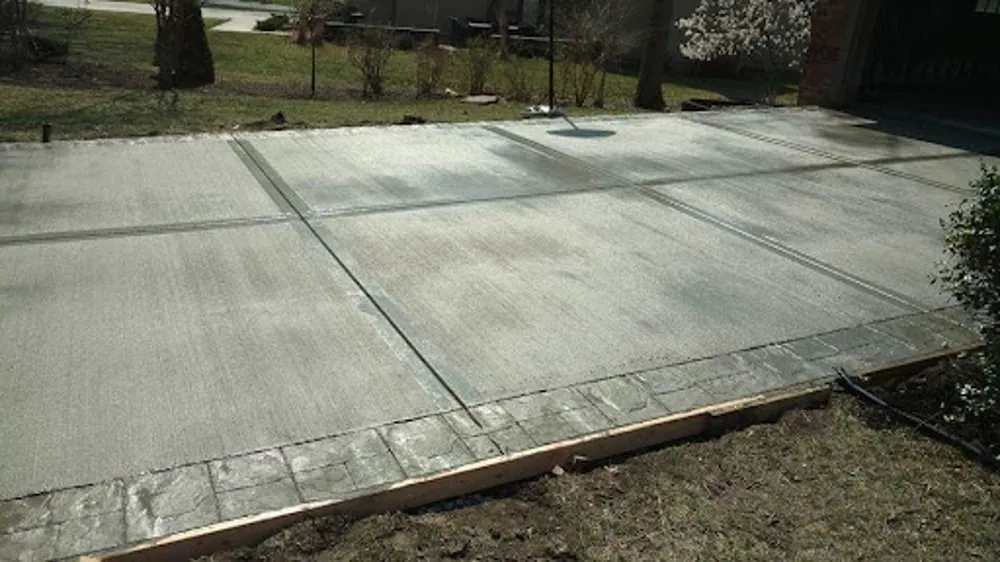
Warehouse & Industrial Floors across the Cass County area
Get your Peculiar project moving
From call to concrete — the fastest in KC.
Get a free, no-obligation estimate for your concrete project. We serve the entire Kansas City metro — call (816) 721-1699 or request your estimate online.