
Warehouse & Industrial Floors in Platte City, MO
Industrial and commercial floors along the MO-92 and I-29 corridor — specified to what the building runs, not to the number the code will accept.
Warehouse & Industrial Floors in Platte City
High-performance industrial concrete floor installation for warehouses, distribution centers, and manufacturing facilities. Ford Concrete serves Platte City, MO and the entire Kansas City metro with more than a decade of experience and a 5-star reputation.
Platte City at a Glance
- Population
- 4,731
- State
- Missouri
- County
- Platte County
- Schools
- Platte County R-III School District
Platte City code gives you a number, and a number is not a floor
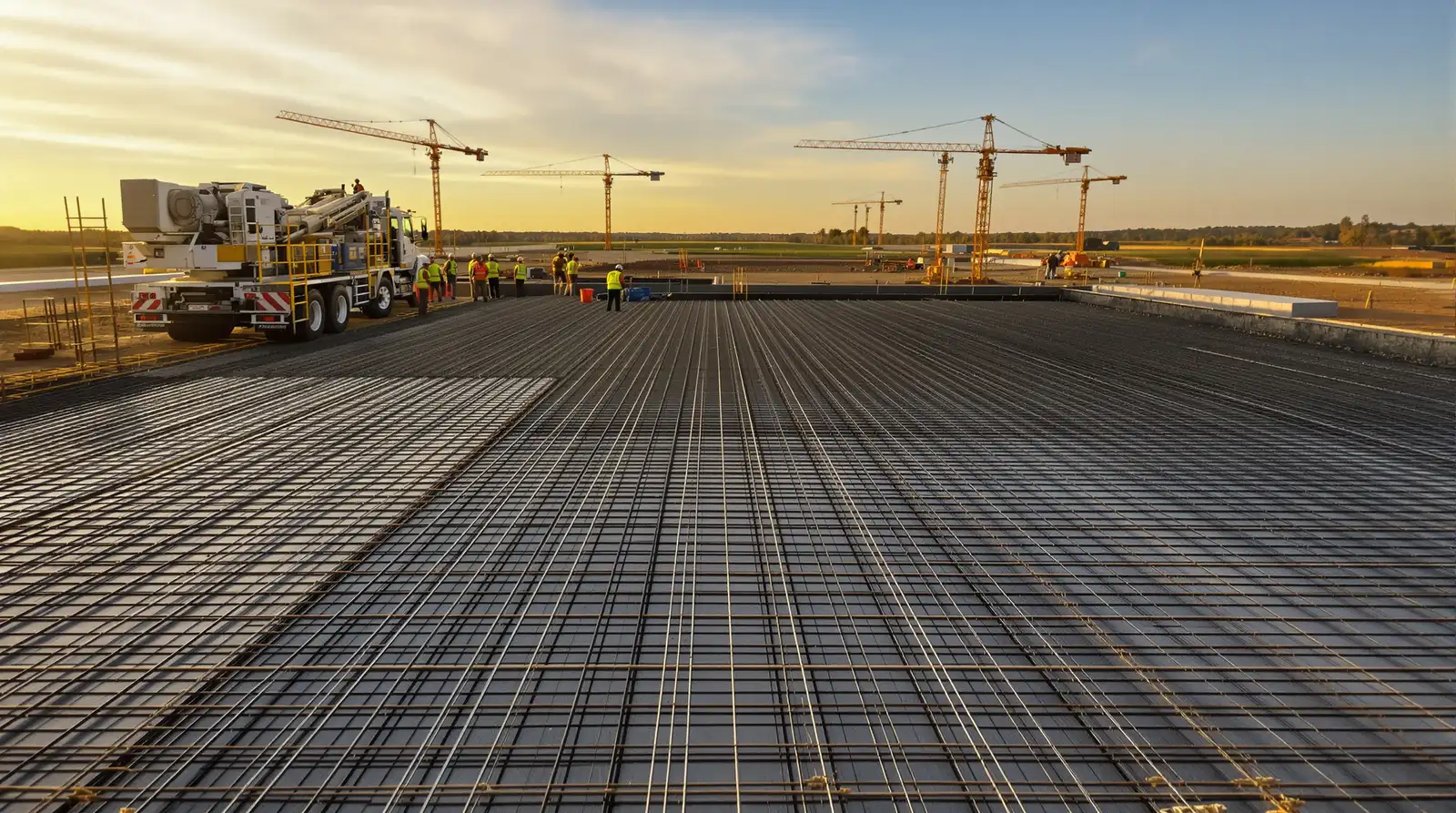
A warehouse floor in Platte City is specified by four things working together: slab thickness from the actual load, a base that will not consolidate under it, a mix designed to stay flat, and joints placed on the concrete's terms. The city's code sets a minimum. A minimum is the beginning of a floor design, not the end of one.
Platte City is stricter than most of its neighbors about this, and that is to its credit — commercial uses here have to be surfaced dustless and hard-surfaced, with four inches of concrete as the floor of what is acceptable. The trouble is what an owner hears. Four inches and a strength number sound like a specification. They are a threshold, and a building that gets built to the threshold has satisfied the inspector and not the rack load.
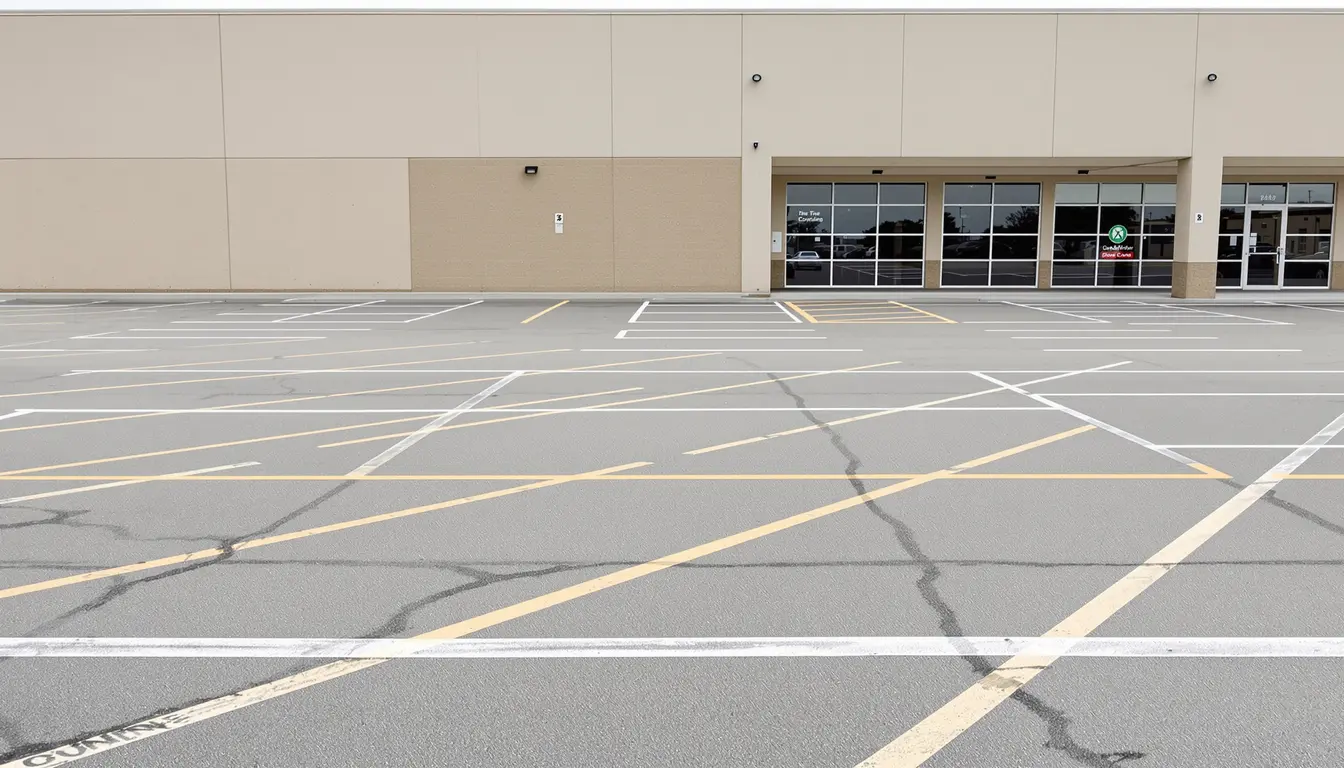
You can see the difference sitting out on MO-92 right now. The retail power centers built through the 1990s and 2000s are hitting a twenty-to-twenty-five-year structural limit together, and the ones failing early are not failing because somebody skipped a permit.
Why 4,000 psi is the least useful number on the ticket
Compressive strength is the most-quoted figure on a submittal and it answers almost nothing an owner cares about. It tells you what a cylinder did in a press at 28 days. It does not tell you how much the slab will shrink, whether the edges will curl, whether the surface will hold up under wheels, or whether the floor will still be flat when the racks go in.
Those things come out of the parts of the mix nobody reads. Water-cementitious ratio drives shrinkage far more than strength does. Aggregate top size and gradation decide how much paste is in the mix, and paste is the part that shrinks — rock does not. Total water, including whatever gets added at the chute to make a stiff load easier to move, is the single most damaging variable on most job sites, and it never appears in the conversation.
So a supplier's standard 4,000 psi mix is not wrong. It is designed to reliably break at 4,000 psi. Nobody designed it to stay flat, and that is a different job. Curling and cracking between the saw cuts are shrinkage problems wearing a strength number's clothes.
What to ask for instead, and what it changes on your floor
Five things belong in writing before anybody pours. The water-cementitious ratio, capped rather than hoped for. Aggregate top size and gradation, because a well-graded mix with the largest rock the placement allows carries less paste. The total water, with a stated position on adding any at the site. The admixture package, so slump comes from chemistry instead of a hose. And whether the finish is compatible with what goes on top, because a dry-shake hardener needs bleed water to bond and some mixes will not give it any.
Every one of those changes something visible. A lower-shrinkage mix lets panels run wider before they crack. A wetter one forces the panel spacing tighter and moves the saw cut window earlier. Get it wrong and you are grinding lifted edges in year two and blaming the crew.
Under all of it, Platte County's upland ground holds water and drains poorly, so the vapor retarder goes directly under the slab and F2170 RH readings set the coating date. Frost walls run to 36 inches and stay isolated from the floor. For most buildings here the traffic is random and an honest overall flatness number is the correct spec.
Permits, the county seat, and honest proof
Platte City is the county seat, and work here often means a public-facing site — the courthouse complex, the fairgrounds, institutional ground where the schedule matters as much as the finish. The city reads commercial plans closely and the surfacing requirements get enforced rather than assumed. Ground disturbance falls under MoDNR's stormwater rules. We handle the submittals, and the permits guide lays out what a commercial floor job actually triggers here.
If the MO-92 lot out front is oxidized and alligatored while the floor inside is sound, those are two scopes and we will price them that way. Talking an owner out of the larger job is not a sales tactic; it is the only way the smaller recommendation means anything later. Our repair work covers the ones worth saving.
On proof: our largest industrial floors are Amazon's new construction in Riverside and a food-grade protein facility for Nortian in Springfield. Neither is Platte City, and we would rather be plain about that. We pour the same floors up US-169 in Smithville and out MO-45 in Weston. The rating is 4.9 stars across 29 reviews, and the gallery shows the work.
Specifying a commercial floor in Platte City?
From call to concrete — the fastest in KC.
Send us the loads and we will tell you where the code minimum stops being enough. Call (816) 721-1699 or request a free estimate.
Getting Warehouse & Industrial Floors right in Platte City
Find the load that governs
Rack post loads, truck axles, or the machine nobody mentioned. Thickness gets designed from the worst of them rather than from the code minimum.
Write the mix down
Water-cementitious cap, aggregate top size and gradation, total water, admixtures, and finish compatibility. All of it on paper before a truck is ordered.
Build and verify the base
Compacted in lifts with the density checked as it goes, because a base that consolidates later turns a good slab into a bad floor.
Barrier, then joints on paper
Vapor retarder directly under the slab, and the joint grid laid out to the mix and the column lines before anyone shows up with a saw.
Place without a hose
Continuous placement, slump held by chemistry, and saw cuts made when the concrete says so rather than when the shift ends.
Cure, test and hand over the numbers
A real cure for the full window, F2170 readings before any coating, and the data goes to you whether it is convenient or not.
Warning signs on Platte City Warehouse & Industrial Floors
Cracks running between the joints
When the concrete cracks where you did not cut it, the panel spacing was set for a lower-shrinkage mix than the one that actually arrived.
Edges lifted before anything was stored
Curling is a shrinkage and cure problem decided in the first day. A strong cylinder break tells you nothing about whether it will happen.
A hardener that never bonded
A dry-shake needs bleed water to lock in. Some mixes give none, and nobody finds out until the surface is already dusting under the wheels.
A twenty-year-old lot failing all at once
The MO-92 power centers were built together and are reaching a structural limit together. Surface maintenance will not reach that kind of failure.
How Ford earns Platte City work
We spec past the minimum
The code's four inches is a threshold. We design thickness from the load that actually governs and tell you where the two numbers differ.
The mix gets designed, not ordered
Water-cementitious ratio, aggregate gradation and total water in writing. Strength is the easy number and the least informative one.
No water at the chute
Slump comes from the admixture package. Water added on site to make a stiff load move is the most expensive convenience on a job.
Straight about our proof
Our big industrial floors are in Riverside and Springfield, not here. We will say that rather than borrow credibility we did not earn in Platte City.
Commercial work behind our Platte City crews
From your driveway to an Amazon warehouse — the same crew, the same standards, every project.
Taco Bell
New Construction
Overland Park, KS
Domino's Pizza
New Construction
Independence, MO
Freddy's
New Construction
Kansas City
Tidal Wave Car Wash
New Construction
Kansas City
Amazon
New Construction
Riverside, MO
Nortian Food Grade Protein Facility
New Construction
Springfield, MO
Book your Platte City Warehouse & Industrial Floors estimate
Or call us directly: (816) 721-1699
Warehouse & Industrial Floors in Platte City — FAQs
The code says four inches of concrete. Is that enough for our building?
Is 4,000 psi concrete good enough for a warehouse floor?
Why does adding water at the truck matter so much?
What else we build in Platte City
Warehouse & Industrial Floors in communities near Platte City
Let's build your Platte City Warehouse & Industrial Floors
From call to concrete — the fastest in KC.
Get a free, no-obligation estimate for your concrete project. We serve the entire Kansas City metro — call (816) 721-1699 or request your estimate online.