
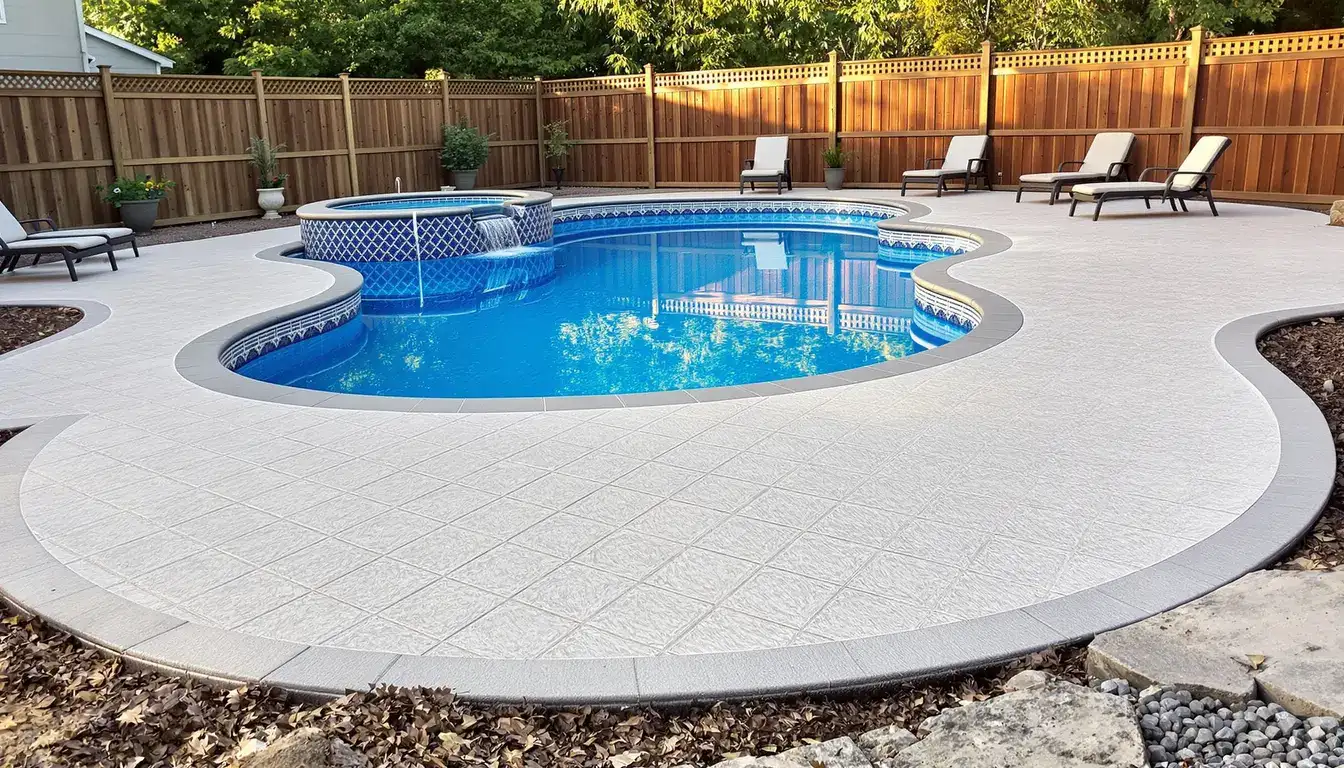
Concrete Pool Decks in Basehor, KS
Pool decks built for Basehor ground — the rolling upland loess above the river that carries the 'Gateway to Leavenworth County.' That wind-laid silt holds a deck flat when its moisture stays steady and slumps when it's suddenly soaked. On the upscale lots around Falcon Lakes and Wolf Creek, we control the water that reaches it, pack a base that holds, and finish the deck to your yard's standard.
Concrete Pool Decks in Basehor
Slip-resistant concrete pool deck installation and resurfacing for residential and commercial swimming pools. Ford Concrete serves Basehor, KS and the entire Kansas City metro with more than a decade of experience and a 5-star reputation.
Basehor at a Glance
- Population
- 7,564
- State
- Kansas
- County
- Leavenworth County
- Schools
- Basehor-Linwood USD 458
What makes a Basehor pool deck last?
A Basehor pool deck lasts when the loess under it is kept at steady moisture, the base is compacted to firm bearing, an isolation joint keeps the deck loose from the pool shell, and the surface is broomed for slip resistance. On the rolling upland silt this town sits on, controlling how much water reaches the ground is the detail that carries the job.
Basehor — the fast-growing 'Gateway to Leavenworth County,' with Falcon Lakes Golf Club, Holy Field Vineyard, and new neighborhoods around Wolf Creek and Cedar Lake — sits on the loess uplands above the Missouri River, not down on the bluffs themselves. That soil behaves unlike the clay across most of the metro, and a deck built for it has to answer what loess actually does.
The loess under an upland Basehor lot
Loess is wind-laid silt, and it has a particular habit: it stands strong and holds load as long as its moisture stays roughly constant, but when it is suddenly soaked it loses strength and collapses on itself, dropping whatever sits above it. Engineers call that hydrocompaction, and on an upland lot it usually comes not from a river but from the home — a new irrigation system, downspouts dumping at the foundation, or a pool that overflows onto dry ground. The deck problem in Basehor is rarely erosion; it is a soil that settles when the water regime around it swings. Reading that is the first thing we do on a lot near Falcon Lakes or the Basehor Town Center.
Keeping the water steady around the deck
Because loess fails when it is soaked unevenly, the plan is to keep water off it and keep its moisture even. We grade the deck to positive fall so rain sheds to a fixed discharge point, route roof and pool-overflow water away from the slab edge, and keep irrigation lines from wetting the ground right under the deck. Where a lot slopes toward the pool, we intercept that runoff before it reaches the backfill. Done together, these keep the loess from taking on a sudden soaking that would build hydrostatic pressure against the shell and drop the deck at the coping.
A base packed on loess
Loess carries load well dry and packed, and poorly wet and loose, so the base is built to keep it firm. We cut to stable subgrade and rebuild the footing as compacted stone in stacked lifts, packing each layer so the deck rides on a controlled base rather than raw silt. Around a new pool, the disturbed backfill band is the softest ground on the lot, and we compact it in lifts and stage the deck's base to bridge from firm ground so backfill consolidation doesn't sink the edge. Grading answers to KDHE and the City of Basehor, and Leavenworth County's freeze-thaw winters mean the finished slab is sealed against the weather.
Why the deck rides free of the pool
The pool shell is anchored in the ground while the deck moves with heat and frost. Locked together, the shell/deck interface gives way at the first hard freeze and splits the slab along the water edge. A full-perimeter isolation joint frees the deck from the shell so each moves alone, and the edge is formed loose to the shell so it travels with the deck. Small work at pour time, and the reason the edge stays sound on ground that reacts to water.
A finish held to a Basehor yard's standard
Basehor's newer homes and golf-course lots carry an appearance standard, and the deck can answer it without losing its grip. Here is how we match finish to use:
- Broom finish — the surest footing and the cleanest look; a dragged texture that keeps slip resistance when the deck is wet, and the default around a family pool.
- Stamped concrete — pressed to read as stone, slate, or plank for an upscale yard; we pour a sample panel in your yard first and keep enough texture in the pattern that it stays safe barefoot.
- Stained concrete — a color coat tuned to the house and landscaping, laid over a broom or light texture so grip comes first.
If the pool is saltwater, we account for the salt exposure in the sealer and mix so the surface holds up to it. You approve the finish on a real panel before the deck is poured.
The edge, sealed for the winter
We form a cantilever coping over the bond beam, set loose to the deck and rounded to be easy on bare feet, then seal the whole slab against Leavenworth County freeze-thaw. A sealer put down in the wrong conditions can cloud into sealer blushing, so we apply it right and set a reseal schedule to keep the surface shedding water. If an existing Basehor deck is structurally sound but worn on top, a bonded overlay can lay a fresh surface over it without a teardown.
Permits, bonding, and a crew used to big pours
A new or rebuilt deck is permitted through the City of Basehor, and the electrical sign-off has to confirm equipotential bonding — the grounding grid that ties the deck into one electrical potential around the water so the pool is safe to stand beside. We book that inspection before the pour so nothing closes in before it passes. Basehor sits among neighbors we pour in regularly — Lansing, Leavenworth, and Bonner Springs — and the same flatwork standard our crew holds on a large commercial slab is the one it brings to a backyard deck.
Ready to build your Basehor pool deck?
From call to concrete — the fastest in KC.
In Basehor, the upland loess sets the plan — keep its moisture steady, pack a base that holds, and finish the deck to your yard's standard. We read your lot, tell you straight what the ground needs, and put a real number on paper. Call (816) 721-1699 to book a site visit, usually within a day.
What goes into a Basehor Concrete Pool Decks job
Read the loess and the water
We check how the upland silt under your Basehor lot behaves and where water — rain, roof, or irrigation — reaches the ground.
Control the moisture
We plan grading and drainage to keep water off the loess and its moisture steady, so the ground doesn't slump when soaked.
Cut and compact the base
We dig to stable subgrade and pack a compacted stone footing in lifts, staging around fresh backfill by the pool.
Break the deck from the shell
We place a full isolation joint around the pool so the deck and the shell each move independently.
Place, joint, and finish
We place a 4,000-PSI pour, cut the joints on layout, and finish to the panel you approved.
Form the coping and cure
We form the cantilever coping over the bond beam, held loose to the deck, and cure the slab slowly for strength.
Bond, seal, and walk it
We book the equipotential bonding inspection, seal the deck against freeze-thaw, and walk the finished job with you.
Is your Basehor Concrete Pool Decks failing?
The deck dropping after new landscaping
A slab that settles after irrigation or grading changes is loess collapsing where it was suddenly soaked — a moisture swing the deck wasn't protected from.
The coping edge sinking
A deck dropping at the pool edge is settling backfill around the shell, common when the disturbed ground was loaded before it was compacted.
Water pooling at the slab edge
Runoff standing against the deck means water is soaking the loess unevenly instead of being carried off to a discharge point.
A crack tracing the waterline
A crack shadowing the pool edge is the mark of a deck locked to the shell — absent an isolation joint, frost sheared the seam.
Surface flaking off the top
A top that flakes and dusts is freeze-thaw scaling, the standard result of skipping the seal on Leavenworth County ground.
A slick top when wet
A slick feel when wet means the broom lines are gone or the deck was polished too fine — no grip for bare feet at the edge.
Why Ford for your Basehor Concrete Pool Decks
Loess kept at steady moisture
Basehor's upland silt slumps when it's suddenly soaked. We route roof, irrigation, and pool-overflow water away so the ground stays firm.
A base packed to hold
We cut to stable subgrade and rebuild the footing as compacted stone in lifts, staging around fresh backfill so the deck rides on firm ground.
A finish for the yard's standard
Broom for grip, stamped for stone, stained for color — matched to an upscale Basehor lot and approved on a real panel before the pour.
Sealed for a Leavenworth County winter
Freeze-thaw scales an unsealed deck. We seal the slab, apply it right to avoid blushing, and set a reseal schedule so it keeps shedding water.
Proof we pour at any scale
From your driveway to an Amazon warehouse — the same crew, the same standards, every project.
Taco Bell
New Construction
Overland Park, KS
Domino's Pizza
New Construction
Independence, MO
Freddy's
New Construction
Kansas City
Tidal Wave Car Wash
New Construction
Kansas City
Amazon
New Construction
Riverside, MO
Nortian Food Grade Protein Facility
New Construction
Springfield, MO
Price your Basehor Concrete Pool Decks project
Or call us directly: (816) 721-1699
Concrete Pool Decks in Basehor — FAQs
Why does the loess under Basehor change how you build a pool deck?
My deck settled after we put in a new irrigation system — why?
Can the deck match the standard of my Basehor home?
Why can't the deck be poured against the pool?
I have a saltwater pool — does that change the deck?
Do I need a permit for a pool deck in Basehor?
Related concrete services in Basehor
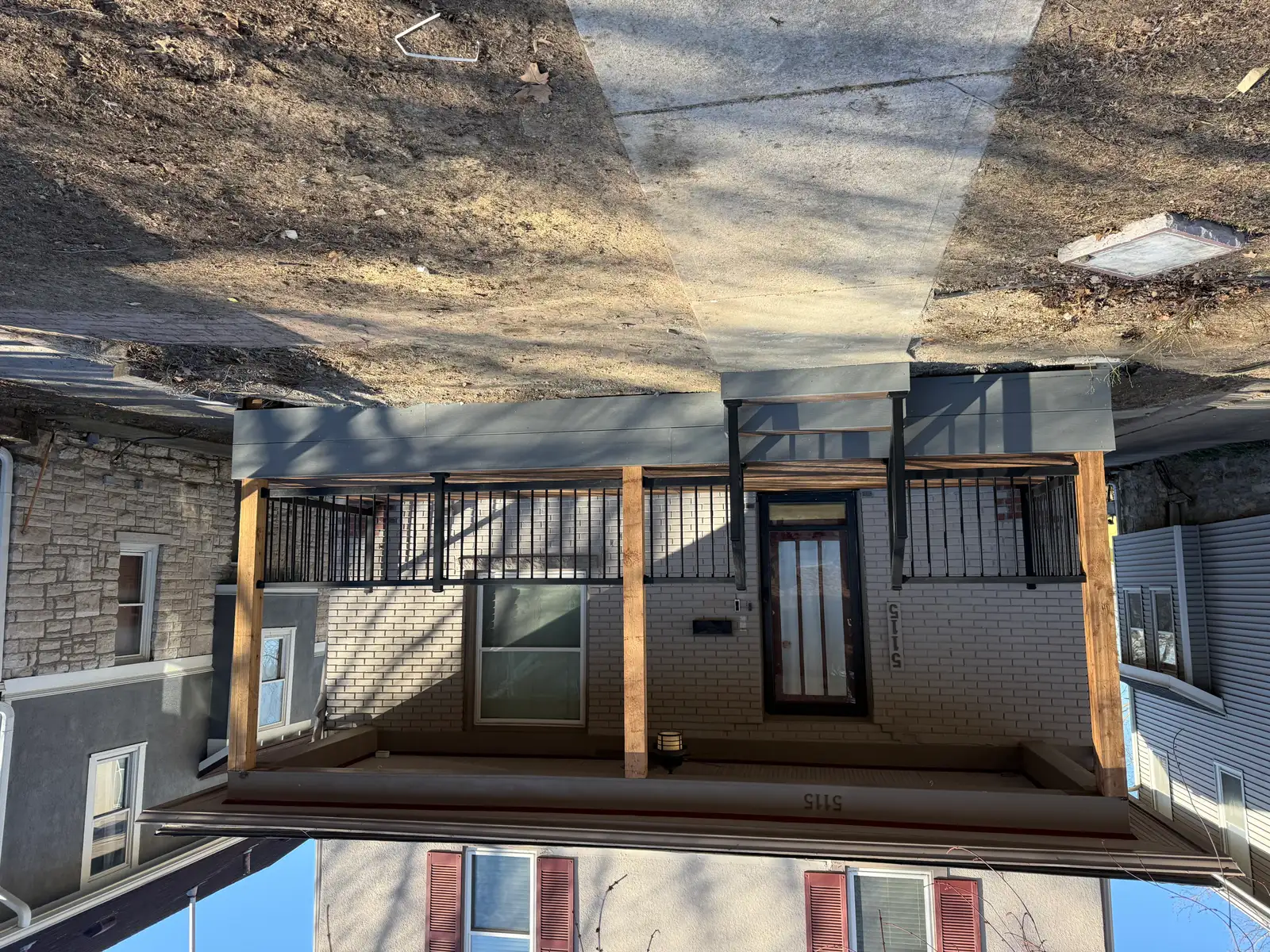
Nearby Basehor-area projects
Start your Basehor concrete project
From call to concrete — the fastest in KC.
Get a free, no-obligation estimate for your concrete project. We serve the entire Kansas City metro — call (816) 721-1699 or request your estimate online.