
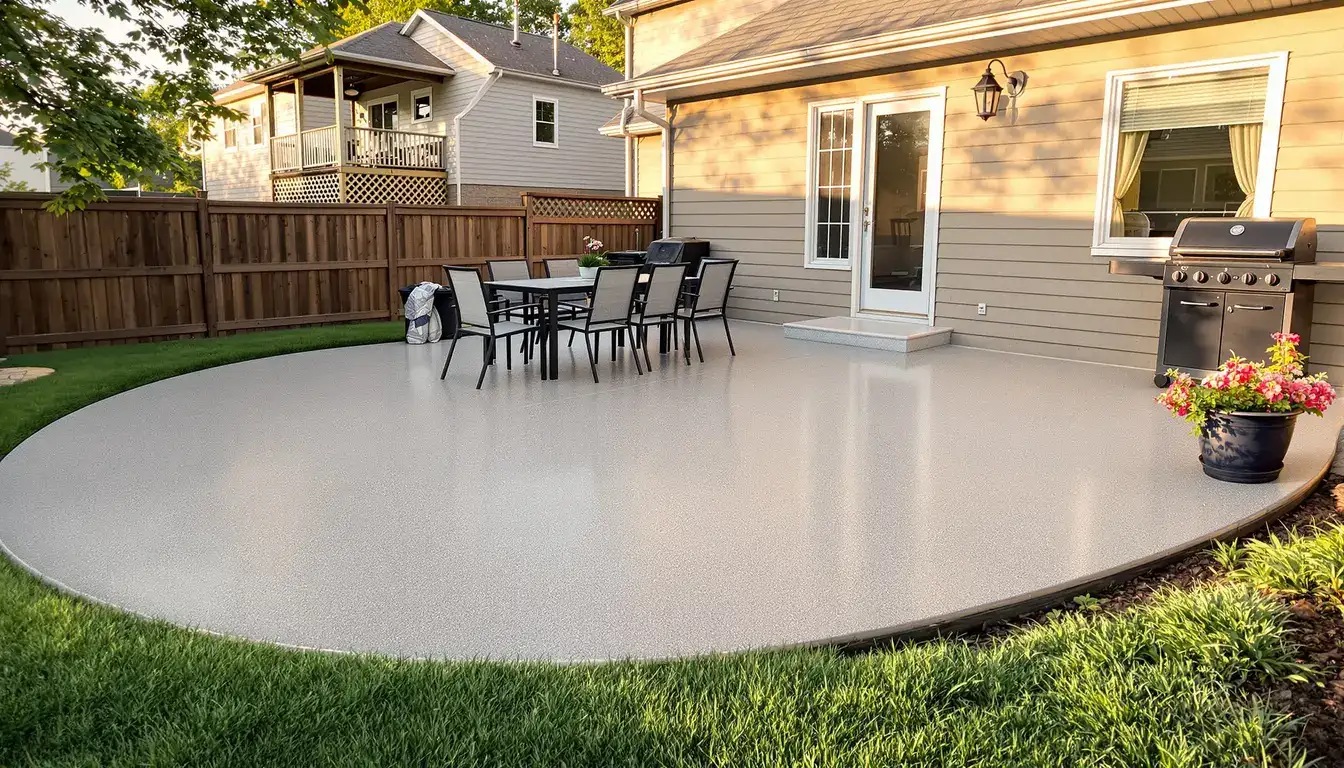
Concrete Patios & Outdoor Spaces in Lathrop, MO
Concrete patios for Lathrop — built up over Clinton County silty clay loam that softens when wet, and drained to keep a country lot's slab steady
Concrete Patios & Outdoor Spaces in Lathrop
Custom concrete patio design and installation for backyards, outdoor living areas, and commercial courtyards. Ford Concrete serves Lathrop, MO and the entire Kansas City metro with more than a decade of experience and a 5-star reputation.
Lathrop at a Glance
- Population
- 2,088
- State
- Missouri
- County
- Clinton County
- Schools
- Lathrop R-II School District
A patio built for a Lathrop country lot
Lathrop is farm country up at the north edge of the metro, and the ground behind most homes here is Clinton County silty clay loam — firm enough when it's dry, but a soil that softens and gives when it's wet. The build answer is a built-up, compacted base over that soft ground plus drainage that keeps water moving off it, so the slab rides on a stable footing instead of following the soil down after a wet spring. That's the whole difference between a country patio that stays level and one that pumps and tilts.
This is the Mule Capital, a town of generous lots off MO-116 and the I-35 corridor where a back-yard slab often sits on open ground with room around it. We bring the same crew and the same base spec out to Lathrop that we bring to a job in the middle of the metro — the drive is longer, the standard isn't. The rest of this page is how we build a patio that holds on Clinton County ground.
Building a base that holds soft silt loam
Silty clay loam carries a slab fine until it takes on water, and then it loses strength — so the base has to make up for that. We strip the topsoil, cut to a firm subgrade, and tamp a thick granular base that spreads the load wide and gives water a path away from under the slab rather than into the soft soil. On a lot that's held pasture or garden, we'll dig down to find sound ground before we build back up, because a base is only worth what it sits on.
We thicken the perimeter and set a restraint point so the edge holds and the slab doesn't creep or drop at the corners, then pour a 4,000-PSI air-entrained mix built for the deeper freeze this far north. That entrained air lets the top shed a hard Clinton County winter without flaking. It's the same compacted base approach behind every patio we pour, from a small back slab to a full outdoor room.
Keeping water off a country slab
On soft silt loam, water is the enemy — it's what turns firm ground to something that won't hold a slab. So drainage does double duty in Lathrop: it protects the surface and it protects the subgrade. Every pad we lay falls about a quarter-inch per foot, positive drainage that clears rain off the slab fast before it can pond or soak the edges.
The grade starts at the door. We set the finished threshold elevation a safe step below the sill with the ground falling away, so runoff always heads out into the yard and never backs toward the house. On an open rural lot we route roof downspouts and any yard runoff into a run that daylights well clear of the pad, keeping that water from ever reaching the soft ground the patio sits on.
Turning a gravel or dirt spot into a patio
A lot of Lathrop projects start where a gravel pad or a bare dirt spot goes to mud every spring. Turning that into a poured patio isn't a matter of pouring over the top — we strip the loose stone and soft soil off, read the ground underneath, and rebuild a proper base before any concrete goes down. Gravel that's been driven and rained on for years hides low, soft spots that would telegraph straight through a new slab.
Once we're down to sound ground we build the base back in compacted lifts and set the restraint point at the edge, so the finished patio sits on an engineered footing instead of an old stone patch. It's the difference between a slab that lasts and one that cracks the first winter — the same care we bring to a rural conversion in Kearney or out toward Smithville.
Jointing for Clinton County ground
Silt loam works with the seasons — it settles where it's soft and moves as it takes on and gives up water — so a Lathrop slab needs its cracks steered. We saw a contraction joint a quarter of the slab deep and keep the lines to two or three times the slab's thickness in feet — a cut every eight to twelve feet on a four-inch pad — so the slab lets go along those grooves instead of out in the field.
Where the patio meets the house we set a full-depth isolation joint so the slab floats free of the foundation, and at any inside corner a re-entrant corner throws a crack off the point unless a control line runs to it. On a wider pour over soft ground we carry reinforcement through the slab so the panels stay tied and level as the silt loam works underneath.
A finish for a country home
A Lathrop patio finish should suit its house and its yard. The everyday call is a broom vs stamped finish: a broom finish gives a clean, honest surface that reads right on a farmhouse or a country ranch, while stamped concrete can pattern the pad to look like stone or plank for a back-porch outdoor room. On a larger slab we lay the control cuts out as a joint pattern continuity so the lines frame the space.
We pour a small mockup on site before any stamp or color, so the texture and shade get judged against your own home in your own light. On a shaded, slow-drying country lot the sealer is chosen for its vapor transmission, letting moisture rise out of the slab instead of hazing under a sealed film. Our gallery shows finishes we've poured around the metro, and stained and colored concrete is another way to warm a slab to the house.
Replacing older slabs, and the permit
Around downtown Lathrop and the older Main Street lots there are patios and walkways poured decades ago — thin, lightly jointed, and mixed before air-entrainment was standard, which is why their surfaces flake and their corners have settled into the soft ground. When a slab is scaling but still solid underneath, a bonded overlay can renew it; when the base has failed, our repair crew tears it out and rebuilds from the subgrade up with a drained compacted base.
Patios inside the city fall under City of Lathrop permitting; a slab on a rural acreage tract may fall under Clinton County instead. We sort out which applies, pull the permit, and handle any setback check, working to Missouri (MoDNR) practice. Nearby we build the same way in Liberty and north toward Saint Joseph — the country drive doesn't change the spec.
Planning a patio in Lathrop?
From call to concrete — the fastest in KC.
Out on Clinton County silt loam a patio lasts when the base is built up over sound ground and the water is routed off it. Ford brings the metro crew and the metro spec out to the country. Call (816) 721-1699 or request a free estimate and we'll lay out the plan for your lot.
What Lathrop Concrete Patios & Outdoor Spaces projects require
Walk the country lot
We read the ground behind your home, find sound subgrade under any soft or filled spots, and set the base depth and grade for Clinton County silt loam.
Strip and rebuild the base
We clear topsoil, gravel, and soft soil, then build a thick compacted granular base in lifts, thickening the edge into a restraint point that holds the slab.
Set the drainage
We pitch the pad to shed a downpour and route downspouts and yard runoff into a run that daylights well clear of the slab, keeping water off the soft ground.
Pour the air-entrained slab
We place a 4,000-PSI air-entrained mix with fiber or rebar, built for the deeper freeze this far north so the surface stays tight through winter.
Saw the joints
We cut contraction joints a quarter depth at two to three times the slab thickness and steer a control line into every inside corner so cracks land on the line.
Finish, seal, and cure
We lay the broom or stamped finish approved off your mockup, seal it to breathe over damp ground, and hold the cure so the top hardens with the body.
Clear the permit
We sort City of Lathrop or Clinton County jurisdiction, pull the permit, clear any setback check, and walk the finished patio with you.
When Concrete Patios & Outdoor Spaces in Lathrop is ready to replace
A slab that has pumped or sunk
Water standing after every rain
A crack tracing the house wall
A crack breaking from an inside corner
A gravel pad gone to mud
A flaking, sheeting surface
Why Ford for your Lathrop Concrete Patios & Outdoor Spaces
Built for soft-when-wet ground
Clinton County silty clay loam gives when it's wet, so we build the base up and compact it over sound subgrade — the slab rides a stable footing instead of following the soil down.
Water routed off the lot
On soft ground water is what fails a slab, so we pitch the pad to shed and route downspouts and yard runoff well clear — protecting the surface and the subgrade at once.
The metro crew, out in the country
We bring the same base spec and the same air-entrained mix to a Lathrop back yard that we bring downtown — the drive is longer, the standard doesn't move.
4.9 stars across 29 reviews
Ford Concrete has earned a 4.9-star average over 29 Google reviews from homeowners around the metro who point to clean work and a slab that held.
Proof we pour at any scale
From your driveway to an Amazon warehouse — the same crew, the same standards, every project.
Taco Bell
New Construction
Overland Park, KS
Domino's Pizza
New Construction
Independence, MO
Freddy's
New Construction
Kansas City
Tidal Wave Car Wash
New Construction
Kansas City
Amazon
New Construction
Riverside, MO
Nortian Food Grade Protein Facility
New Construction
Springfield, MO
Price your Lathrop Concrete Patios & Outdoor Spaces project
Or call us directly: (816) 721-1699
Concrete Patios & Outdoor Spaces in Lathrop — FAQs
What makes Lathrop's soil tricky for a patio?
Can you turn my gravel patio area into concrete?
Do you really come all the way out to Lathrop?
How far apart should the joints be on my patio?
Will a patio crack on Clinton County ground?
Do I need a permit for a patio in Lathrop?
Related concrete services in Lathrop
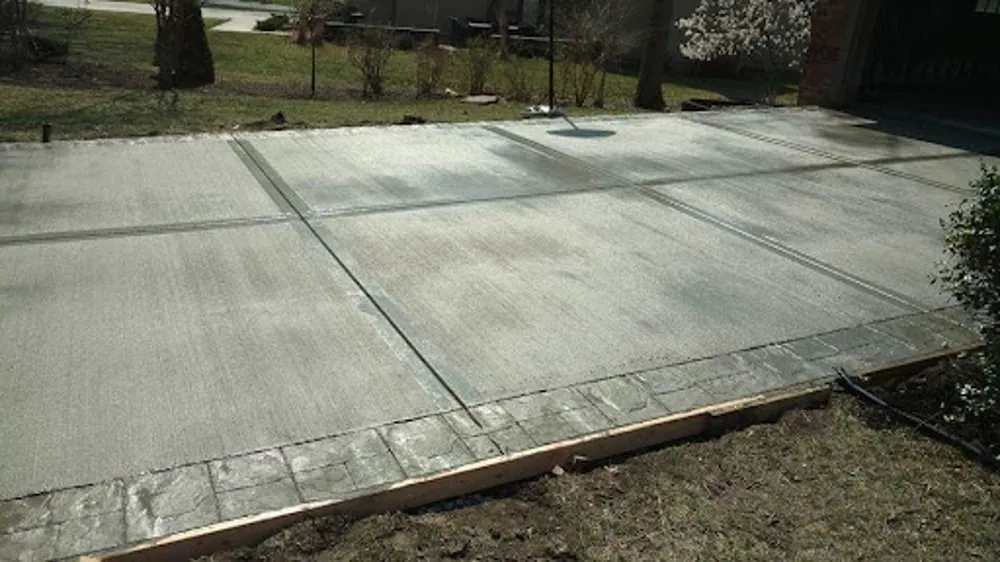
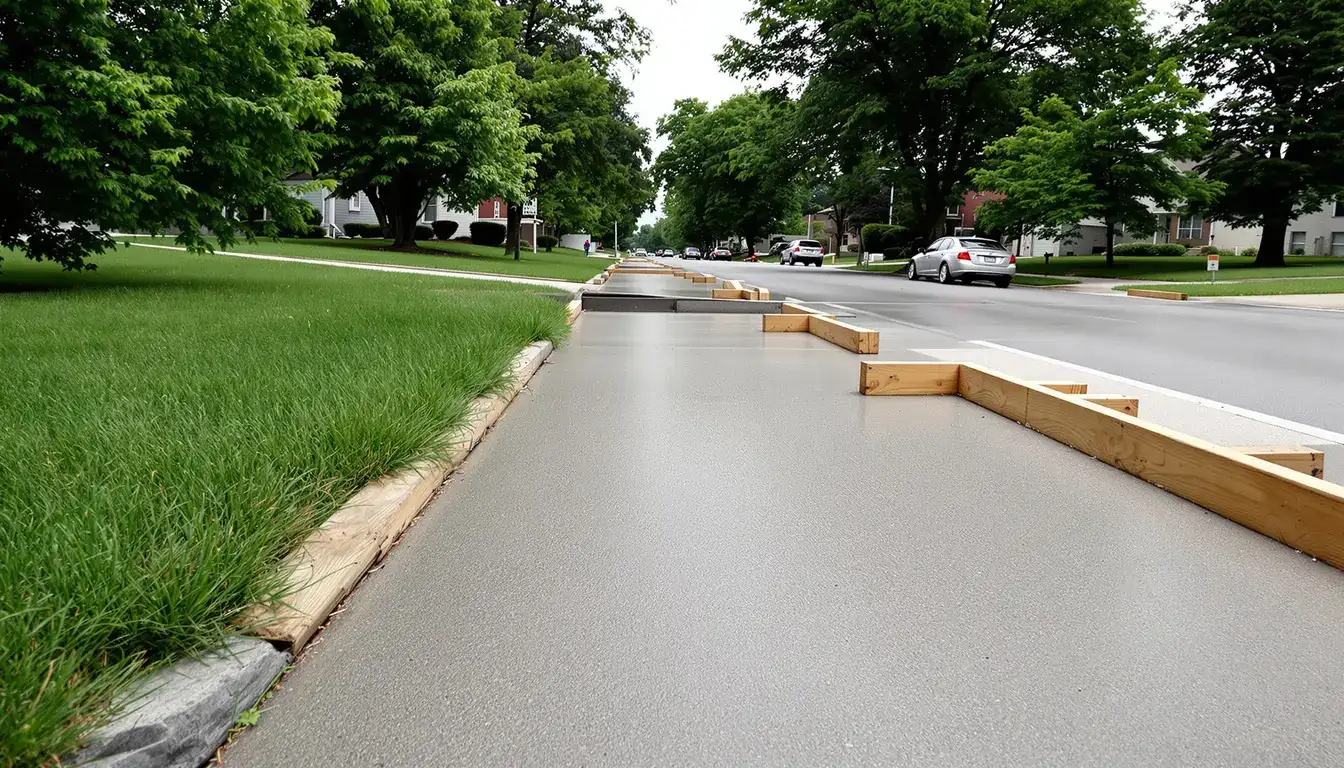
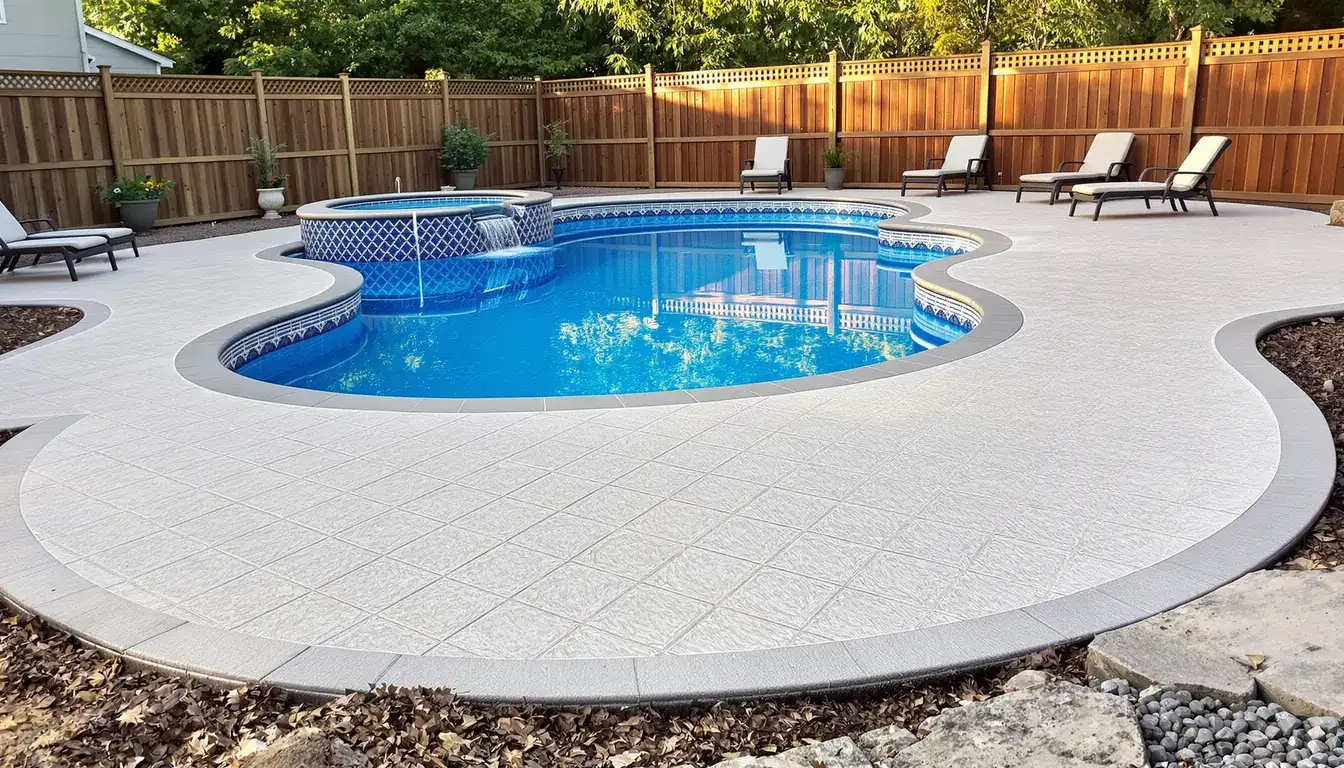
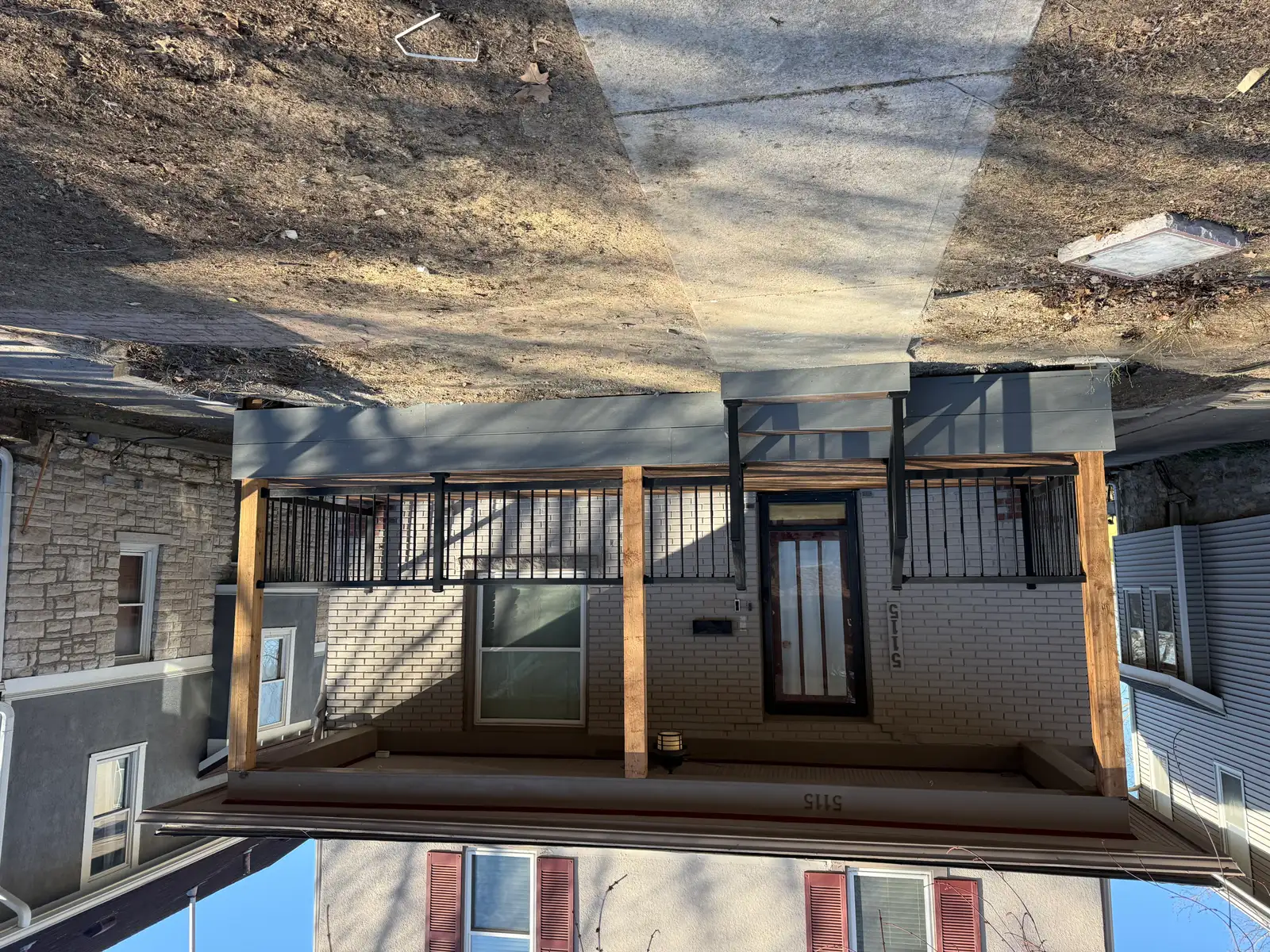
Nearby Lathrop-area projects
Start your Lathrop concrete project
From call to concrete — the fastest in KC.
Get a free, no-obligation estimate for your concrete project. We serve the entire Kansas City metro — call (816) 721-1699 or request your estimate online.