
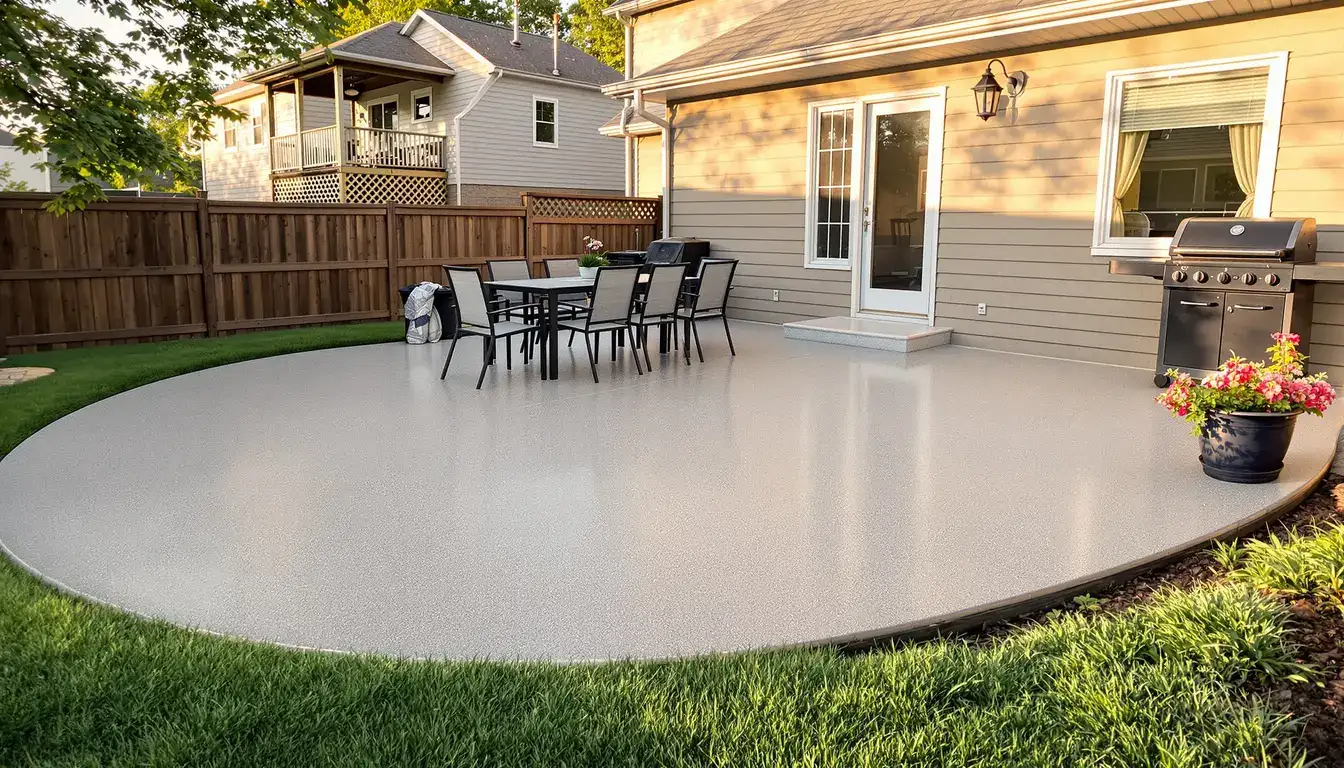
Concrete Patios & Outdoor Spaces in Lawrence, KS
Concrete patios built for Lawrence's two grounds — a compacted base for North Lawrence river bottom and the joints Mount Oread clay needs, from Old West Lawrence to the K-10 edge of town.
Concrete Patios & Outdoor Spaces in Lawrence
Custom concrete patio design and installation for backyards, outdoor living areas, and commercial courtyards. Ford Concrete serves Lawrence, KS and the entire Kansas City metro with more than a decade of experience and a 5-star reputation.
Lawrence at a Glance
- Population
- 97,411
- State
- Kansas
- County
- Douglas County
- Schools
- Lawrence Public Schools (USD 497)
Two grounds under Lawrence, two ways to build a patio
A concrete patio in Lawrence lasts when it rides a compacted base, is cut free of the house with an isolation joint, and sheds water on a positive drainage fall — but the base a patio needs here depends entirely on which of Lawrence's two grounds it sits on.
The Kansas River splits the town into two soils that behave nothing alike. Down in North Lawrence, patios sit on Kaw river-bottom alluvium — soft, granular ground with a high water table that can pump and settle under a slab. Up on Mount Oread and through the older streets off Sixth and downtown, the ground is upland clay that swells with a wet spring and shrinks through a dry August. A patio built for one and poured on the other is the slab that fails first, so the first thing we settle in Lawrence is which ground you're on and what it needs underneath.
Building a patio on the North Lawrence river bottom
On the river bottom the ground is the whole problem. Kaw alluvium is loose and granular with water sitting close to the surface, and a slab laid straight on it can pump — water working up and fines working out under load until the patio settles in dishes. We strip the soft topsoil and bring a compacted base up in lifts of crushed stone, packing each one so the slab bears on keyed aggregate that drains rather than on saturated ground that moves.
Where the patio meets a stoop or a step we set a restraint point to hold its position while the wet ground finds its level, and we keep the base thick enough to bridge the soft spots the bottom is known for. Over it goes four inches of 4,000-PSI concrete. On North Lawrence ground the base isn't a formality — it's the layer that decides whether a bottom-land patio stays flat or rides down into the alluvium the first wet season.
Building on the Mount Oread upland clay
Climb out of the bottom and the recipe changes. The clay under Mount Oread, Old West Lawrence, and the streets off Sixth is an upland soil that takes on water and swells, then pulls back and shrinks as it dries — movement that lifts and drops a slab on the season's schedule rather than washing out under it. Here the base still gets compacted, but the defense shifts to how the slab is separated and jointed.
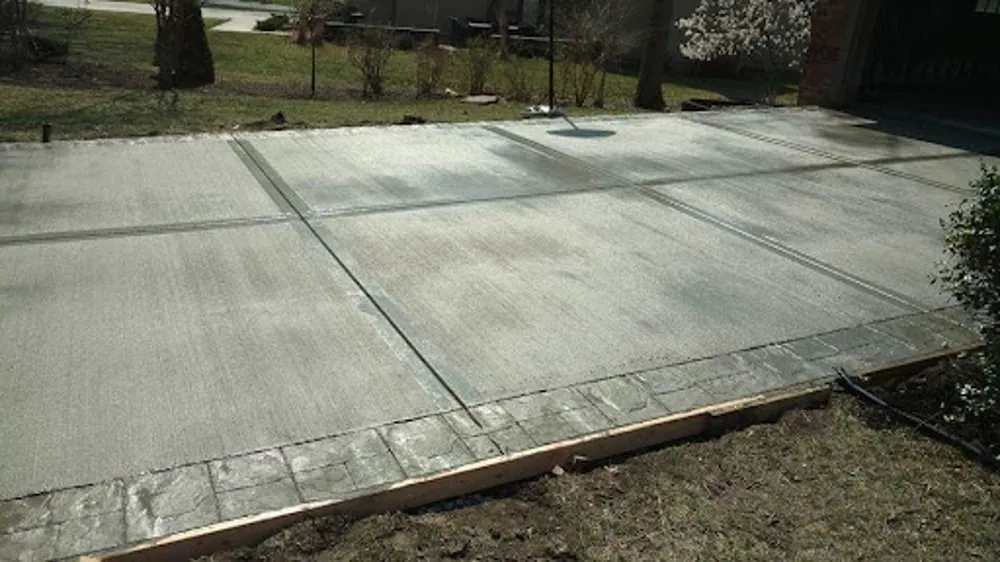
We cut the patio loose from the house with an isolation joint so the two can move on their own, and we saw contraction joints into the fresh slab so the clay's seasonal movement travels along planned lines instead of tearing a crack of its own. It's the same crew and the same 4,000-PSI mix as a bottom-land pour, but the ground asks a different question, and building for the clay on Mount Oread is not building for the alluvium in North Lawrence.
Setting drainage that fits whichever ground you're on
Both Lawrence soils punish standing water, for opposite reasons — the bottom because a high water table is already close, the upland clay because saturation is what makes it swell. Either way the fix is the same discipline: every patio we build sheds water on positive drainage, an unbroken fall away from the house that carries rain off the surface before it can pool.
We set the threshold elevation so the finished slab sits a step below the door, then run the grade out and down to ground that can take the runoff. On a sloping Sunset Hill or Old West Lawrence lot that means carrying water past the low corner and protecting where it leaves the slab; down in the Brook Creek flats near the river it means making sure the fall is real and not lost to a table that's already high. Moving water off the surface is half of keeping a Lawrence patio level on either ground.
A finish that suits a historic Lawrence back yard
Lawrence sets a high bar for how a back yard should look — the Victorian stock of Old West Lawrence, the brick and limestone character that runs down toward Massachusetts Street — and the finish is where a patio earns its place among it. The first fork is a broom vs stamped finish: a broom finish is the durable, slip-resistant, honest surface, while a stamped finish presses the texture of stone, brick, or plank into the slab for a finished outdoor room that reads with an older home.
Because the color and pattern are worked into the concrete as it cures, we pour a mockup on your own ground first so you approve the exact look in Lawrence light before the full patio goes down. We also run the joints in line with the pattern so the joint pattern continuity reads as part of the design, and on a sealed stamped slab we choose a sealer whose vapor transmission lets upland-clay moisture leave without clouding the finish.
Replacing a worn slab near campus or Old West Lawrence
The older neighborhoods around downtown and the University carry patios and walks that have been on native ground for decades — thin, unreinforced slabs, cracked through, tilted back toward the house, or flaked down to the aggregate by freeze-thaw and winter deicers. On a slab that old the trouble is usually the ground and a base that was never built, not the surface you can see, so a patch buys a season and no more.
Whether to resurface or rebuild turns on what sits under the wear. A slab that's only worn on top — firm underfoot, still pitched, no crack crossing it end to end — carries a bonded overlay that renews the surface without a tear-out. One that's split through, gone flat, or started shedding water at the house needs a fresh pour on a real compacted base, and that's the call we'll make with you. We run the same patio work through Eudora, De Soto, and Tonganoxie, so Douglas County's two grounds read the same to us from one lot to the next.
Do you need a permit for a patio in Lawrence?
Lawrence permits concrete flatwork through the City of Lawrence. Replacing a slab on its own footprint is routine; a new patio, a wider footprint, or any change to how the lot drains needs the permit and an inspection, which we file and schedule so the pour clears on the first visit — the same check that the positive drainage carries water away from the house. Kansas stormwater sits under KDHE, so once a job disturbs enough ground it answers to state rules, not Missouri's.
If you're weighing more than a patio, our Lawrence services page covers patios, driveways, and repair on one visit, and the patio service page walks through the full range of finishes. Lawrence and KC-metro homeowners rate Ford 4.9 on Google across 29 reviews, and the crew that pours heavy commercial flatwork is the same one that builds your back-yard patio. Call (816) 721-1699 for a written estimate after a site visit, usually within 24 hours.
Ready for a Lawrence patio built for the ground it's on?
From call to concrete — the fastest in KC.
River bottom or Mount Oread clay, the base is what keeps a patio flat. We read your ground and build for it. Call (816) 721-1699 for a site visit, usually within 24 hours, and a written number.
How we pour Concrete Patios & Outdoor Spaces in Lawrence
Read the lot and tell the ground apart
We work out whether you're on North Lawrence bottom or upland clay, read the grade and where water runs, and match the base to the ground before we quote.
Clear down to ground that holds
We pull the old slab and clear topsoil and loose fill to a layer that carries — deeper over soft river-bottom alluvium than up on the firmer clay.
Build the base the ground calls for
We lift and compact the base to drain, running it thicker over the bottom and jointing the slab for movement on the upland clay.
Form the slab and pitch the fall
Forms set the slope below the door for positive drainage, with an isolation joint holding the patio free of the house.
Place 4,000-PSI concrete and finish it
We pour the slab and work in the broom or stamped finish you chose, air-entrained for a Douglas County freeze-thaw winter.
Saw the joints and relieve the corners
Contraction joints go in early and run straight out of every inside corner, steering the crack to a line we picked.
Seal, cure, and hand it over
We seal for the right vapor transmission, cure the slab, protect the graded edge, clear the site, and walk the patio with you.
Warning signs on Lawrence Concrete Patios & Outdoor Spaces
A patio settling in dishes
A slab dropping into low spots on a North Lawrence lot is river-bottom alluvium pumping under load — the base was too thin for soft, wet ground.
A slab that lifts and drops with the season
A patio on the Mount Oread uplands that rides up wet and settles dry is clay swelling and shrinking, working against a slab with no room to move.
Water standing at a low edge
A puddle that lingers means the fall was lost or never set — dangerous on either Lawrence ground, since standing water is what softens the bottom and swells the clay.
A crack out of an inside corner
A crack breaking out of the notch where an L-shaped patio wraps a stoop is a re-entrant corner left without a joint to bleed off the stress a moving slab piles up there.
A flaking, spalled top on an old slab
A surface peeling down to the stone on an older patio near downtown is winter deicer and freeze-thaw chewing concrete placed before air-entrainment was standard.
Blotchy color on a stamped slab
Cloudy blotches on a stamped patio usually trace to moisture caught under a sealer that can't breathe; reset it with one picked for vapor transmission and the color clears.
How Ford earns Lawrence work
We build for the ground you're on
North Lawrence bottom and Mount Oread clay need different bases. We read which one your lot sits on and build the patio it actually needs.
River-bottom lots handled right
On Kaw alluvium with a high water table we build a base thick enough to bridge soft ground so the slab doesn't pump and settle.
Straight answer on overlay vs rebuild
A slab that's only surface-worn we overlay. One cracked through gets rebuilt on a real base. You hear the honest call, not the bigger number.
4.9 stars, 29 Google reviews
Homeowners across Lawrence and the KC metro rate Ford 4.9 on Google over 29 reviews for concrete work around the region.
The projects behind our name
From your driveway to an Amazon warehouse — the same crew, the same standards, every project.
Taco Bell
New Construction
Overland Park, KS
Domino's Pizza
New Construction
Independence, MO
Freddy's
New Construction
Kansas City
Tidal Wave Car Wash
New Construction
Kansas City
Amazon
New Construction
Riverside, MO
Nortian Food Grade Protein Facility
New Construction
Springfield, MO
Start with a free Lawrence estimate
Or call us directly: (816) 721-1699
Concrete Patios & Outdoor Spaces in Lawrence — FAQs
What kind of ground is under a Lawrence patio?
It depends which side of the Kansas River you're on. North Lawrence sits on Kaw river-bottom alluvium — soft, granular, with a high water table — while Mount Oread and the older streets off Sixth are upland clay that swells and shrinks. The two need different bases, which is why we read the ground before we quote the patio.
Why is my North Lawrence patio settling in low spots?
On the river bottom, a slab settles when loose alluvium pumps under load and water works up through it. The fix is a thick, compacted base of crushed stone that bridges the soft ground and drains, so the slab bears on stone instead of on saturated soil that moves.
Can you build a patio on the Mount Oread clay uplands?
Yes. On upland clay the work is in the separation and the joints: an isolation joint cuts the patio loose from the house, and contraction joints give the clay's seasonal movement planned lines to travel instead of a crack of its own. Built that way, an upland patio holds flat through the wet-dry swing.
Can you resurface my old patio instead of replacing it?
On a slab that's still solid underfoot, holding its pitch, with no crack running corner to corner, a bonded overlay renews the surface and skips the tear-out. Once it's cracked through, dropped out of level, or turned the water back toward the house, an overlay only masks a slab that's already failing, and we'll point you to a rebuild instead.
Do I need a permit for a patio in Lawrence?
Yes. Concrete flatwork in Lawrence is permitted through the City of Lawrence, and we pull it. Swapping a slab on the same footprint is quick; a new patio, a bigger footprint, or a change to how the lot drains brings an inspection. Kansas ground answers to KDHE, not Missouri's rules.
How long does a patio take to build in Lawrence?
Once the base is packed and the forms are set, most back-yard patios pour in a single day, with a day or two of prep and grading ahead of that. Give it about a day before you walk it and close to a month before heavy furniture while it cures to full strength. The schedule comes with your written estimate.
Related concrete services in Lawrence
Lawrence and neighboring communities
Get your Lawrence project moving
From call to concrete — the fastest in KC.
Get a free, no-obligation estimate for your concrete project. We serve the entire Kansas City metro — call (816) 721-1699 or request your estimate online.