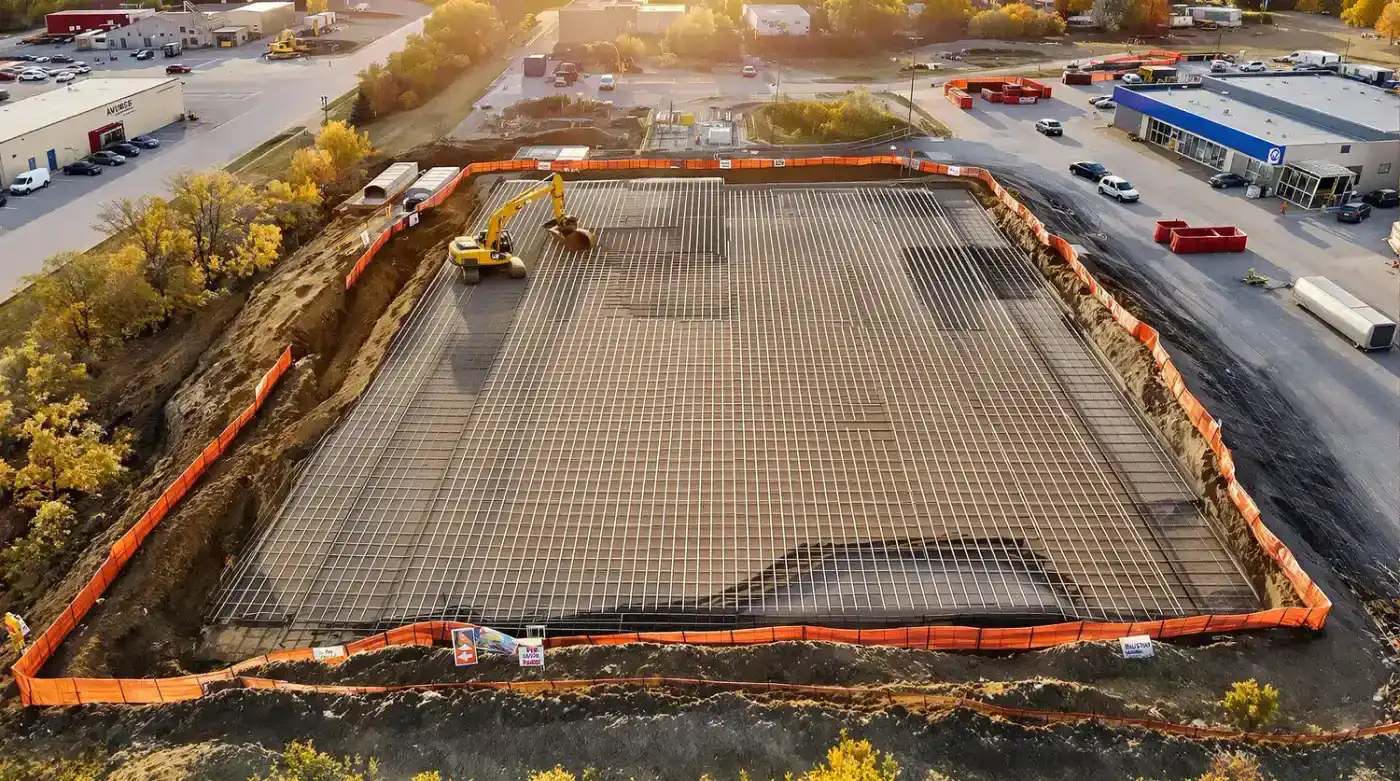
Sitework Contractor in Kansas City — Full-Scope Site Preparation
From raw ground to finished concrete — one contractor, one crew, one call. Ford Concrete is the full-scope sitework contractor for commercial and residential projects across the Kansas City metro.
What Sitework Actually Is
Sitework is every step between raw ground and a ready-to-pour slab. Clearing, mass excavation, rough and fine grading, utility trenching, sub-base compaction, erosion control, and storm drainage. On a commercial project, it is everything between the civil plan and the first truck of concrete. Most KC excavation companies stop at fine grading and hand the project off — and that handoff is the most expensive failure mode in commercial construction.
The Ford Advantage
One contractor from raw ground to finished concrete.
Same crew preps the sub-base and pours the slab. No coordination gap, no re-mobilization, no finger-pointing when something goes wrong.
Ford Concrete has run full-scope sitework in the KC metro for eleven years. Our project list includes Amazon in Riverside, Taco Bell in Overland Park, Nortian Food Grade Protein Facility in Springfield, Domino's Pizza in Independence, Freddy's, and Tidal Wave Car Wash. Every one of those jobs was built on Wymore-Ladoga clay, over limestone bedrock, or through the full swing of Kansas City's seasonal weather. Because we stay on the job through the concrete pour, sitework feeds directly into our commercial parking lot, warehouse floor, and retaining wall work.
Sitework Services We Provide
Seven sitework disciplines, all handled in-house, all backed by the same crew that pours your concrete.
01 — Sitework
Site Grading
Grading is where a civil plan turns into a buildable surface.
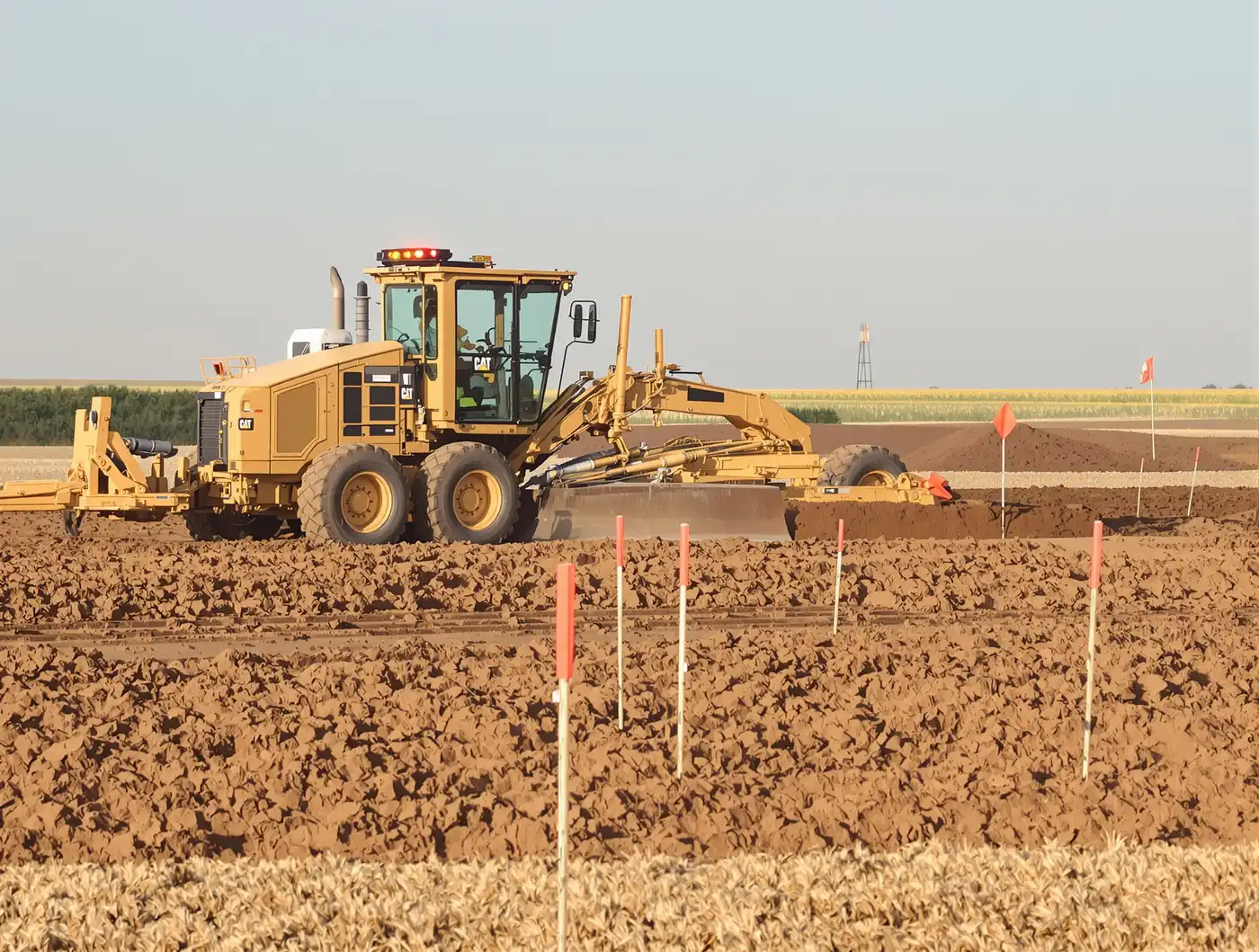
Rough grading moves thousands of cubic yards to get pad elevations within a few tenths of a foot. Fine grading pulls the sub-base to within hundredths — tight enough that the concrete crew can form and pour without chasing soft spots. On commercial work we run GPS and laser-guided machine control so the grader reads the civil model directly off the plan. Drainage slope gets built in at this stage, not patched on later, because every crown, swale, and invert dictates where water goes for the next thirty years.
- ▶ Rough grading to design elevation
- ▶ Fine grading within blue-top tolerance
- ▶ Laser and GPS machine-control grading
- ▶ Drainage slope, crowns, and swales
- ▶ Building pad preparation to 95% modified proctor
- ▶ Parking lot sub-grade and proof rolling
02 — Sitework
Excavation
Excavation is the single largest cost line on most sitework bids — and the place where bad bids go wrong.
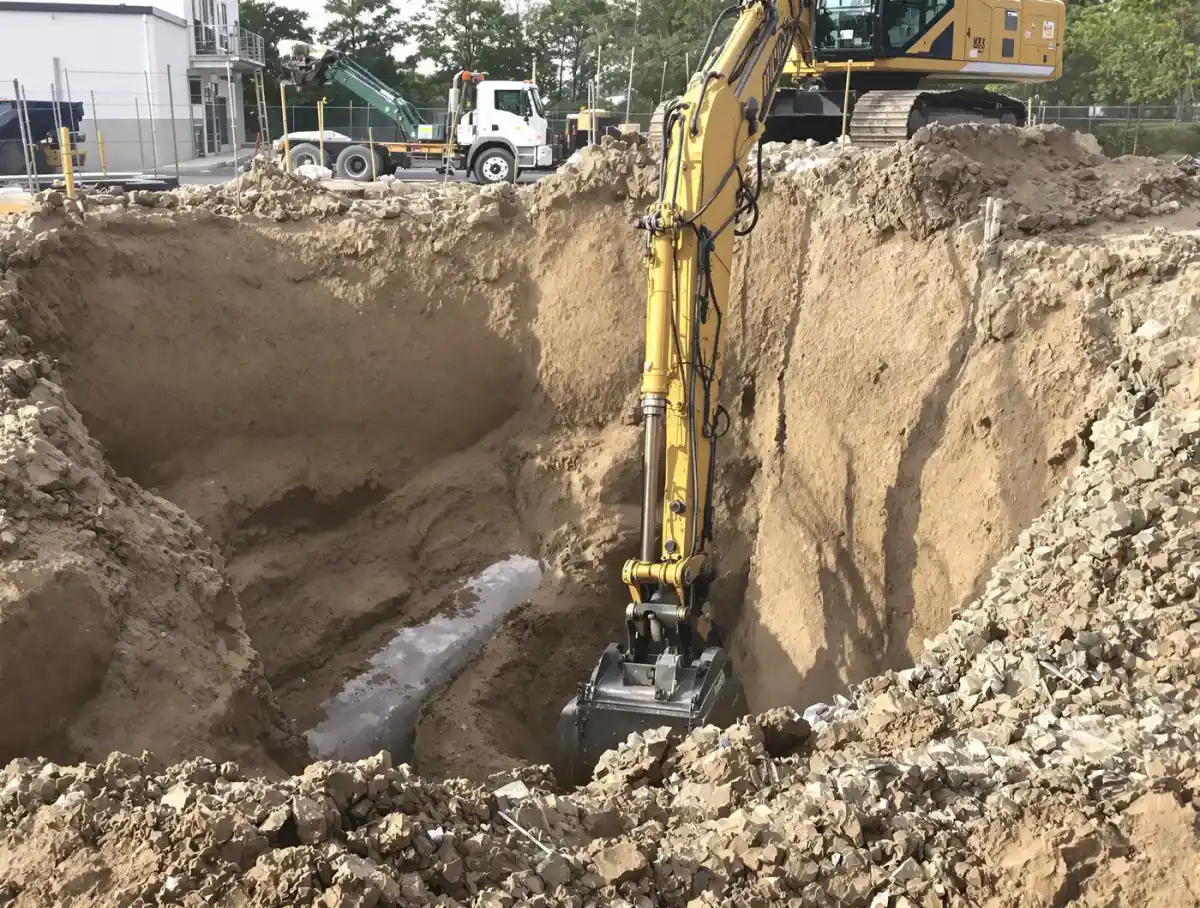
We run mass excavation on open sites where the cut-and-fill balance needs to move fast, and precision structural excavation for footings, foundations, and below-grade utilities where a quarter inch matters. Rock ripping and rock excavation are priced separately because the production rate drops hard in limestone. Every cubic yard is tracked against the civil plan so bank, loose, and compacted yards stay honest — no mystery swell factor hiding in the total.
- ▶ Mass earthwork and cut-and-fill balancing
- ▶ Structural excavation for footings and foundations
- ▶ Rock excavation and limestone ripping
- ▶ Backfill placement and compaction
- ▶ Dewatering for wet sites and river bottoms
- ▶ Haul-off and spoil management with swell tracking
03 — Sitework
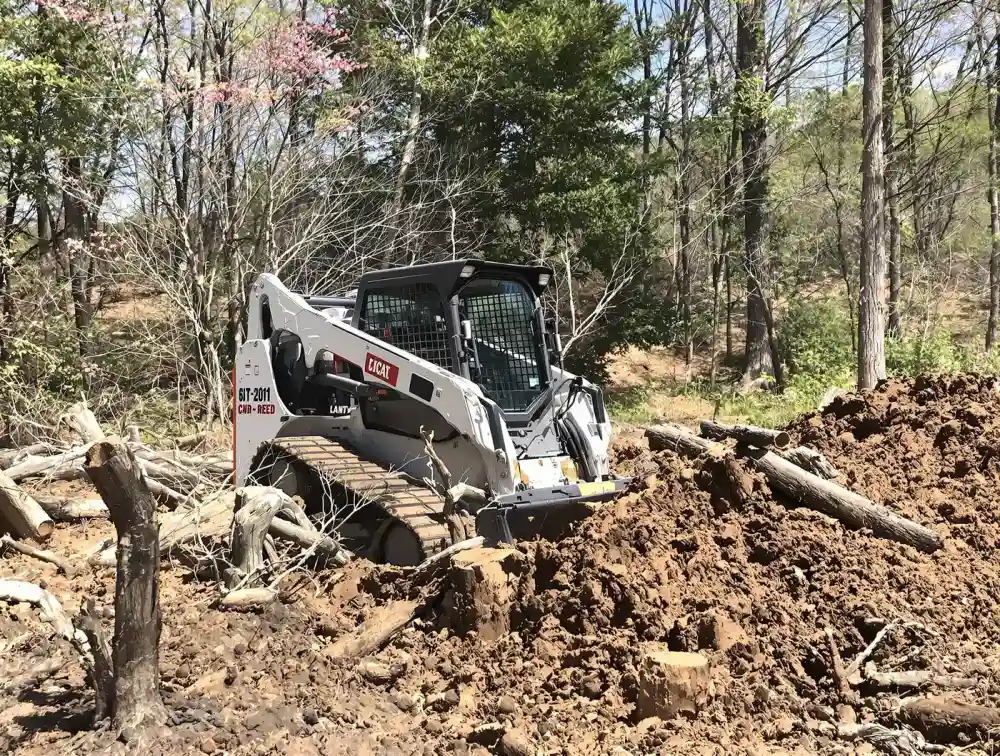
Land Clearing
Before the dirt moves, the ground has to be cleared.
We handle full clearing on wooded lots, selective clearing where specific trees stay, stump grinding and root grubbing so nothing rots under the slab, and full debris hauling to licensed disposal. On commercial jobs we strip and stockpile topsoil where the spec allows, because reusing it on final landscaping saves import cost at the end of the project. Brush, stumps, and root mats get mulched or hauled — not buried on site, which is a compaction nightmare waiting to happen.
- ▶ Brush and undergrowth removal
- ▶ Tree removal and felling
- ▶ Stump grinding below sub-grade
- ▶ Root grubbing and organic material removal
- ▶ Debris hauling to licensed disposal
- ▶ Mulching and topsoil stockpiling
04 — Sitework
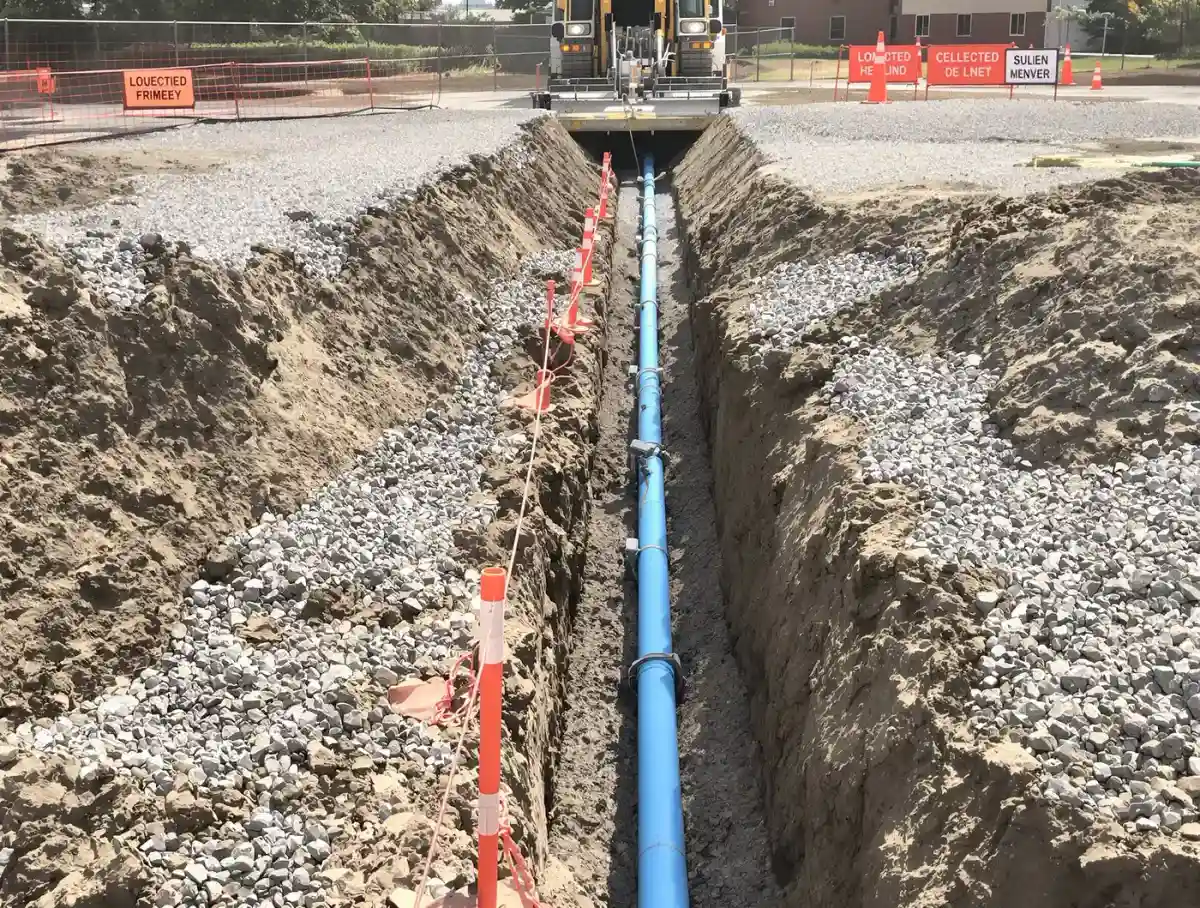
Utility Trenching
Every building needs water, sewer, electric, gas, and communications in the ground before the slab goes down.
We trench for all of it — water mains, sanitary and storm sewer, electrical conduit, gas service coordination with the utility, and fiber or communications runs. Bedding stone is placed and compacted beneath pipe, haunching is hand-worked to spring line, tracer wire and locatable warning tape go in at the required depth, and backfill matches the spec. We file 811 locates before any machine enters the site and coordinate with KC Water, Evergy, Spire, and the relevant comms providers on connection points.
- ▶ Water line trenching and installation
- ▶ Sanitary and storm sewer line trenching
- ▶ Electrical conduit and duct bank
- ▶ Gas line coordination with utility
- ▶ Bedding stone, haunching, and tracer wire
- ▶ Trench safety, shoring, and 811 locates
05 — Sitework
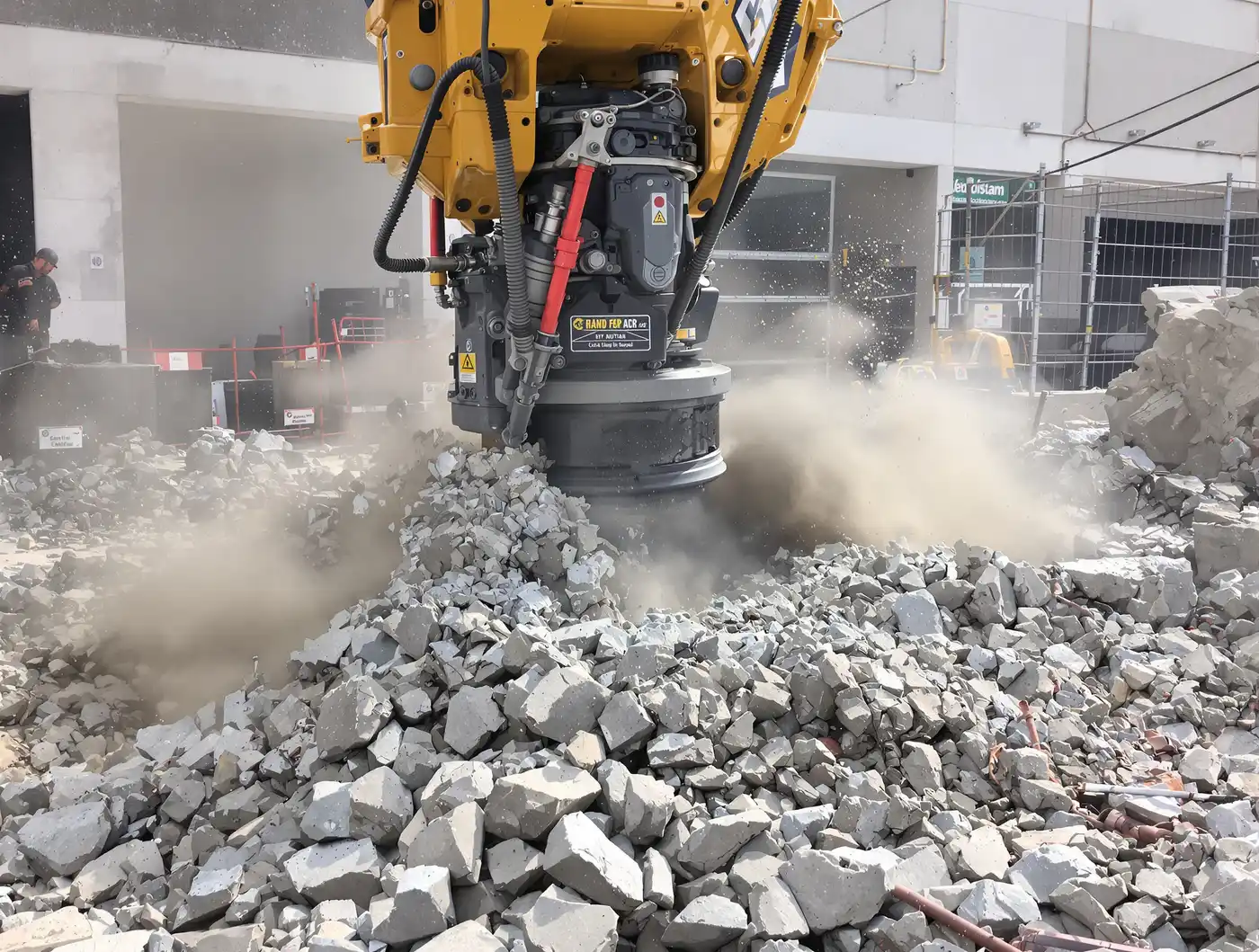
Demolition & Removal
A lot of KC sitework starts with tearing something out.
Structural demolition, concrete slab removal, foundation demolition, and selective interior demo all fall inside our scope, and all of it connects directly to the concrete work that follows. Pulling out an old slab and pouring the replacement with the same crew eliminates the handoff gap that trips up most projects. Debris is hauled, site is cleaned, and the sub-grade is prepped in a single sequence — see our concrete repair and parking lot work for the replacement side.
- ▶ Structural demolition of buildings and outbuildings
- ▶ Concrete slab and sidewalk removal
- ▶ Foundation and footing demolition
- ▶ Selective interior demolition
- ▶ Debris hauling and disposal
- ▶ Site cleanup and sub-grade prep for replacement
06 — Sitework
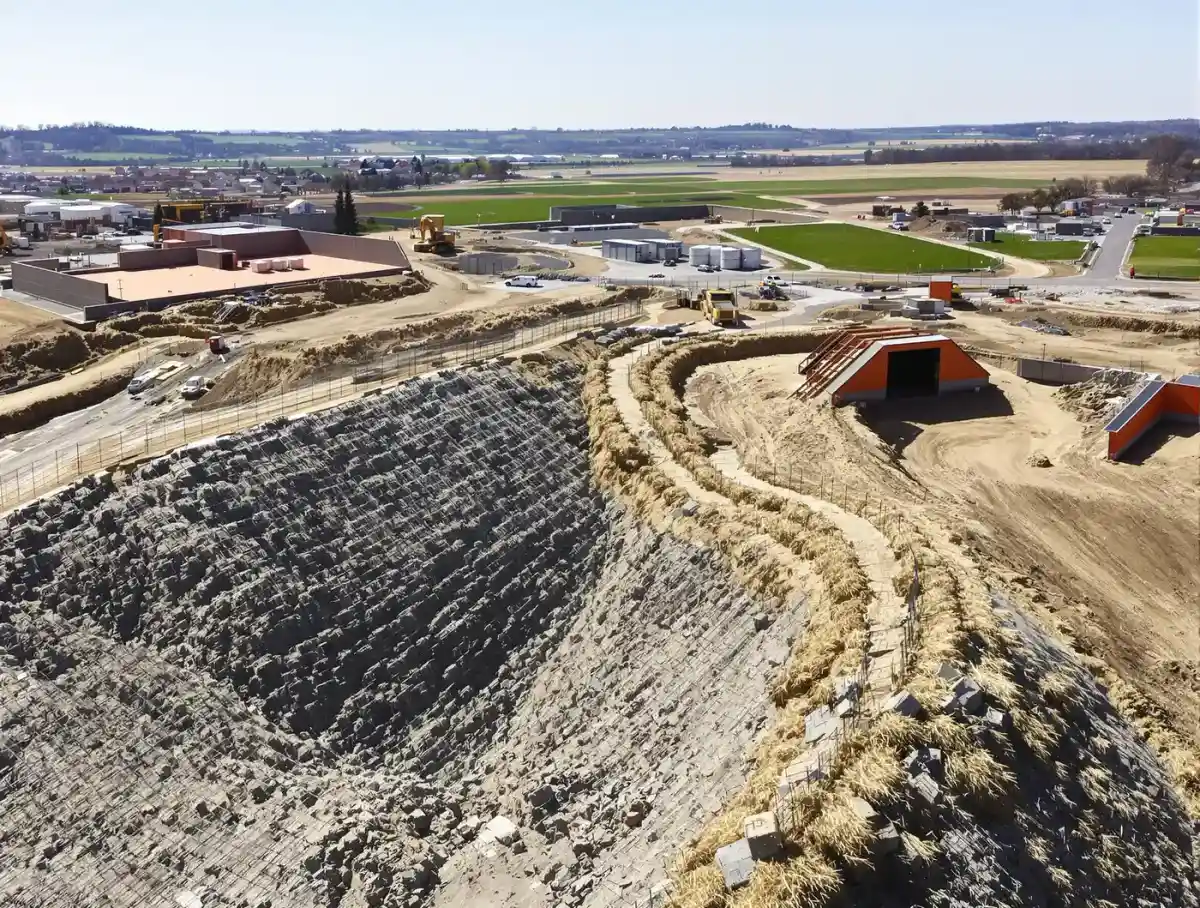
Erosion Control
Any project disturbing an acre or more triggers an NPDES construction stormwater permit in both Missouri and Kansas.
That means a written SWPPP, installed Best Management Practices, and ongoing inspections from mobilization through notice of termination. We handle the full compliance package — silt fence along down-gradient perimeters, straw wattles across bare soil, construction entrance rock pads to knock mud off tires, inlet protection at every active catch basin, temporary seeding, and permanent stabilization at project close. Fines for non-compliance run $1,000 to $25,000 per day per violation, so this gets treated as critical path work, not afterthought.
- ▶ SWPPP preparation and NPDES filing
- ▶ Silt fence installation and maintenance
- ▶ Straw wattles and check dams
- ▶ Construction entrance rock pads
- ▶ Inlet protection at catch basins
- ▶ Temporary and permanent stabilization
07 — Sitework
Storm Drainage
Storm drainage is where sitework meets the thirty-year life of the finished site.
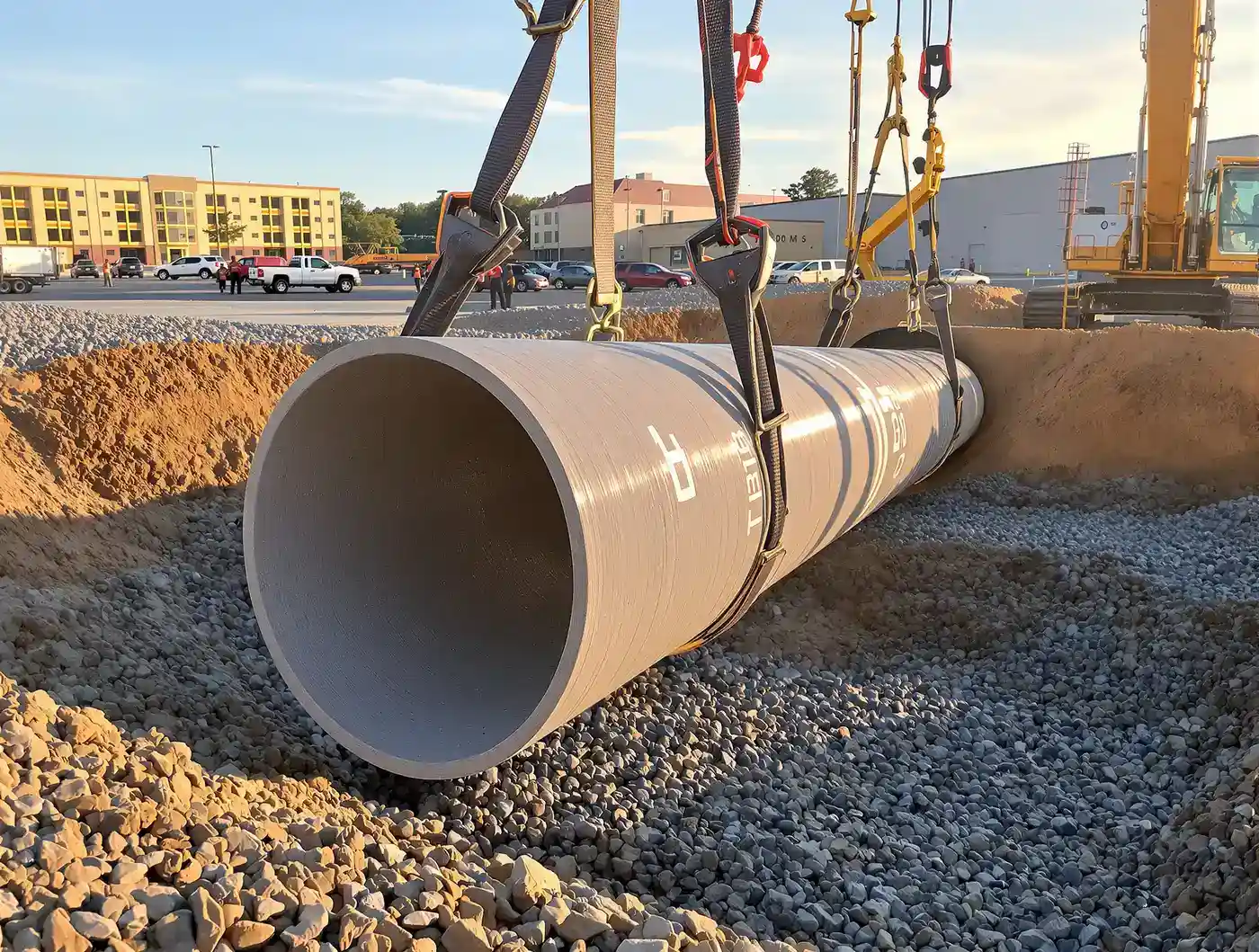
We install storm pipe systems in both reinforced concrete pipe (RCP) and HDPE, set catch basins and inlet boxes to rim grade, and build both detention basins that hold water and retention ponds that keep it. On flat commercial sites we pair the storm system directly with our curb and gutter work so the surface hydraulics and the underground system are designed to agree. French drains, swales, and sub-surface drainage round out the scope on problem sites.
- ▶ RCP and HDPE storm pipe installation
- ▶ Catch basins, manholes, and inlet boxes
- ▶ Detention and retention basin construction
- ▶ French drains and sub-surface drainage
- ▶ Drainage swales and overland flow paths
- ▶ Integration with curb, gutter, and inlets
How Sitework Works — From Raw Ground to Finished Concrete
Nine steps. One crew. The first eight are where every sitework contractor operates. The ninth is where we keep going and they stop.
Site Assessment & Survey
We walk the site with the general contractor or owner, review civil drawings, check existing topography against design grades, and flag conditions like poor-bearing soil or groundwater that affect the bid.
Permitting
We pull grading permits, prepare SWPPP documents, file NPDES construction stormwater notices with KDHE or MoDNR, and coordinate with city inspectors before a single bucket hits the dirt.
Clearing & Grubbing
Trees come down, stumps and root mats are removed, and vegetative material is hauled off. Topsoil is stripped and stockpiled for later reuse where specs allow.
Mass Excavation / Earthwork
We execute the cut-and-fill balance from the civil plan, haul spoils or import structural fill, and account for the swell factor that KC clay adds to loose cubic yards.
Rough Grading
The building pad and parking areas get shaped to within a few tenths of design elevation, with drainage swales, crowns, and inverts established for the first time.
Utility Trenching
Water, sewer, storm, gas, electric, and communications lines go in at required cover depths, with bedding stone, haunching, tracer wire, and locatable warning tape per utility standards.
Sub-Base Preparation
AB-3 aggregate base or other specified material is placed, moisture-conditioned, and compacted in lifts, with proof rolling to catch soft spots before they become cracks.
Fine Grading
Laser-guided fine grading brings the sub-base to final elevation within 95% modified proctor compaction. Blue top stakes set the forms. Cross-slope tolerance is checked and documented.
Concrete Construction
This is where most sitework contractors stop and hand the project off. We keep going. The same crew that prepared the sub-base forms, pours, and finishes the concrete — no coordination gap, no re-mobilization, no finger-pointing.
This is where our competitors stop. We keep going.
Why Full-Scope Sitework Beats the Handoff Model
Schedule Compression
When sitework and concrete are handled by different contractors, there is almost always a gap between demobilization of the excavator and mobilization of the concrete crew. That gap kills the schedule. Ford Concrete runs both phases with the same crew, so the sub-base is signed off one day and the forms go in the next.
Single Accountability
If the sub-base is wrong, the concrete cracks. If the concrete cracks, the sitework contractor blames the concrete contractor and vice versa. With Ford Concrete, Aaron Ford is personally accountable for both the dirt and the slab. There is nowhere for responsibility to hide.
Cost Efficiency
Two contractors means two mobilization fees, two insurance riders, two project managers, and two punch lists. Bundling sitework and concrete into one contract eliminates the duplicate costs and the overhead of coordinating a second trade.
Quality Control
The crew that preps the sub-base knows exactly what it is going to pour onto. Compaction is matched to the load, drainage is matched to the slab layout, and joints are cut where the sub-grade actually allows. Quality control starts at grading, not at the pour.
Commercial Experience at Scale
Ford Concrete has completed sitework and concrete construction for Amazon in Riverside, Taco Bell in Overland Park, Nortian Food Grade Protein Facility in Springfield, Domino's Pizza in Independence, Freddy's, and Tidal Wave Car Wash. The fleet and crew are built for commercial scale without losing the responsiveness of a local contractor.
Kansas City Soil Expertise
Wymore-Ladoga clay, limestone bedrock in southern Johnson County, and Missouri River alluvial soils each behave differently under load. Eleven years of work in the KC metro means we know which soils swell, which need over-excavation, and which require structural fill. That local judgment is not something an out-of-market contractor brings to the job.
Built for Commercial Scale
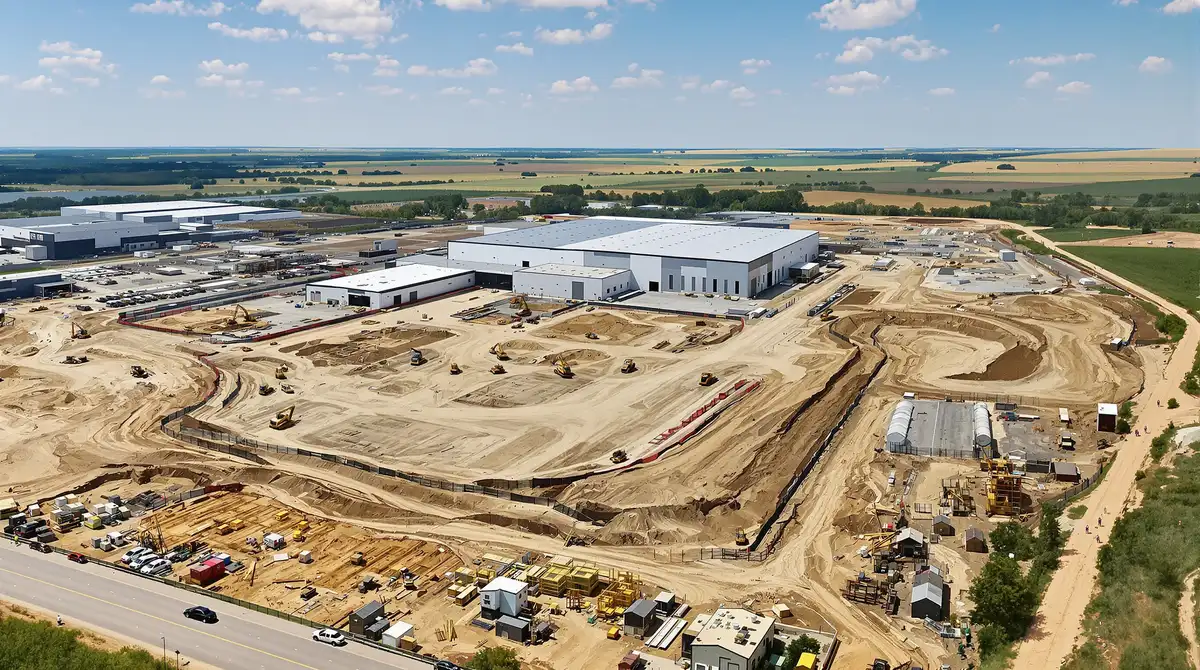
Commercial sitework at the scale of an Amazon facility or a national QSR brand is a different animal than a residential driveway. It requires staged mobilization, SWPPP compliance, NPDES permitting, coordination with civil engineers and inspectors, and the equipment fleet to move thousands of cubic yards on a schedule.
Ford Concrete has eleven years and six marquee commercial projects behind us — Amazon in Riverside, Taco Bell in Overland Park, Nortian Food Grade Protein Facility in Springfield, Domino's Pizza in Independence, Freddy's, and Tidal Wave Car Wash. We bring that commercial discipline to every project, whether it is a 50-acre distribution center or a single-family driveway replacement.
Trusted by National Brands
From your driveway to an Amazon warehouse — the same crew, the same standards, every project.
Taco Bell
New Construction
Overland Park, KS
Domino's Pizza
New Construction
Independence, MO
Freddy's
New Construction
Kansas City
Tidal Wave Car Wash
New Construction
Kansas City
Amazon
New Construction
Riverside, MO
Nortian Food Grade Protein Facility
New Construction
Springfield, MO
Kansas City Soil & Site Conditions
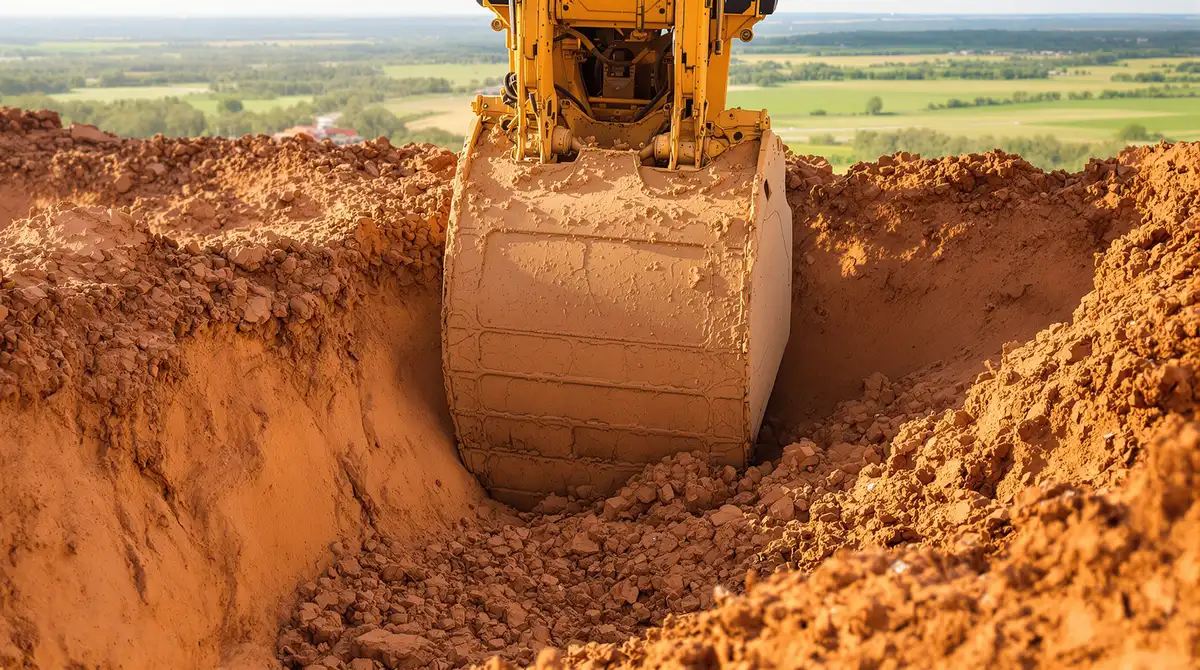
The Kansas City metro sits primarily on the Wymore-Ladoga soil complex, a CH fat clay classified with a very high shrink-swell rating. Clay content runs 60 to 80 percent. Excavated material swells 25 to 35 percent by volume, compaction must be held within 2 percent of optimum moisture, and finished grades can shift seasonally as the clay expands and contracts with 40 inches of annual rainfall.
Frost depth runs 30 to 36 inches across the metro, which sets footing and utility cover requirements. Southern Johnson County adds shallow limestone bedrock that affects excavation cost and sometimes requires rock ripping. The Missouri River bottoms on the north side introduce alluvial soils with different bearing capacity. Each sub-market behaves differently under load, and eleven years of work in this metro has given us the judgment to price, schedule, and build accordingly.
KC Metro — Soil & Site Conditions by Area
| Area | Soil Type | Key Challenge |
|---|---|---|
| Jackson County (KC MO, Independence, Blue Springs) | Wymore-Ladoga clay (CH) | High shrink-swell, difficult compaction |
| Johnson County South (Olathe, Gardner) | Shallow limestone bedrock | Rock excavation required |
| River corridors (Riverside, Parkville) | Alluvial sand and silt | High water table, dewatering |
| Wyandotte / Leavenworth | Loess silt deposits | Erosion-prone, needs stabilization |
Sitework Cost Overview
Sitework is priced by scope, not a single headline rate. The biggest variables on any KC project are cut-and-fill balance, swell factor on clay spoils, trenching length, and whether the site sits over limestone bedrock. Here are the general ranges we see across the KC metro — actual bid pricing depends on your specific site, soil, haul distance, and scope.
- Excavation: roughly $8–$25 per bank cubic yard (common earthwork); rock excavation runs 2–4x higher
- Structural fill placement: roughly $20–$40 per compacted cubic yard, higher if imported
- Grading & clearing: priced per acre — varies with terrain slope, timber density, and grubbing depth
- Trenching: priced per linear foot — varies with depth, pipe size, and bedding spec
- Land clearing: priced per acre — light brush to heavy hardwood can vary by an order of magnitude
- Mobilization: $500–$1,500 residential, $1,500–$5,000 commercial (higher on large-scale projects)
Every project is different — for your specific scope.
Read the full sitework cost guide →
Get a Sitework Bid for Your Kansas City Project
Or call us directly: (816) 721-1699
Sitework in Kansas City — FAQs
What is included in sitework for a commercial construction project?
How much does sitework cost in Kansas City?
Do I need a SWPPP for my construction project?
What is the difference between sitework and excavation?
How long does sitework take for a commercial project?
Can one contractor handle both sitework and concrete?
What soil challenges exist in the Kansas City area?
When is the best time of year for sitework in Kansas City?
Sitework Service Area
Ready to Get Started?
From call to concrete — the fastest in KC.
Get a free, no-obligation estimate for your concrete project. We serve the entire Kansas City metro — call (816) 721-1699 or request your estimate online.