
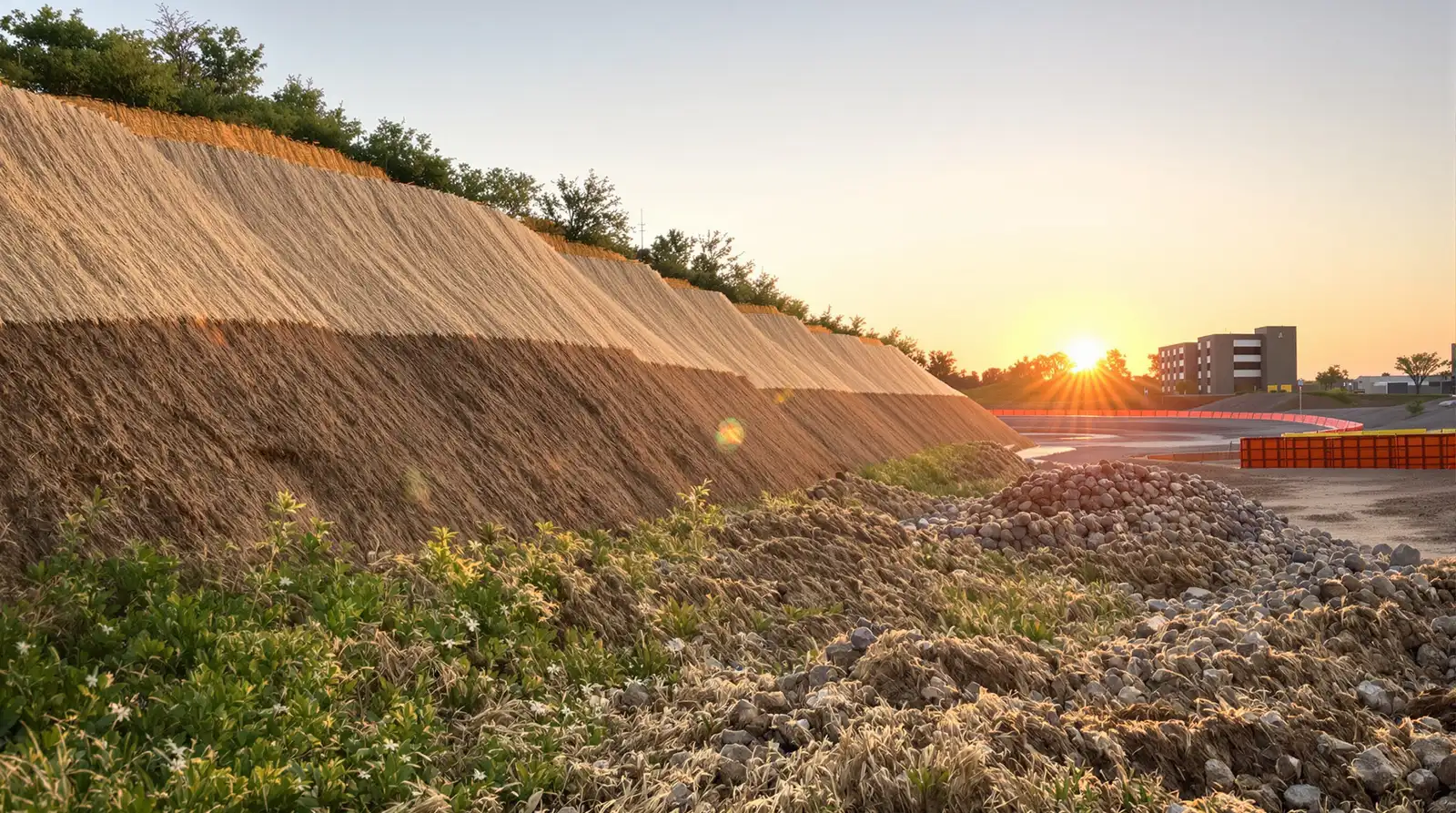
Erosion Control & SWPPP Compliance in Kansas City
Trenched silt fence installation, construction entrance rock pads, temporary seeding stabilization, erosion blanket anchoring, and weekly SWPPP BMP inspections for commercial construction sites across the Kansas City metro — installed and maintained by the same crew that pours your concrete.
What Is Erosion Control?
Definition
Erosion control is the installation and ongoing maintenance of best management practices — silt fence, construction entrance rock pads, inlet protection devices, temporary seeding, and erosion blankets — that keep sediment inside the limits of a construction site and out of the storm drain system for the life of a project.
Erosion control is a compliance discipline, not a nice-to-have. On any Kansas City commercial project that disturbs more than one acre of land, an NPDES construction stormwater permit is required on both sides of the state line and a written SWPPP has to be on-site from the first bucket of dirt through final stabilization. The permit exists because clay soil moving downhill in a rain event does not politely stop at the property line — it ends up in a creek, a catch basin, or a neighbor's parking lot, and the fines and remediation cost far more than the BMPs would have.
BMPs only work when they are installed correctly and inspected weekly. A trenched-in silt fence installation, a properly sized construction entrance rock pad, and erosion blanket anchoring on a staple pattern are not paperwork exercises — they are field work that has to be done right the first time and maintained through the full build. We have been installing and maintaining SWPPP BMPs on Kansas City commercial sites for eleven years, including Amazon's Riverside facility and QSR new-construction pads where the inspector walked the site every week. The BMPs that worked on those jobs are the BMPs on yours.
Erosion Control Capabilities
Four capability blocks — silt fence installation, construction entrance and tracking controls, temporary seeding and erosion blankets, and SWPPP compliance documentation — all handled in-house by the same crew that grades your site and pours your concrete.
01 — Capability
Silt Fence Installation & Perimeter Controls
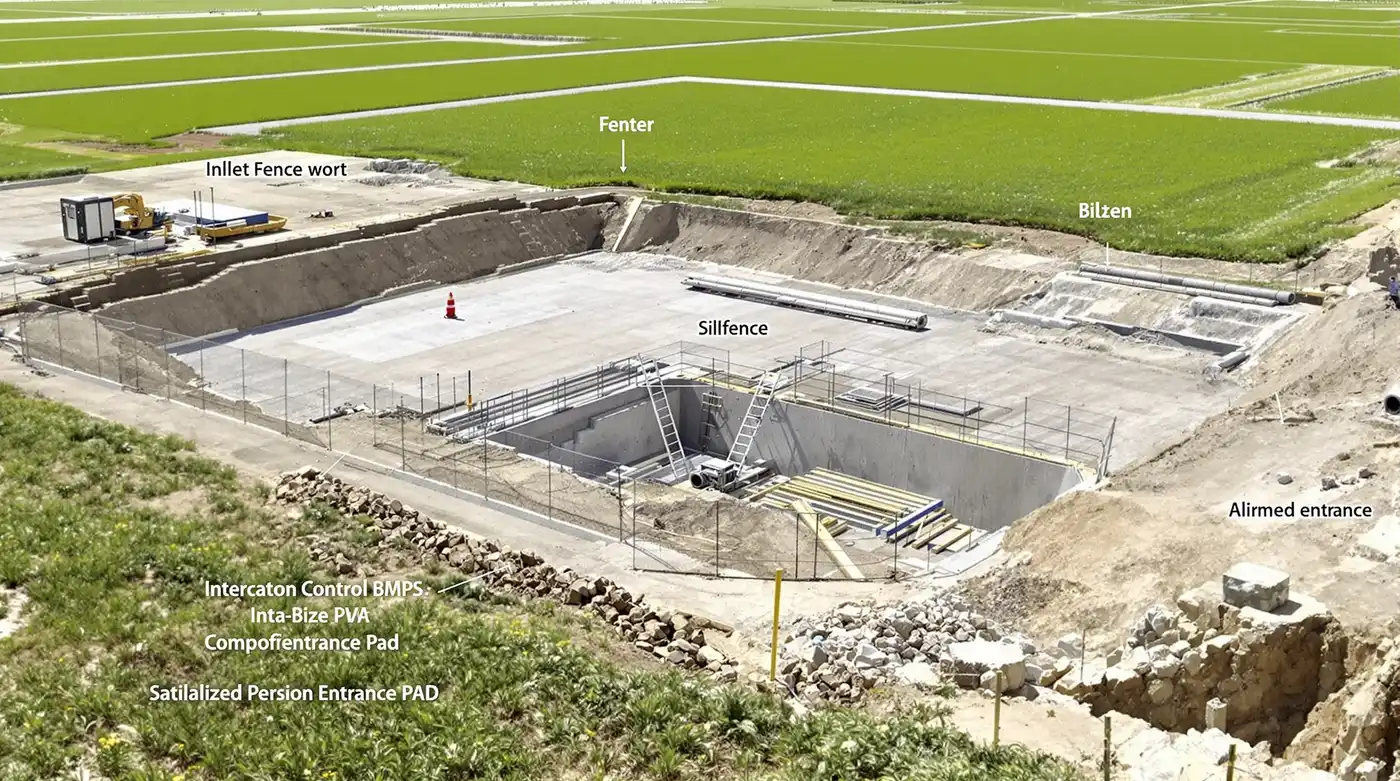
Silt fence installation is the first and most visible line of defense on any Kansas City commercial erosion control plan.
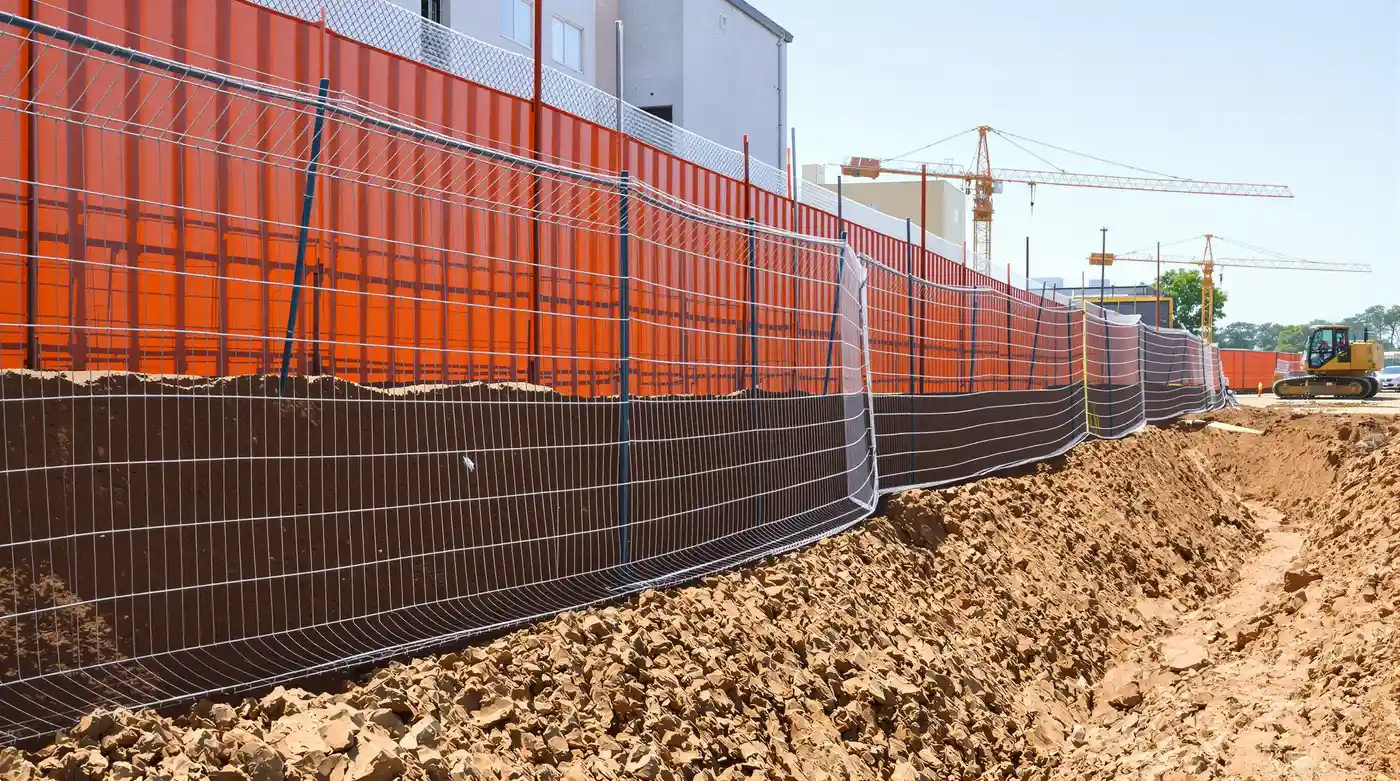
Silt fence installation done correctly is a trenched-in silt fence installation — not fabric stapled to the surface of the ground and hoped for. We cut a narrow trench six inches deep along the downslope perimeter, drop the bottom edge of the fabric into the trench, backfill, and compact over the fabric so runoff cannot undercut the barrier the first time it rains. Wooden or steel stakes go on the downhill side at proper anchoring depth with stake spacing no wider than six to eight feet depending on slope length.
Once it is in, silt fence is not a set-and-forget BMP. We inspect weekly and after every rain event, replace damaged sections before sediment breaks through, and shovel out accumulated silt when it reaches a third of the fence height. Downslope perimeter placement is planned against the civil grading plan so the fence catches sheet flow before it leaves the site — not after it has already reached the street.
- ▶ Trenched-in silt fence installation
- ▶ Proper anchoring depth and backfill
- ▶ Stake spacing for slope length
- ▶ Downslope perimeter placement
- ▶ Weekly inspection and logging
- ▶ Damaged section replacement
02 — Capability
Construction Entrance Rock Pad & Tracking Controls
A construction entrance rock pad is the only thing standing between a muddy commercial site and a sediment trail on the public road.
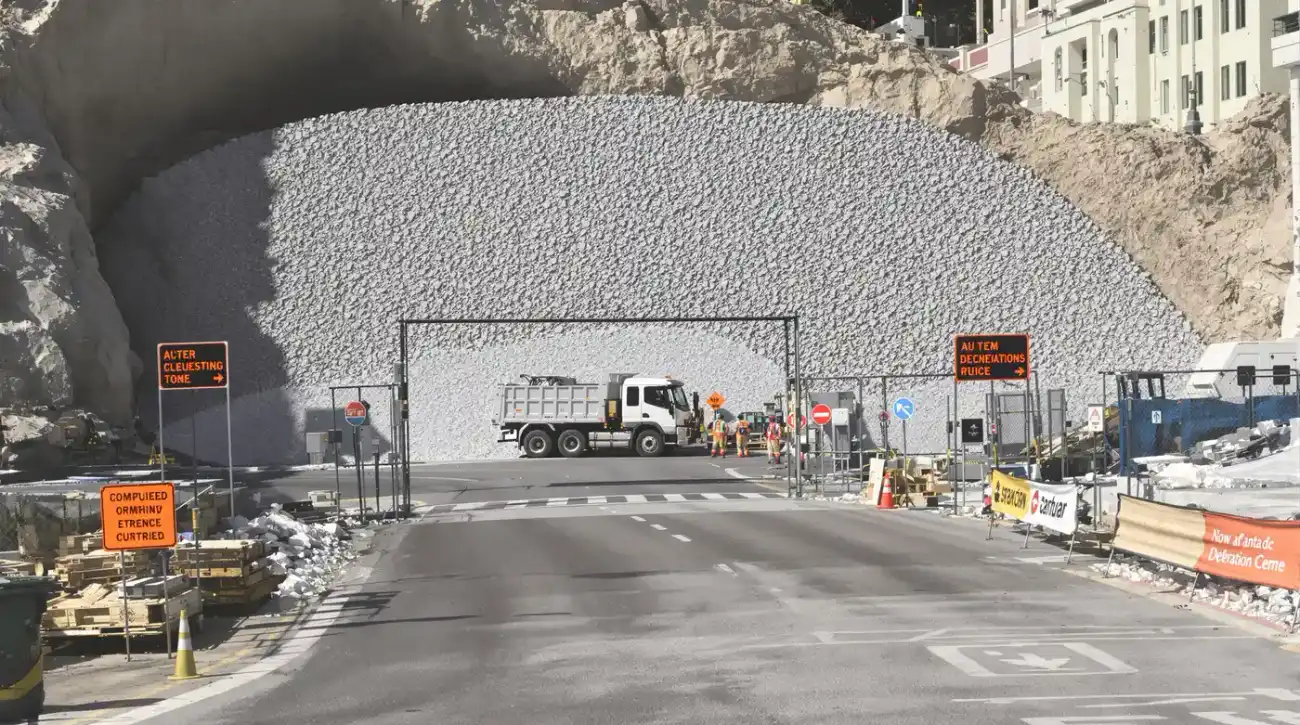
A proper construction entrance rock pad is 50 to 100 feet long, a minimum of 12 feet wide, and built from large crushed stone sized between 1 and 4 inches so tires flex and drop loose mud before vehicles hit the pavement. We place geotextile under the stone on soft sub-grade so the rock does not pump down into the clay. On high-traffic sites we add a tire wash station and stabilized access roads across the interior so sediment never reaches the entrance in the first place.
Tracking prevention is an ongoing job, not a one-time install. The rock pad clogs with clay over time and stops flexing tires the way it should, so we add fresh stone whenever the existing layer becomes impregnated. Any sediment that does reach the public road gets swept the same day — not left for the city or the next rain to carry into a storm inlet.
- ▶ Construction entrance rock pad
- ▶ Crushed stone sizing 1–4 inches
- ▶ Tire wash station on high-traffic sites
- ▶ Stabilized access roads
- ▶ Periodic rock replacement
- ▶ Tracking prevention and street sweeping
03 — Capability
Temporary Seeding Stabilization & Erosion Blanket Anchoring
Temporary seeding stabilization and erosion blanket anchoring are how exposed soil stops being a liability once grading wraps for the season.
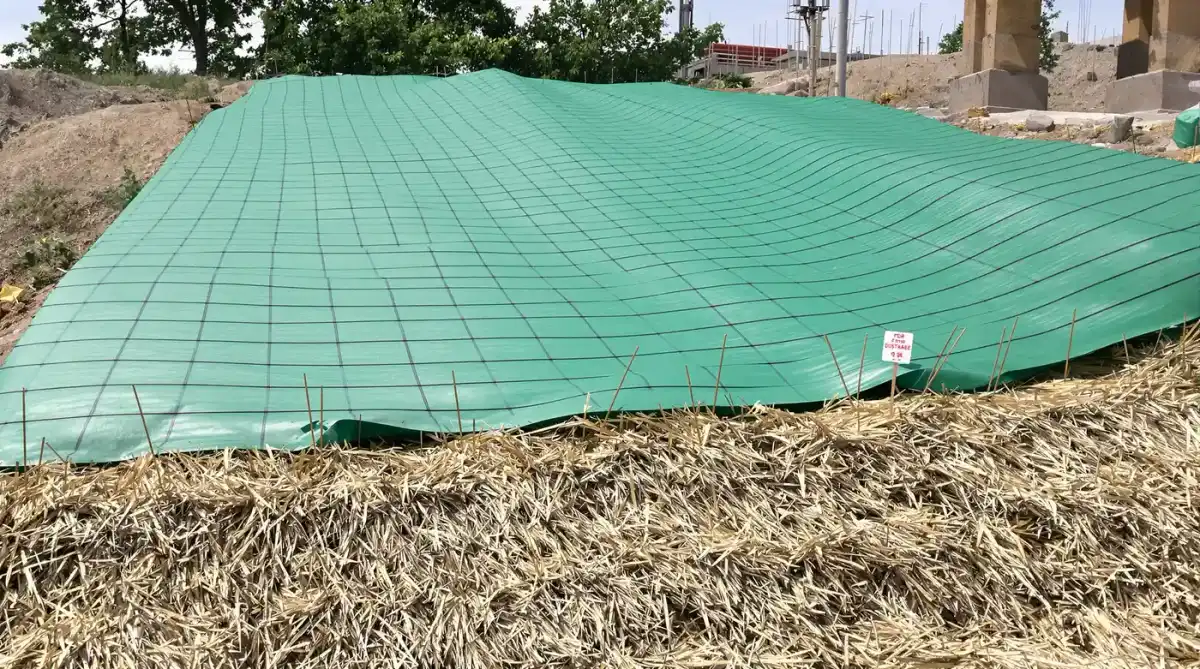
Temporary seeding stabilization is required on any area of exposed soil that will sit idle for more than 14 days on most Kansas City commercial jobs. We broadcast or hydromulch a fast-germinating annual — typically winter wheat, oats, or annual ryegrass depending on season — at the rate specified in the SWPPP, then protect the seed bed with straw mulch or a rolled erosion control blanket on steeper pitches.
Erosion blanket anchoring is a staple pattern game. Excelsior, straw, or coconut fiber blankets go over the seed bed with metal staples driven through the net on a diamond pattern, spacing tightened on steep slopes and at check slots. A straw wattle fiber roll runs along the toe of slope to slow runoff and catch any sediment the blanket lets through before it hits the perimeter silt fence.
- ▶ Temporary seeding stabilization
- ▶ Hydromulch application
- ▶ Erosion blanket anchoring
- ▶ Straw wattle fiber roll at toe of slope
- ▶ Staple pattern specs for slope grade
- ▶ Toe-of-slope protection
04 — Capability
SWPPP Best Management Practices & Compliance Documentation
SWPPP best management practices are the written rulebook the state inspector reads when they show up on your commercial site unannounced.
SWPPP best management practices live in a binder — or a tablet — that has to be on-site and accessible for the life of construction. We maintain weekly inspection logs, complete rain event inspections within 24 hours of any storm producing a half inch or more, photo document BMP condition at every pass, and record corrective actions the same day they are taken. Every maintenance visit gets initialed by the qualified inspector so there is a paper trail when the state walks the site.
NOI filing stormwater — the Notice of Intent that starts the NPDES construction permit clock — is summarized here but owned by our sitework permits and regulations page. That page covers the full MoDNR and KDHE filing process, fees, and the Missouri versus Kansas differences. This page sticks to the inspection, documentation, and BMP maintenance side of compliance.
- ▶ SWPPP best management practices
- ▶ Weekly inspection logs
- ▶ Rain event inspections within 24 hours
- ▶ Photo documentation of BMP condition
- ▶ NOI filing stormwater (summary only)
- ▶ Inspector access and corrective action logs
Why Ford Concrete for Erosion Control
We install the BMPs and we pour the concrete. A pure SWPPP subcontractor rolls off your site the week after final stabilization and never sees how their decisions affected the concrete pour. We are still on the job — forming, pouring, and finishing — which means every silt fence line and every inlet protection device is planned against the pour sequence from day one.
Trenched-In Silt Fence — Always
No surface-stapled fabric. Every silt fence on a Ford Concrete job is trenched six inches and backfilled so it actually catches sediment instead of laying flat after the first storm.
Weekly SWPPP Inspections Documented
Weekly inspection logs and rain event inspections within 24 hours. Photo documentation in the on-site binder for every pass — the state inspector gets a paper trail, not a shrug.
One Crew From BMP To Broom Finish
Erosion control, grading, sub-base, and concrete — same crew, single invoice, no handoff gap when the inspector shows up unannounced.
Aaron Ford Answers The Phone
Field condition questions, SWPPP inspection findings, and corrective action decisions go directly to the owner.
Erosion Control in Kansas City's Clay & Rain
Land disturbance over one acre on both the Missouri side (MoDNR) and the Kansas side (KDHE) triggers an NPDES construction stormwater permit and a written SWPPP that must be on-site and accessible throughout construction. Kansas City's roughly 40 inches of annual rainfall combined with Wymore clay makes erosion control critical — exposed clay soil washes rapidly in any significant storm, and a single unprotected slope can drop tons of sediment into a downstream catch basin in a single afternoon.
For the full permit filing process, fees, and the Missouri versus Kansas differences, see our sitework permits and regulations page. For the clay soil detail and how Wymore behaves under moisture, see the Kansas City soil conditions guide. Both pages own that detail — this page sticks to BMP installation and SWPPP inspection work.
Our Erosion Control Process
Six steps from SWPPP review through final stabilization and permit closeout — installed and inspected by the same crew that grades and pours.
SWPPP Review & BMP Planning
We review the approved SWPPP and civil grading plan, walk the site, and map every required BMP — perimeter silt fence, inlet protection device locations, construction entrance, stabilized access, and temporary seeding areas — before the first BMP goes in.
Perimeter Silt Fence & Entrance Install
Trenched-in silt fence along the downslope perimeter goes in first, followed by the construction entrance rock pad. These two BMPs have to be operational before any meaningful earth disturbance begins on the site.
Inlet Protection & Interior Controls
Inlet protection devices go on every existing and new catch basin. Straw wattle fiber rolls get installed across slope contours and at the toe of steeper cuts to break up sheet flow before it picks up sediment.
Temporary Seeding & Erosion Blankets
Exposed slopes that will sit idle more than 14 days get temporary seeding stabilization. Steeper pitches get erosion blanket anchoring with staples on the specified pattern and straw wattles at the toe.
Weekly & Rain-Event Inspection
Weekly SWPPP inspections and rain event inspections within 24 hours of any significant storm. Damaged BMPs are repaired or replaced the same day, and every inspection is logged with photos in the on-site SWPPP binder.
Final Stabilization & Permit Closeout
Once the site reaches 70% permanent vegetative cover or permanent BMPs, we help the owner close out the permit with a Notice of Termination. All temporary BMPs are removed and any disturbed areas are permanently stabilized.
Erosion Control in Kansas City — FAQs
When does a Kansas City commercial project trigger an NPDES permit and SWPPP?
Any land disturbance over one acre triggers an NPDES construction stormwater permit on both the Missouri side (through MoDNR) and the Kansas side (through KDHE). Smaller projects that are part of a larger common plan of development also count against the one-acre threshold. Once triggered, an NOI filing stormwater package has to be submitted and a written SWPPP has to be on-site and accessible before significant earth disturbance begins. For the full permit filing process and the Missouri versus Kansas differences, see our sitework permits and regulations page.
What is the difference between trenched-in silt fence and surface-stapled silt fence?
Trenched-in silt fence installation cuts a six-inch trench along the downslope perimeter, drops the bottom edge of the fabric into the trench, and backfills with compacted soil so runoff cannot undercut the barrier. Surface-stapled silt fence skips the trench and gets flattened the first real storm. Every Kansas City SWPPP we have ever written specifies trenched-in installation, and so does every state inspector we have worked with. The trench takes an extra pass but it is the difference between a BMP that works and a fence that just looks like one.
How is a construction entrance rock pad supposed to be built?
A construction entrance rock pad is 50 to 100 feet long, a minimum of 12 feet wide, built from 1 to 4 inch crushed stone, and placed over geotextile fabric on any soft sub-grade. The pad has to be long enough for a full wheel rotation so tires flex and drop loose clay before vehicles reach the pavement. Fresh stone gets added whenever the existing layer clogs with mud, and any sediment that reaches the public road gets swept the same day.
What is erosion blanket anchoring and when is it required?
Erosion blanket anchoring is how a rolled straw, excelsior, or coconut fiber blanket gets pinned over a seed bed on a steep slope. Metal staples drive through the netting on a diamond pattern with spacing tightened on steeper grades. A straw wattle fiber roll usually runs along the toe of the slope to slow runoff and catch any sediment the blanket lets through. Blankets are typically required on slopes steeper than 3:1 or on any slope where temporary seeding alone will not hold until germination.
How often does a SWPPP have to be inspected on a Kansas City commercial site?
SWPPP best management practices have to be inspected at least once every seven calendar days and within 24 hours of any rain event producing a half inch or more. Every inspection is logged, dated, and signed by a qualified inspector. Corrective actions — repair, replacement, or added BMPs — get documented the same day they are taken. The inspection log is kept in the on-site SWPPP binder and has to be available to state inspectors on request.
Do you handle the NOI filing stormwater paperwork or just the field work?
Both. We can write and file the Notice of Intent on the owner's behalf, develop the SWPPP document, install every BMP in the field, and maintain weekly and rain-event inspections through final stabilization. For a deeper breakdown of the filing process, fees, and the differences between MoDNR and KDHE requirements, see our sitework permits and regulations page — it owns the paperwork side. This page owns the field BMPs.
Related Sitework Services
Erosion control sits inside a larger sitework sequence. Here is where it connects.
Site Grading
Laser-guided rough and fine grading, 2% minimum slope drainage, and building pad sub-grade preparation — what happens inside the silt fence perimeter.
Learn more →Storm Drainage
RCP and HDPE storm pipe, catch basins, and detention basins — the drainage-side BMPs that work downstream of erosion control.
Learn more →Land Clearing
Brush removal, tree felling, and stockpile management before erosion controls have to be in place.
Learn more →Sitework Permits & Regulations
NPDES permit filing, NOI filing stormwater, MoDNR versus KDHE differences, and full permit detail.
Learn more →Commercial Parking Lots
The concrete that gets poured once erosion control, grading, and sub-base work are signed off.
Learn more →Warehouse Floors
Heavy commercial slab work poured by the same crew that installed your SWPPP BMPs.
Learn more →Erosion Control Service Area
Ready to Start Your Erosion Control Scope?
Commercial SWPPP BMPs installed, inspected, and maintained by the same crew that grades your site and pours your concrete. Call Aaron directly or request a bid.
Ready to Get Started?
From call to concrete — the fastest in KC.
Get a free, no-obligation estimate for your concrete project. We serve the entire Kansas City metro — call (816) 721-1699 or request your estimate online.